
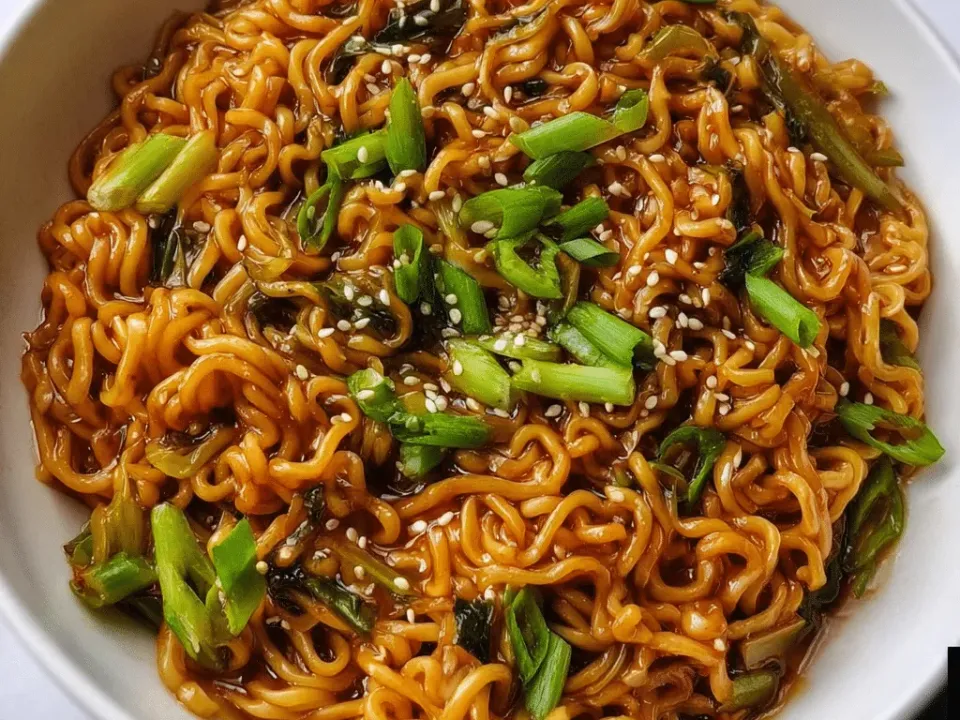
Two packets of instant ramen, the seasoning thrown away, and a four-part soy sauce that takes about a minute to mix.
Twenty minutes start to finish, one pan for the stir-fry and one for the noodles, and no ingredient that needs a special shop.
Why This Recipe Works
- Draining the noodles just before they are fully soft is the single most important instruction here. They finish cooking in the pan while they absorb the sauce, and noodles boiled to done first turn to paste at that stage.
- Two kinds of soy sauce do two different jobs — regular for salt, dark for colour and body. Using four tablespoons of regular alone gives a dish that is too salty and still looks pale.
- Garlic and ginger are cooked in neutral oil rather than in the sesame oil. Toasted sesame oil burns at a low temperature and turns bitter; it belongs in the sauce, not in the hot pan.
- The green onions are split, whites into the pan and greens on at the end. The whites are an aromatic, the greens are a fresh finish, and using them together wastes half of what they offer.
The Four Parts of the Sauce
Five liquids go into one small bowl, and each one is pulling in a different direction. That is the whole recipe — the noodles and aromatics are just what carries it.
- Salt3 tablespoons regular soy sauce
- The backbone, and the reason the seasoning packets get thrown away. Regular soy sauce is the salty one; it is doing the job the packet would have done, with nothing else in it.
- Colour and depth1 tablespoon dark soy sauce
- Not a stronger version of the first one. Dark soy is thicker, less salty and slightly sweet, and it is what makes stir-fried noodles look glossy brown instead of pale. Skip it and the dish tastes close but looks wrong.
- Sweet1 tablespoon maple syrup or brown sugar
- One tablespoon against four of soy. It is not there to make the dish sweet, it is there to stop four tablespoons of soy sauce tasting harsh, and it helps the sauce cling as it reduces.
- Sour1 tablespoon rice vinegar
- The lift. Without acid a soy-and-sugar sauce sits flat on the tongue; rice vinegar is mild enough to brighten it without reading as vinegary.
Toasted sesame oil is the fifth liquid and it belongs to none of these axes — it is aroma rather than balance, which is why it is measured in teaspoons and why it goes into the sauce rather than into the hot pan, where it would scorch.
Ingredient Notes
- Ramen noodles, seasoning packets discarded
- Two 3-ounce packs. The packets are where most of the salt and, in many brands, any non-vegan ingredients live — throwing them away is what makes this recipe both vegan and worth making.
- Dark soy sauce
- One tablespoon, and it is not interchangeable with regular soy sauce. It is thicker and less salty, and it is doing the colour.
- Toasted sesame oil
- Two teaspoons, in the sauce rather than the pan. Toasted, not plain sesame oil — the untoasted kind is a neutral cooking oil and brings none of the aroma.
- Fresh ginger
- A tablespoon, grated. Ground ginger is a different flavour entirely and does not work as a substitute here.
How to Make It
Cook the noodles
Boil the two packs of ramen without their seasoning, and drain them just before they are fully soft so they do not overcook when stir-fried.
Make the sauce
Whisk the soy sauce, dark soy sauce, maple syrup or brown sugar, rice vinegar and toasted sesame oil together in a small bowl.
Stir-fry the aromatics
In a hot pan with the neutral oil, cook the minced garlic, grated ginger and the white parts of the green onions until fragrant.
Toss it together
Add the drained noodles, pour over the sauce, and stir-fry 1 to 2 minutes until the noodles have absorbed every drop. Finish with the green onion tops and the sesame seeds.
Success Tips
- Undercook the noodles. They finish in the pan.
- Have the sauce mixed before the pan is hot.
- Keep the sesame oil out of the hot pan.
- Give the noodles a full minute or two in the sauce so it reduces onto them rather than sitting under them.
Serving Ideas
Good on its own as a fast dinner, and an easy base for whatever is in the fridge — sliced cabbage or mushrooms in with the aromatics, or crisped tofu added at the end. Chilli crisp on top if you want heat, since the recipe itself has none.
Storage and Reheating
Refrigerate
Best eaten straight from the pan. It will keep a day refrigerated, but the noodles keep absorbing and soften noticeably.
Freeze
Not suitable. Cooked ramen noodles do not survive freezing.
Reheat
A hot pan with a splash of water, tossing, rather than the microwave — it loosens the noodles instead of steaming them further.
Frequently Asked Questions
What if I only have regular soy sauce?
Use three and a half tablespoons in total rather than four, since regular soy is saltier, and expect a paler dish. A quarter teaspoon of molasses gets you closer to the colour and body dark soy would have given.
Can I make it gluten-free?
The sauce yes, with tamari in place of both soy sauces. The noodles are the problem — most instant ramen is wheat, so you would need a gluten-free noodle, and those want a slightly shorter boil.
How do I make it more of a meal?
Crisp cubed firm tofu or edamame in the pan before the aromatics, then set it aside and add it back with the noodles. Adding it at the same time as the aromatics means it steams in the sauce rather than staying crisp.