
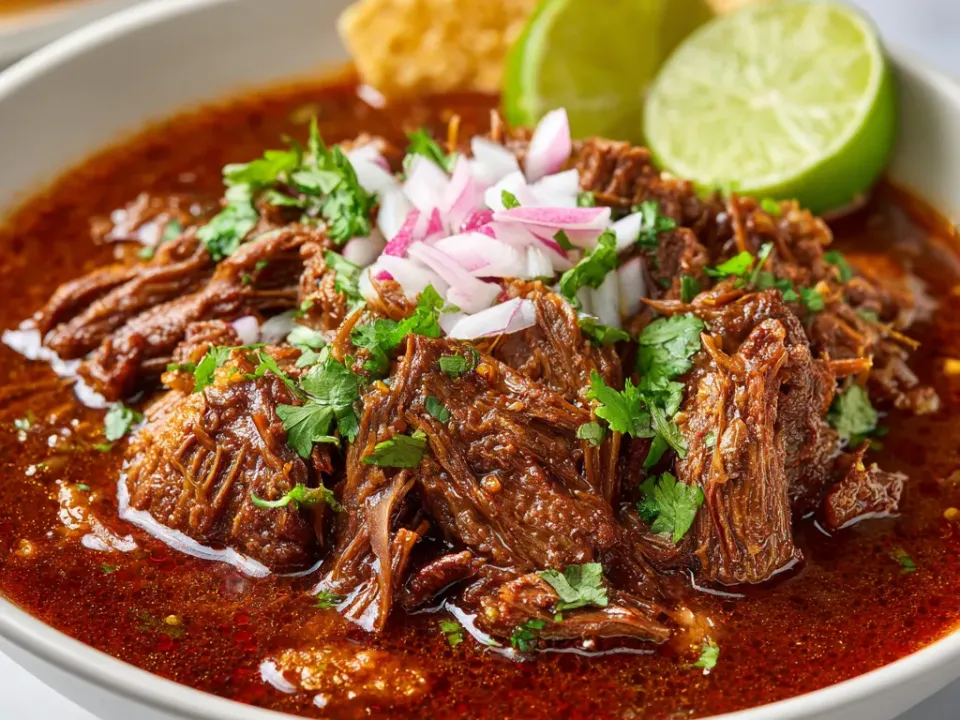
Birria is defined by its adobo. Dried guajillo and ancho chiles are toasted, soaked, then blended with charred tomato, onion and garlic into a sauce that the beef braises in for eight hours. What is left in the cooker afterwards is strained into consommé, and that is what the tacos get dipped into.
It is a front-loaded recipe — the chiles, the charring and the blending all happen before the slow cooker is switched on. After that it is eight hours of nothing.
The Three Stages
Ten steps, but they are not evenly spread. Six of them happen before the cooker is switched on, and the last four are what turn a braise into birria.
Stage 1 of 3
Build the adobo
Steps 1–3 of 10
Toasting, soaking and blending. Everything that gives the dish its colour and depth is decided here, before any beef is touched.
- Toast and soak the chilesToast the guajillo, ancho and any árbol chiles in a dry skillet over medium heat until fragrant, 30–60 seconds per side. Cover with hot water, soak 20 minutes, then drain.
- Char the aromaticsIn the same skillet, or under a broiler, char the tomatoes, half the onion and the garlic until lightly blistered. Optionally toast the cumin, cloves and cinnamon briefly for more depth.
- Blend the adoboBlend the soaked chiles, charred vegetables, toasted spices, vinegar, one cup of the beef broth and the pepper until silky smooth. Add the chipotle in adobo now if you want extra heat and smoke.
Stage 2 of 3
Sear and slow cook
Steps 4–6 of 10
The beef is seasoned, browned, and left under the chile sauce for eight to nine hours. This is the only unattended stretch in the recipe.
- Season and sear the beefPat the beef dry and season with the tablespoon of kosher salt. Sear in two tablespoons of oil in a hot skillet until browned on all sides — this is optional but recommended.
- Assemble in the cookerTransfer the beef to the slow cooker. Pour over the chile sauce and the remaining three cups of broth, then add the bay leaves and the rest of the onion, sliced.
- Slow cookCover and cook on LOW for 8–9 hours, or HIGH for 4–5, until the beef is fall-apart tender.
Stage 3 of 3
Shred and strain
Steps 7–10 of 10
Shredding the beef, skimming the fat, and straining the cooking liquid into a clear consommé — the part that makes it worth dipping into.
- Shred and reserve the fatRemove the beef, discard any bones and the bay leaves, and shred. Skim the fat from the top of the cooking liquid and keep some of it — the tortillas are griddled in it later.
- Strain the consomméStrain the cooking liquid into a clear, rich consommé. Season with salt and another splash of vinegar if it needs brightening.
- Griddle the tacosDip the tortillas in the reserved fat and griddle until sizzling. Add the beef, plus cheese for quesabirria, fold, and crisp on both sides.
- ServeServe the tacos with hot consommé for dipping, plus cilantro, diced onion and lime. For bowls instead, ladle the consommé over rice or beans and top with the shredded beef and garnishes.
Making the Adobo
The adobo is three separate operations before it is a sauce: toasting, soaking, and blending. Each does something the others cannot, and skipping any of them shows in the finished consommé.
The one non-negotiable is blending it genuinely smooth. Step 3 uses the word silky, and it is a functional instruction rather than a stylistic one — chile skins that survive the blender stay as fragments through the entire eight-hour cook and are impossible to strain out cleanly later.
Why This Recipe Works
- Toasting the chiles before soaking changes them. Thirty to sixty seconds a side in a dry skillet until fragrant deepens the flavour; soaking alone rehydrates without developing it.
- Charring the aromatics adds a second layer. The tomatoes, half the onion and the garlic go into the same skillet until lightly blistered, so the adobo carries both toasted chile and charred vegetable.
- The sauce is blended smooth before it ever meets the beef. Step 3 asks for silky, and that matters — unblended chile skins stay as fragments through eight hours and give a gritty consommé.
- The cooking liquid is strained, not just skimmed. That is the difference between a fatty braising liquid and the clear, rich consommé step 8 describes.
- Vinegar carries through the whole dish. Two tablespoons go into the adobo, and step 8 offers another splash at the end for brightness against eight hours of rich beef.
Ingredient Notes
- Guajillo and ancho chiles
- Eight guajillo and four ancho, stemmed and seeded. These are the body of the adobo and neither is hot — guajillo is bright and slightly tart, ancho is dark and raisin-like. Seeding is what keeps them mild.
- Chiles de árbol
- Two, marked optional and listed for heat. This is the only genuinely hot chile in the recipe; leave them out and the birria is rich rather than spicy.
- Beef short ribs or oxtail
- One pound, marked optional for richness. The chuck alone makes the dish; the short ribs add collagen and fat, and step 7 notes bones are discarded after shredding.
- White onion
- One large, quartered — half goes into the sauce and half is kept raw for topping. Do not use it all in the adobo.
- Beef broth
- Four cups, divided. One cup goes into the blender with the chiles, the remaining three into the cooker.
- Mexican oregano
- Two teaspoons. It is a different plant from Mediterranean oregano and tastes more citrus than pine, which is why Mexican oregano is named specifically.
Consommé and Quesabirria
The consommé is not a by-product — it is half the dish. Straining rather than merely skimming is what gives it clarity, and the fat you skim off first is what the tortillas are griddled in.
For quesabirria, add one to two cups of shredded Oaxaca or low-moisture mozzarella inside the taco before it crisps. Both melt without releasing much water, which is why they are the two named.
Success Tips
- Seed the guajillo and ancho chiles properly. The seeds are where most of the harshness sits.
- Keep half the white onion raw. It is split deliberately between the sauce and the topping.
- Do not throw away the skimmed fat until the tacos are done — it is the griddling medium.
- Taste the consommé before serving. Step 8 offers extra salt and a splash of vinegar, and after eight hours it usually wants the acid more than the salt.
- Both bay leaves come out with the bones at step 7.
Serving Ideas
There are two formats from the same pot: tacos griddled in the reserved fat and served with consommé for dipping, or bowls with the consommé ladled over rice or beans. Both finish with cilantro, diced white onion and lime wedges.
Storage and Reheating
Refrigerate
Step 12 is explicit about cooling leftovers quickly. Keep the shredded beef and the consommé together so the beef stays moist.
Reheat
Reheat gently, then crisp the tacos in a skillet or air fryer — reheated birria tacos that are not re-crisped go soft.
Frequently Asked Questions
How spicy is birria?
As written, mild. Guajillo and ancho are flavour chiles rather than hot ones, and both are seeded. The heat is in the two chiles de árbol and the chipotle in adobo, and both are optional.
Do I need the short ribs?
No. The pound of short ribs or oxtail is listed as optional, for richness. The three pounds of chuck carries the dish on its own.
What is the consommé for?
Dipping. The cooking liquid is strained clear at step 8 and served alongside the tacos. If you are making bowls instead, it is ladled over rice or beans.
My sauce is gritty. What happened?
The chiles were not blended smooth enough. Step 3 asks for silky, and chile skins that survive the blender stay in the sauce through the whole cook. Blending longer, with the cup of broth already in, is the fix.