
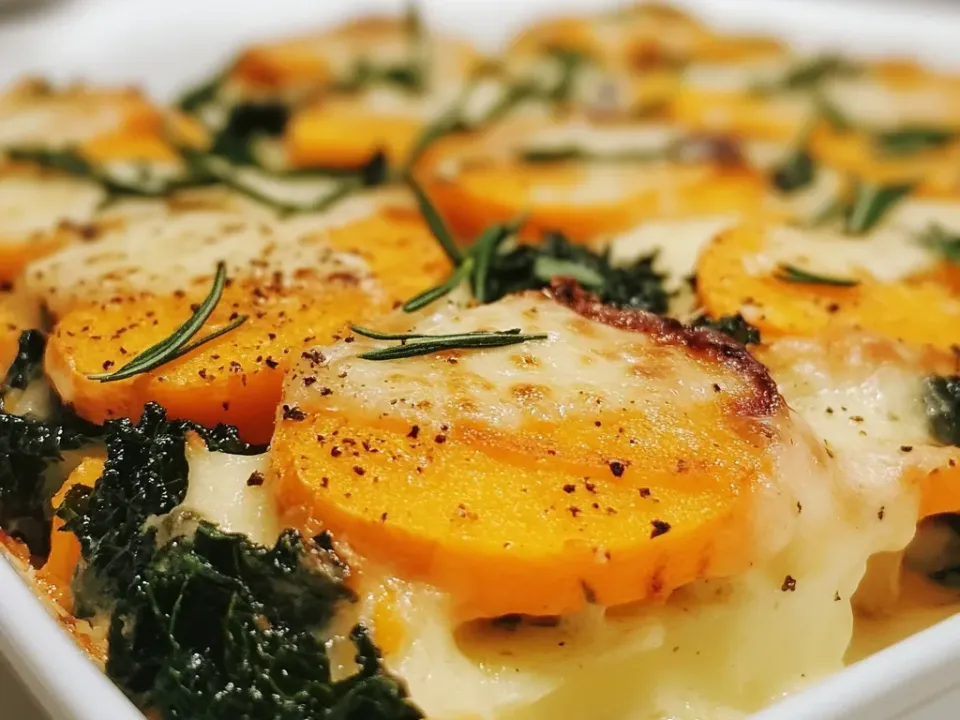
Swede and sweet potato peeled and sliced two to three millimetres thin, onion sliced, and kale stripped, chopped and wilted in olive oil with garlic for two to three minutes.
Cream, vegetable stock, Dijon, thyme, nutmeg, optional lemon zest, salt and pepper are whisked together, the dish is built in two full layers with cheese through it, and it bakes covered for thirty-five minutes and uncovered for twenty to twenty-five more.
Why This Recipe Works
- The kale is wilted before it is layered. Raw kale in a gratin steams unevenly and pushes the layers apart; two or three minutes in a skillet takes the volume out of it first.
- Covered, then uncovered. Thirty-five minutes under tight foil cooks dense swede through in steam; twenty to twenty-five uncovered is what browns the top. Neither half would work alone.
- Cream cut with stock, not cream alone. A cup and a half of cream to half a cup of stock keeps it rich enough to set but loose enough to reach the bottom layer.
- A teaspoon of Dijon in the cream, which the recipe marks optional but recommended. In a dish of root vegetables, dairy and cheese, it is the only sharp thing in the mixture.
- The Parmesan is divided three ways: two tablespoons in each internal cheese layer and the rest on top at the uncovering. The last portion is there to brown, which it cannot do under foil.
- Ten to fifteen minutes of rest before serving. A gratin cut straight from the oven runs; the rest is what gives clean slices, and the recipe says so explicitly.
The Dish, Built From The Bottom Up
Step 5 is a single long instruction that builds seven layers in a specific order and then repeats most of them. Read bottom-up, it is much easier to follow with a knife in one hand.
Cream, then butter
The cream mixture poured evenly over the top and 2 tbsp of butter dotted on before the foil goes on tightly.
The whole sequence again
Remaining swede, remaining sweet potato, remaining kale and remaining Gruyère with the second 2 tbsp of Parmesan.
Half the cheese
Half the Gruyère or mature cheddar and 2 tbsp of the Parmesan.
Half the kale
Scattered rather than layered — it has already been wilted with garlic in a skillet, so it goes in soft.
Half the sweet potato
Over the swede, again shingled.
Half the swede
In overlapping shingle layers. Swede is the denser of the two roots, so it starts at the bottom where it is fully submerged for longest.
Onion, on the buttered base
The whole sliced onion spread across the bottom of the greased dish. It goes in raw and cooks in the cream from underneath.
How to Make It
Heat the oven, grease the dish
Preheat the oven to 190°C/375°F. Grease a 23×33 cm (9×13-inch) baking dish with butter.
Prep the vegetables
Peel and thinly slice the swede and sweet potatoes to 2–3 mm. Thinly slice the onion. Strip the kale from its stems and chop.
Soften the kale
Warm 1 tbsp olive oil in a skillet over medium heat, add the kale and a pinch of salt, and sauté 2–3 minutes until just wilted. Stir in the minced garlic for 30 seconds, then remove from the heat.
Whisk the cream mixture
In a bowl, whisk the cream, vegetable stock, Dijon, thyme, nutmeg, lemon zest if using, 3/4 tsp salt and the pepper.
Build the layers
Spread the onion over the base of the dish. Add half the swede in overlapping shingle layers, then half the sweet potato. Scatter half the kale. Sprinkle half the Gruyère or cheddar and 2 tbsp Parmesan. Repeat the layers with the remaining swede, sweet potato, kale and cheese.
Cream, butter, foil
Pour the cream mixture evenly over the layers. Dot the top with 2 tbsp butter. Cover the dish tightly with foil.
Bake covered, then uncovered
Bake covered for 35 minutes. Uncover, sprinkle the remaining Parmesan and the panko mixture if using, drizzle with 1 tbsp olive oil, and bake 20–25 minutes more until deeply golden and the vegetables are tender when pierced.
Rest before slicing
Rest 10–15 minutes to set for clean slices. Garnish with extra thyme if you like, then serve warm.
Ingredient Notes
- Swede (rutabaga), peeled and thinly sliced (2–3 mm)
- About 600 g. The densest thing in the dish, which is why it goes in at the bottom of each layer and why the thickness is specified in millimetres.
- Curly kale, ribs removed and chopped
- Three cups, 90 g. The ribs are removed because they never soften in the time the recipe allows.
- Heavy cream (double cream)
- A cup and a half, named in both British and American terms. Cut with half a cup of stock rather than used neat.
- Grated Parmesan, divided
- Half a cup split three ways: 2 tbsp in each of the two internal cheese layers and the rest sprinkled on when the foil comes off.
- Dijon mustard (optional but recommended)
- A teaspoon, whisked into the cream. The recipe's own phrasing tells you how it rates it.
- Fine sea salt, divided
- A teaspoon split: a pinch with the kale in the skillet and 3/4 tsp in the cream mixture.
Success Tips
- Slice the swede as thin as the sweet potato, not thicker.
- Wilt the kale first — raw kale lifts the layers apart.
- Shingle the slices so they overlap rather than lie flat.
- Seal the foil tightly for the first thirty-five minutes.
- Let it stand the full ten to fifteen minutes before you cut into it.
Serving Ideas
It is listed as both a side dish and a main course. As a side it sits well beside a roast; as a main it wants something green and sharply dressed next to it.
Storage and Reheating
Refrigerate
Refrigerate covered for up to 4 days. It slices more cleanly cold than hot, which makes leftovers easy to portion.
Freeze
Not recommended. Cream-based gratins separate on thawing and the sweet potato goes watery.
Reheat
Reheat covered in a moderate oven until hot through, then uncover for a few minutes to bring the top back. A microwave will heat it but loses the crust.
Frequently Asked Questions
What is swede?
The recipe gives both names in the ingredient line — swede is rutabaga. One medium one, about 600 g.
Does the 2–3 mm really matter?
For the swede especially. It is denser than sweet potato, and thicker slices will still be firm when the fifty-five minutes are up.
Gruyère or cheddar?
The recipe offers either, specifying mature cheddar if you take that route. Both melt cleanly and both are strong enough to stand against a cup and a half of cream.
Can I assemble it ahead?
The recipe does not give a make-ahead. What it does insist on is the rest at the end: 10 to 15 minutes for clean slices.