
Eleven ingredients and forty minutes for four plates of rotini that carry their seasoning on the pasta rather than in a sauce.
The Cajun seasoning is split. A tablespoon goes onto the chicken before it sears and the remaining half tablespoon goes into the pan with the tomato, so the pasta picks it up too.
Why This Recipe Works
- Seasoning the chicken before it sears puts the spice into the crust and the fond rather than into liquid.
- Draining the diced tomato keeps the pan from turning into a sauce.
- Starchy pasta water and butter emulsify into a coating rather than a pool.
- Tossing over medium-high heat drives off the last of the moisture so the coating clings.
- Parsley and red pepper flakes at the end are the only things added off the heat.
Ingredient Notes
- Cajun seasoning, divided
- A tablespoon and a half in total: a tablespoon on the chicken and the rest into the pan. It is the seasoning of the whole dish, not just the meat.
- Diced tomatoes, drained
- A cup, drained. Draining is the difference between tomato pieces through the pasta and a tomato sauce on it.
- Reserved pasta water
- A third of a cup, and it is the only liquid added to the pan. With the butter it makes a coating rather than a sauce.
- Parsley
- A third of a cup, chopped. Generous, and it is what gives the green flecks through the finished plate.
How to Make It
Rotini, and keep the water
Cook rotini in salted water until al dente, reserving 1/3 cup pasta water.
Sear the chicken to 165F
Season chicken with 1 tablespoon Cajun seasoning. Sear in olive oil over medium-high heat until browned and 165 degrees Fahrenheit; transfer to a plate.
Pepper, garlic, tomato, more Cajun
Cook bell pepper 3 minutes, add garlic for 30 seconds, then add diced tomato and remaining Cajun seasoning.
Toss glossy, not saucy
Return chicken and rotini. Add reserved pasta water and butter and toss over medium-high heat until the pasta is glossy but not coated in a cream sauce.
Parsley and chilli flakes
Finish with parsley and red pepper flakes.
How Little Liquid There Actually Is
The title promised something creamy. Set the liquid against the pasta and it is obvious why this is not: there is no sauce here, and there is barely enough moisture to coat.
- Rotini12 oz
- Chicken breast1 1/4 lb
- Diced tomatoes, DRAINED1 cup
- Reserved pasta water1/3 cup
- Unsalted butter1 tbsp
- Cream of any kindnone
The bar is relative volume only. Two rows carry the whole point. The tomatoes are DRAINED, which is what keeps their liquid out of the pan; and the only liquid deliberately added is 1/3 cup of starchy pasta water with 1 tbsp of butter, tossed over medium-high heat until the rotini is - in the recipe's own words - glossy but not coated in a cream sauce. The last row is a real entry: there is no cream here at all.
Success Tips
- Drain the tomatoes properly; the liquid in the tin would undo the whole texture.
- Keep the heat up while tossing so the pasta water reduces onto the rotini rather than sitting under it.
- Reach for more pasta water only a splash at a time — a third of a cup is the amount to use.
Serving Ideas
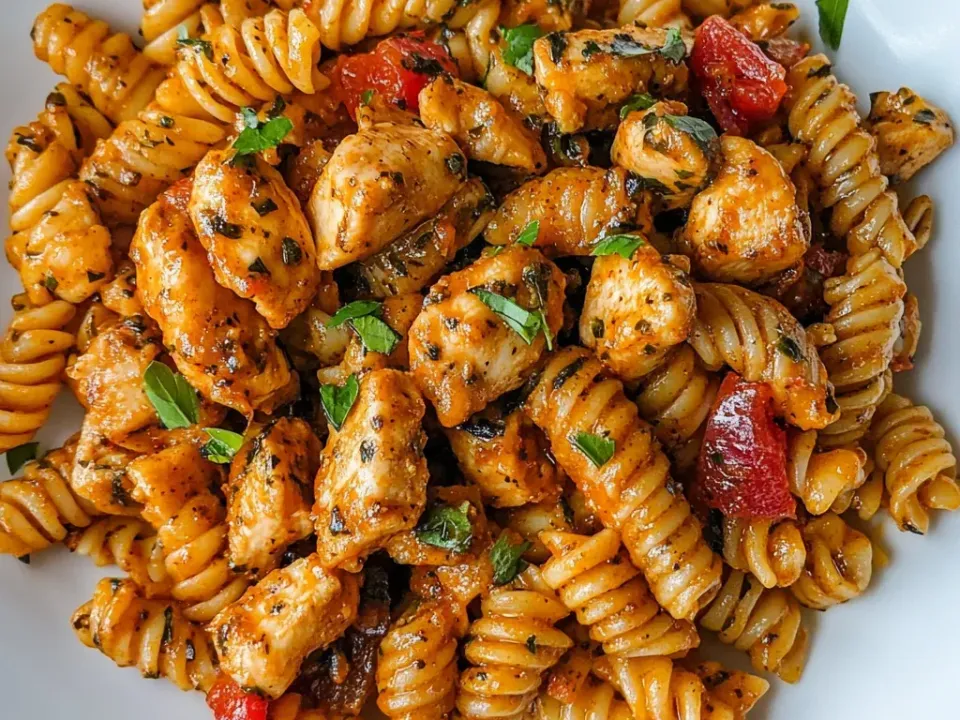
Four plates of rotini tossed with the seared Cajun chicken, red pepper and tomato pieces, glossy rather than sauced, finished with plenty of parsley and red pepper flakes.
Frequently Asked Questions
Is there cream in this?
None. Step 4 asks for pasta glossy but not coated in a cream sauce, and the finished dish carries no pooled sauce at all.
How is this different from the Cajun chicken orzo?
That one is a one-pot orzo, tinted with tomato paste and deliberately creamy. This is rotini with no sauce and no cream.
My pasta looks dry. What went wrong?
Usually the tomato was not drained, or the toss was done off the heat. Medium-high heat is what emulsifies the pasta water and butter into a coating.