
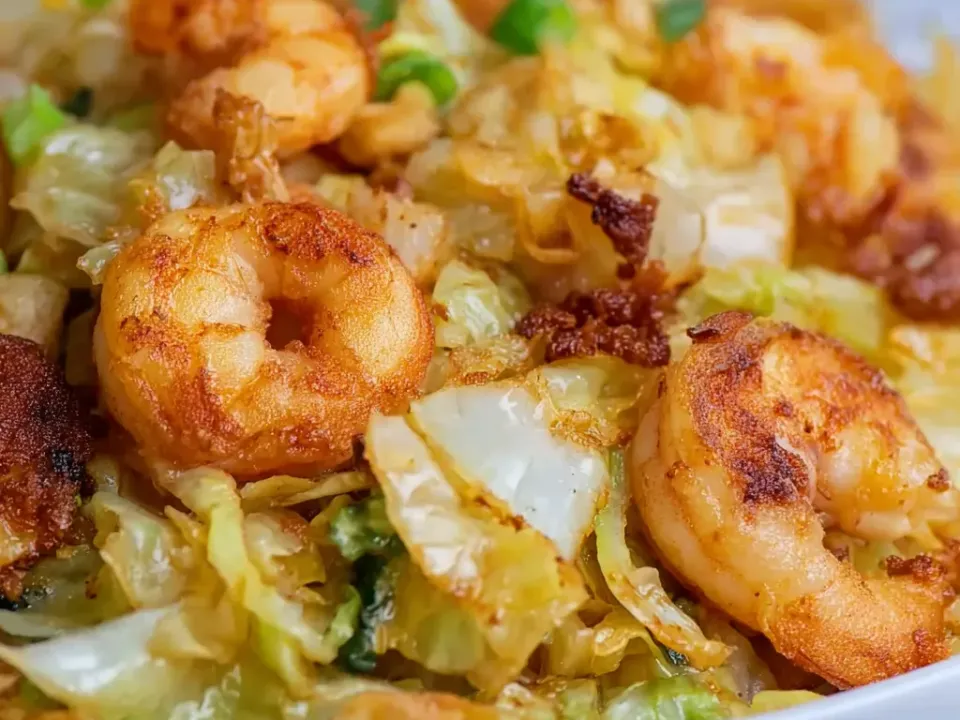
Southern fried cabbage cooked in bacon fat, with shrimp seared in the same pan and folded back in at the end.
Fifteen minutes of prep, twenty in the skillet, and one pan doing three jobs in sequence.
Why This Recipe Works
- Rendering the bacon first gives the dish its cooking fat and its salt at the same time. There is no oil in the ingredient list because none is needed.
- Taking the shrimp out after ninety seconds a side is the single most important instruction here. Shrimp go from tender to rubbery in about the time the cabbage takes to soften, so they cannot share the pan.
- Seven cups of cabbage in a deep skillet, tossed rather than stirred, gives the browned edges the name promises. A crowded or under-heated pan makes boiled cabbage instead.
- A tablespoon of cider vinegar at the end cuts through bacon fat that would otherwise coat the whole dish. It goes in off the main cook so it stays sharp.
- Smoked paprika on the shrimp rather than in the cabbage means the seasoning is concentrated where you meet it first.
One Pan, Three Things In and Out
Everything cooks in the same skillet, and the sequence exists because the three main ingredients want completely different amounts of time. Two of them come out and go back in.
Stage 1 of 5
Season the shrimp
Steps 1–1 of 7
Patted dry and seasoned with a quarter of the salt and pepper plus all the smoked paprika. Dry shrimp sear; wet shrimp steam.
- Season the shrimpPat the shrimp dry and season with 1/4 teaspoon of the salt, 1/4 teaspoon of the pepper and the smoked paprika.
Stage 2 of 5
Render the bacon, keep the fat
Steps 2–2 of 7
The bacon crisps and leaves, but about two tablespoons of its drippings stay behind. That fat is the cooking medium for everything that follows and it is why the recipe uses no separate oil.
- Render the baconCook the bacon in a large deep skillet over medium heat until crisp. Transfer the bacon to a plate, leaving about 2 tablespoons of drippings in the skillet.
Stage 3 of 5
Sear the shrimp and remove them
Steps 3–3 of 7
One to two minutes a side, to 145°F and opaque, and then straight out onto the plate with the bacon. Shrimp left in the pan for the next ten minutes would be rubber by the end.
- Sear the shrimpAdd the shrimp and cook 1 to 2 minutes per side, until opaque and 145°F. Transfer to the plate with the bacon.
Stage 4 of 5
Fry the cabbage
Steps 4–5 of 7
Onion and pepper first, then garlic, then seven cups of cabbage with the remaining salt and pepper. Eight to ten minutes, tossed often, until tender with lightly browned edges — the browning is what 'fried cabbage' means.
- Soften the onion and pepperAdd the onion and bell pepper to the skillet and cook 4 minutes. Add the garlic and cook 30 seconds.
- Fry the cabbageAdd the cabbage, the remaining salt and pepper and the optional red pepper flakes. Cook 8 to 10 minutes, tossing often, until tender with lightly browned edges.
Stage 5 of 5
Bring it back together
Steps 6–7 of 7
Cider vinegar, then the shrimp and bacon returned just long enough to warm through, and parsley at the end. Nothing is re-cooked, only reheated.
- Return everything to the panStir in the apple cider vinegar, the shrimp and the bacon, and cook just long enough to heat through.
- Finish and serveFinish with the parsley and serve.
Ingredient Notes
- Large shrimp, peeled and deveined
- A pound, and the recipe's own step 3 names 145°F alongside the visual cue of opaque and firm.
- Bacon, chopped
- Four slices, and they are the fat source as much as an ingredient. About two tablespoons of drippings stay in the pan by instruction.
- Kosher salt and black pepper, divided
- Three quarters of a teaspoon and half a teaspoon respectively, split between the shrimp in step 1 and the cabbage in step 5.
- Green cabbage, sliced
- About seven cups from one small head, sliced rather than shredded so it can brown at the edges instead of collapsing.
- Apple cider vinegar
- One tablespoon at the end. Small, and the thing that keeps a bacon-fat dish from tasting heavy.
How to Make It
Season the shrimp
Pat the shrimp dry and season with 1/4 teaspoon of the salt, 1/4 teaspoon of the pepper and the smoked paprika.
Render the bacon
Cook the bacon in a large deep skillet over medium heat until crisp. Transfer the bacon to a plate, leaving about 2 tablespoons of drippings in the skillet.
Sear the shrimp
Add the shrimp and cook 1 to 2 minutes per side, until opaque and 145°F. Transfer to the plate with the bacon.
Soften the onion and pepper
Add the onion and bell pepper to the skillet and cook 4 minutes. Add the garlic and cook 30 seconds.
Fry the cabbage
Add the cabbage, the remaining salt and pepper and the optional red pepper flakes. Cook 8 to 10 minutes, tossing often, until tender with lightly browned edges.
Return everything to the pan
Stir in the apple cider vinegar, the shrimp and the bacon, and cook just long enough to heat through.
Finish and serve
Finish with the parsley and serve.
Success Tips
- Pat the shrimp properly dry before they meet the pan.
- Take the shrimp out — do not leave them in while the cabbage cooks.
- Keep about two tablespoons of bacon fat and no more; pour off any excess.
- Use a large deep skillet and toss the cabbage often so it browns rather than steams.
- Remember the divided salt and pepper.
Serving Ideas
A one-skillet dinner as it is, or over rice or grits if you want it to go further. Hot sauce on the table suits it.
Storage and Reheating
Refrigerate
Refrigerate up to 2 days. Cooked shrimp are at their best on the first day and firm up noticeably after that.
Freeze
Not recommended. Both the shrimp and the fried cabbage lose their texture on thawing.
Reheat
Briefly in a hot pan rather than a microwave, and only until warm — the shrimp are already cooked and will tighten if taken further.
Frequently Asked Questions
Can I use frozen shrimp?
Thaw them completely and pat them very dry first. Shrimp that go into the pan wet will steam rather than sear, and they will also drop the pan temperature the cabbage needs.
Can I make it without bacon?
The bacon supplies both the cooking fat and a good share of the salt, so leaving it out changes the dish rather than simply omitting an ingredient. You would need to add a cooking fat and re-taste for salt.
My cabbage never browned. Why?
Either the pan was too small for seven cups or the heat was too low. Fried cabbage needs contact with hot metal; a crowded pan traps steam and the cabbage boils in its own water instead.
Is it spicy?
Only if you want it to be. The quarter teaspoon of crushed red pepper flakes is marked optional, and smoked paprika is smoky rather than hot.