
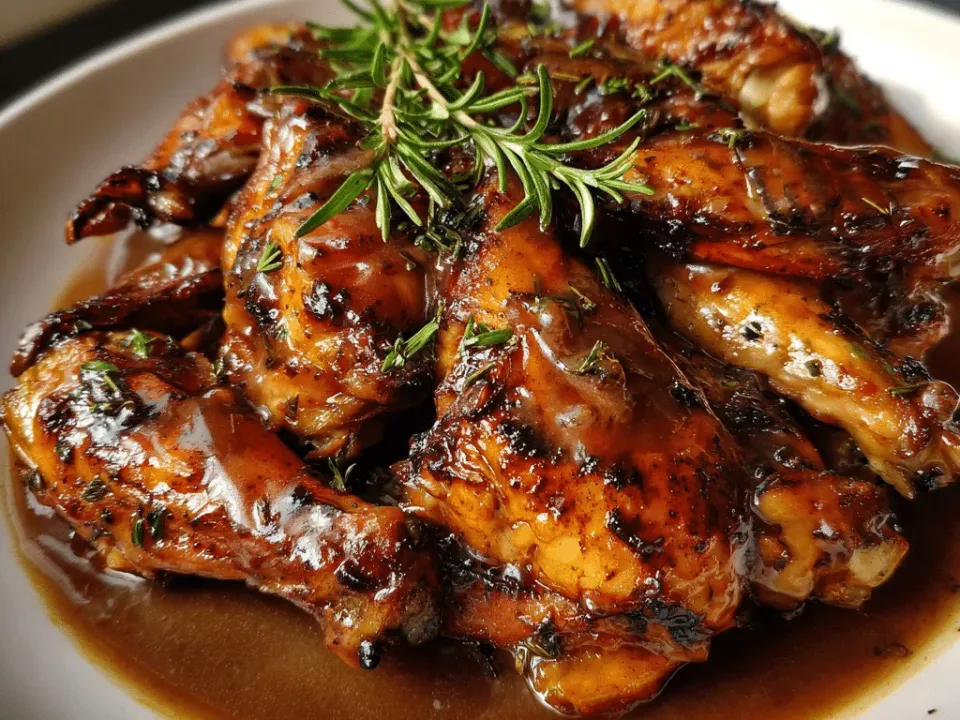
Turkey wings dried, seasoned with smoked paprika, garlic and onion powder, and browned on both sides in an oven-safe skillet before coming out to rest.
Onion and bell pepper soften in the same pan, butter and flour build a roux, and broth, Worcestershire and thyme turn it into a gravy the wings braise in for over two hours, covered, until they fall apart.
Why This Recipe Works
- The wings are dried and seasoned before they ever touch the pan. Wet skin steams instead of browning, and the colour built here is what the gravy tastes of later.
- The gravy is built in the same pan, using the fond the seared wings left behind. There is no separate stock or bouillon anywhere in the list — that fond is the flavour base.
- A proper roux, three tablespoons of butter to three of flour, cooked a full minute before any liquid goes in. That minute is what keeps the finished gravy from tasting of raw flour after two hours in the oven.
- The broth goes in gradually while whisking, not all at once. Poured in a rush against a hot roux, it lumps; added slowly, it stays smooth.
- Two hours to two hours fifteen minutes, covered. Turkey wings are heavier and more sinewy than chicken wings, and this is genuinely how long they need under a tight lid to go from tough to falling off the bone.
Sear, Build, Braise, Rest
Nothing about this recipe is fast, but very little of it is active. Four stages, and the middle two hours are the oven's job, not yours.
Stage 1 of 4
Season and sear
Steps 1–2 of 6
Wings patted dry and rubbed with salt, pepper, smoked paprika, garlic and onion powder, then browned on both sides in the same pan the gravy is about to be built in.
- Season the wingsHeat oven to 350°F. Pat wings dry and season with salt, pepper, paprika, garlic powder, and onion powder.
- SearHeat oil in a large oven-safe skillet or Dutch oven. Brown wings on both sides, then transfer to a plate.
Stage 2 of 4
Build the gravy
Steps 3–4 of 6
Onion and bell pepper soften in the fond, then butter and flour make a roux before the broth goes in gradually, followed by Worcestershire and thyme.
- Soften the vegetables, start the rouxCook onion and bell pepper 4 minutes. Add butter, then flour, and stir 1 minute.
- Build the gravyWhisk in broth gradually, then Worcestershire and thyme. Simmer until lightly thickened.
Stage 3 of 4
Braise
Steps 5–5 of 6
Wings return to the gravy, the lid goes on tight, and the oven does two hours to two hours fifteen minutes of work — until the meat is very tender and reads at least 165°F.
- BraiseReturn wings to gravy, cover tightly, and bake 2 hours to 2 hours 15 minutes, until very tender and at least 165°F internally.
Stage 4 of 4
Rest
Steps 6–6 of 6
Ten minutes off the heat before serving, so the gravy settles rather than running straight off the plate.
- Rest and serveRest 10 minutes and serve with gravy.
How to Make It
Season the wings
Heat oven to 350°F. Pat wings dry and season with salt, pepper, paprika, garlic powder, and onion powder.
Sear
Heat oil in a large oven-safe skillet or Dutch oven. Brown wings on both sides, then transfer to a plate.
Soften the vegetables, start the roux
Cook onion and bell pepper 4 minutes. Add butter, then flour, and stir 1 minute.
Build the gravy
Whisk in broth gradually, then Worcestershire and thyme. Simmer until lightly thickened.
Braise
Return wings to gravy, cover tightly, and bake 2 hours to 2 hours 15 minutes, until very tender and at least 165°F internally.
Rest and serve
Rest 10 minutes and serve with gravy.
Ingredient Notes
- Turkey wings, split at the joints
- Three pounds, split rather than left whole — smaller joints fit the pan in one layer and braise more evenly than two long whole wings would.
- Unsalted butter and all-purpose flour
- Three tablespoons each, cooked together into a roux before any broth arrives. It is the only thickener in the recipe.
- Low-sodium chicken or turkey broth
- Two and a half cups, low-sodium because a teaspoon and a half of kosher salt already seasons the wings before the gravy reduces around them for two hours.
- Worcestershire sauce
- One teaspoon, into the gravy rather than the dry rub. It rounds out the broth without announcing itself the way it would on the skin.
Success Tips
- Dry the wings thoroughly before they touch any seasoning.
- Do not wipe out the searing pan — the gravy is built on what is left in it.
- Whisk the broth in a little at a time so the roux never breaks.
- Check for a tight lid seal before the pan goes into the oven for two hours.
- Let the pan rest the full ten minutes before you spoon out the gravy.
Serving Ideas
Serve with gravy spooned over, as the last step says. Rice or mashed potatoes underneath give the gravy somewhere to go; cornbread on the side does the same job.
Storage and Reheating
Refrigerate
Refrigerate wings and gravy together in an airtight container for up to 4 days. The gravy sets firm when cold and loosens again on reheating.
Freeze
Freeze wings with their gravy for up to 3 months. Thaw in the fridge before reheating so the sauce comes back smoothly.
Reheat
Reheat covered in a low oven or on the stovetop over gentle heat, adding a splash of broth if the gravy has thickened too far.
Frequently Asked Questions
Can I use chicken wings instead?
The recipe is timed for turkey wings, which are larger and need the full two-plus hours to go tender. Chicken wings in the same braise would be overcooked well before that.
I don't have an oven-safe skillet or Dutch oven.
Sear in any skillet, then transfer everything to a covered oven-safe dish for the braise — the tight lid for two hours is what matters, not which pan gets you there.
My gravy came out thin.
Most often the roux was rushed. Cooking the butter and flour for the full minute before the broth goes in is what gives the gravy body across a two-hour braise.
Can this be made ahead?
Yes — it reheats well, and the gravy often tastes even better the next day once the flavours have settled.