
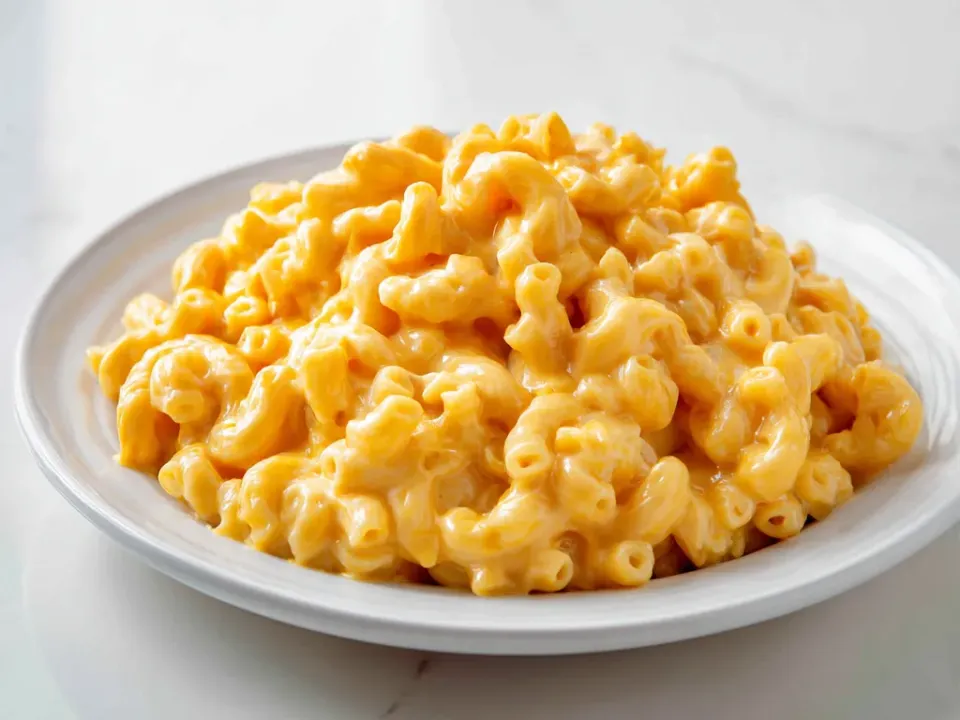
Nothing is boiled first. A pound of dry elbow macaroni goes into a greased slow cooker, the dairy is whisked and poured over, and the pasta cooks in the sauce it will be served in.
That is what makes it easy and it is also the one risk: pasta cooking in dairy will stick to the corners of the crock if it is left alone. The recipe answers that with a stirring schedule rather than a longer cook.
Why This Recipe Works
- Cooking the pasta in the sauce means the starch it releases stays in the pot and thickens the sauce instead of going down the sink with the cooking water.
- Evaporated milk holds together under long, low heat better than fresh milk alone, which is why it is doing the structural work here.
- Holding back half a cup of cheddar until the end means the last addition melts into a finished sauce rather than being cooked for two hours.
- The recipe gives a correction in both directions — warm milk for a sauce gone too thick, ten minutes uncovered for one too loose — so the finish is adjustable rather than fixed.
Ingredient Notes
- Elbow macaroni
- Sixteen ounces, uncooked. It is never boiled separately — the whole method depends on it absorbing the dairy.
- Evaporated milk
- A 12 oz can, alongside the whole milk and cream rather than instead of them. It is the component that stands up to two hours of heat.
- Cheddar, divided
- Three cups total: two and a half go in at the start, half a cup is stirred through at the end.
How to Make It
Grease the crock, add dry pasta
Grease a 5 to 6 quart slow cooker and tip in the uncooked elbow macaroni.
Whisk the dairy and seasoning
In a large bowl, whisk the evaporated milk, whole milk, heavy cream, melted butter, Dijon, garlic powder, onion powder, paprika, salt and pepper together.
Combine in the crock
Pour the milk mixture over the pasta, then add the cubed cream cheese, two and a half cups of the cheddar and the Monterey Jack. Stir to combine.
One hour, then stir properly
Cover and cook on LOW for an hour, then open it and stir well, scraping into the corners where pasta sticks first.
Finish on LOW, stirring often
Carry on on LOW for another 30 to 60 minutes, stirring every 20, until the pasta is tender and the sauce creamy — about an hour and a half to two hours in total.
Add the last cheese and adjust
Stir in the remaining half cup of cheddar and taste for salt and pepper. Splash in warm milk if it has gone too thick, or cook uncovered 5 to 10 minutes if it is too loose.
Serve from the crock
Serve warm, straight from the slow cooker.
The Stirring Schedule
Dry pasta cooking in dairy is the easy part and the risky part at once. These are the four points the recipe actually checks.
Before the lid goes on
Pasta, dairy, cream cheese and the first cheeses are stirred to combine.
Dry pockets of macaroni left sitting in one place are what stick to the crock.
1 hour on LOW
Stirred well, including into the corners.
The corners run hottest and dry first; this is the stir that prevents catching.
Every 20 minutes after
Pasta softening evenly, sauce thickening rather than splitting.
Long unattended stretches are how a dairy sauce breaks.
90 minutes to 2 hours
Pasta tender, sauce creamy; last cheddar stirred in off the schedule.
Doneness here is a texture, not a time — the range is wide by design.
Success Tips
- Scrape the corners at the one-hour stir, not just the middle — that is where dry pasta catches and sticks.
- Keep it on LOW throughout. The recipe never uses HIGH, and dairy held at a higher heat for this long is what splits a sauce.
- Judge the end by the pasta being tender and the sauce creamy rather than by the clock; the window is 90 minutes to 2 hours.
Serving Ideas
Eight servings from a pound of pasta, as a side dish rather than a main.
Frequently Asked Questions
Do I need to boil the macaroni first?
No. It goes into the slow cooker uncooked and cooks in the milk mixture, which is what thickens the sauce.
What if the sauce is too thick or too thin?
The recipe covers both: splash in warm milk to loosen it, or cook uncovered for 5 to 10 minutes to reduce it.
Can I cook it on HIGH to save time?
The recipe uses LOW throughout, with a total of about an hour and a half to two hours. There is no HIGH setting for this recipe.