
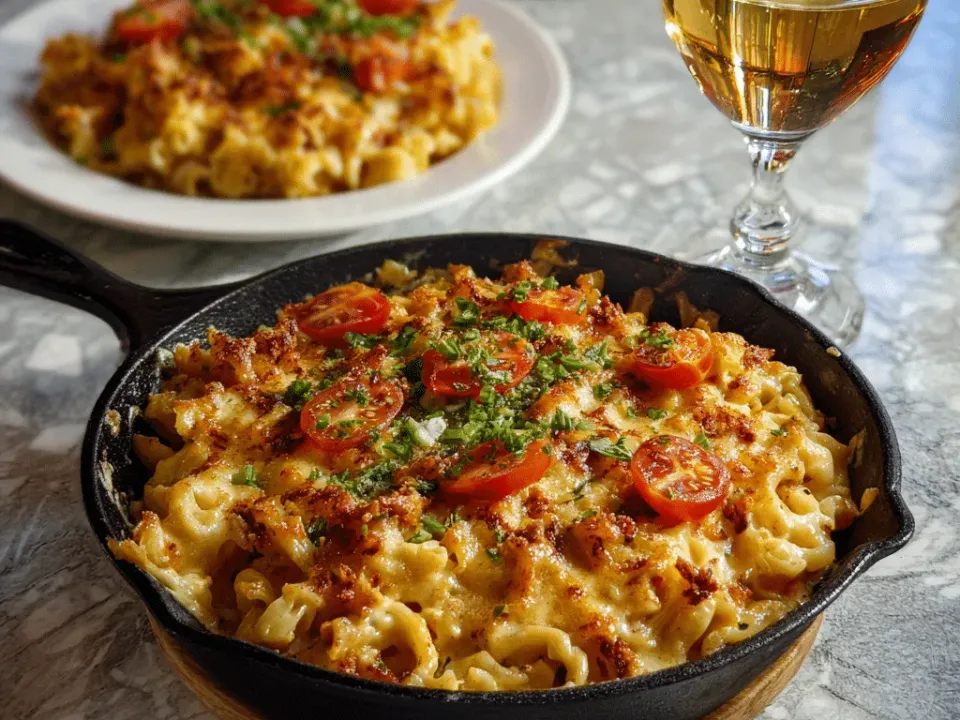
Elbow macaroni cooked just to al dente while a roux of butter and flour builds in a large deep skillet, seasoned with Dijon, garlic powder, salt and pepper as milk whisks in.
Sharp cheddar melts into the base over low heat, then the drained macaroni and well-drained diced tomatoes fold in together and warm through before the dish goes straight to the table from the pan.
Why This Recipe Works
- A real roux, not a cornstarch shortcut. Two tablespoons each of butter and flour, cooked a full minute, is what gives this sauce body without a bag of pre-shredded cheese and its anti-caking starch fighting the texture.
- The cheese goes in over low heat, after the milk has already thickened. Cheddar added to a sauce that is still at a simmer tends to seize into strings rather than melt smoothly.
- The tomatoes are drained well — the recipe says so twice, in the ingredient line and the method. Canned tomato liquid would thin a sauce this size out of shape.
- Dijon rather than dry mustard powder. A teaspoon of it sharpens the cheddar without adding a mustard flavour on its own, which is the point of using it in a cheese sauce at all.
- The pasta and tomatoes are folded in and warmed for two minutes, not simmered. Longer on the heat would break the sauce apart rather than warming it through.
The Sauce, Built In The Right Order
This is a short recipe with an exact sequence: the sauce has to be built before anything else joins the pan, and each addition happens at a specific point so the cheese never breaks.
The roux
1 minute over medium heat2 tablespoons butter, 2 tablespoons flour
Cooked together for a minute before any milk goes in — this is what thickens the sauce and keeps it from tasting of raw flour.
The base
3 to 4 minutes2 cups whole milk, Dijon, garlic powder, salt, pepper
Whisked in gradually and simmered until slightly thickened, building the seasoned base the cheese melts into.
The cheese
Low heat only2 cups shredded sharp cheddar
Stirred in off the higher heat, over low, until smooth — cheese added too hot can split into a grainy sauce.
The pasta and tomato
2 minutes, just to heatCooked macaroni, well-drained diced tomatoes
Folded into the finished sauce and warmed through, rather than cooked further, so the tomato keeps its shape.
Then tasteTopped with parsley if desired and served straight from the skillet.
How to Make It
Cook the macaroni
Cook macaroni in salted water until just al dente; drain.
Start the roux
Melt butter in a large deep skillet over medium heat. Whisk in flour and cook 1 minute.
Build the base
Gradually whisk in milk, then add Dijon, garlic powder, salt, and pepper. Simmer 3 to 4 minutes until slightly thickened.
Melt in the cheese
Lower heat and stir in cheddar until smooth.
Fold in pasta and tomato
Fold in macaroni and drained tomatoes. Cook 2 minutes until hot.
Serve
Top with parsley if desired and serve from the skillet.
Ingredient Notes
- Shredded sharp cheddar
- Two cups, added over low heat rather than while the sauce is still simmering, which is what keeps it smooth instead of grainy.
- Canned diced tomatoes, drained well
- One 14.5-ounce can. Draining is called out twice in the recipe because undrained tomatoes are the single biggest risk to the sauce's texture.
- Dijon mustard
- A single teaspoon, whisked into the milk base. It sharpens the cheese flavour without reading as mustard in the finished dish.
- Whole milk
- Two cups, whisked gradually into the roux. Whole milk gives the sauce the body a lower-fat milk would leave thin.
Success Tips
- Cook the macaroni just to al dente — it finishes softening in the hot sauce.
- Whisk the milk in slowly so the roux never lumps.
- Drop the heat before the cheese goes in.
- Drain the tomatoes as thoroughly as the recipe asks.
- Fold, don't stir hard, once the pasta and tomatoes are in — the sauce is already finished.
Serving Ideas
Straight from the skillet, as the recipe serves it — no separate serving dish needed. Extra parsley and a crack of black pepper at the table finish it well.
Storage and Reheating
Refrigerate
Refrigerate in an airtight container for up to 3 days. The sauce tightens considerably once cold.
Freeze
Not recommended. A roux-and-cheddar sauce like this one tends to separate on thawing.
Reheat
Reheat gently in a pan with a splash of milk, stirring, to bring the sauce back to a smooth coating consistency.
Frequently Asked Questions
My cheese sauce turned grainy.
Almost always the cheese went in over heat that was too high. The recipe lowers the heat before adding the cheddar for exactly this reason.
Can I use fresh tomatoes instead of canned?
The recipe is written around drained canned diced tomatoes, which hold their shape and add no extra liquid. Fresh tomatoes would need to be seeded and drained just as thoroughly to work the same way.
Can I use a different cheese?
Sharp cheddar is what gives the sauce its flavour and colour. A different melting cheese would change the dish's identity rather than just its taste.
Can this be made ahead?
It is best straight from the pan, while the sauce is still glossy. Reheated leftovers work but want a splash of milk to bring the texture back.