

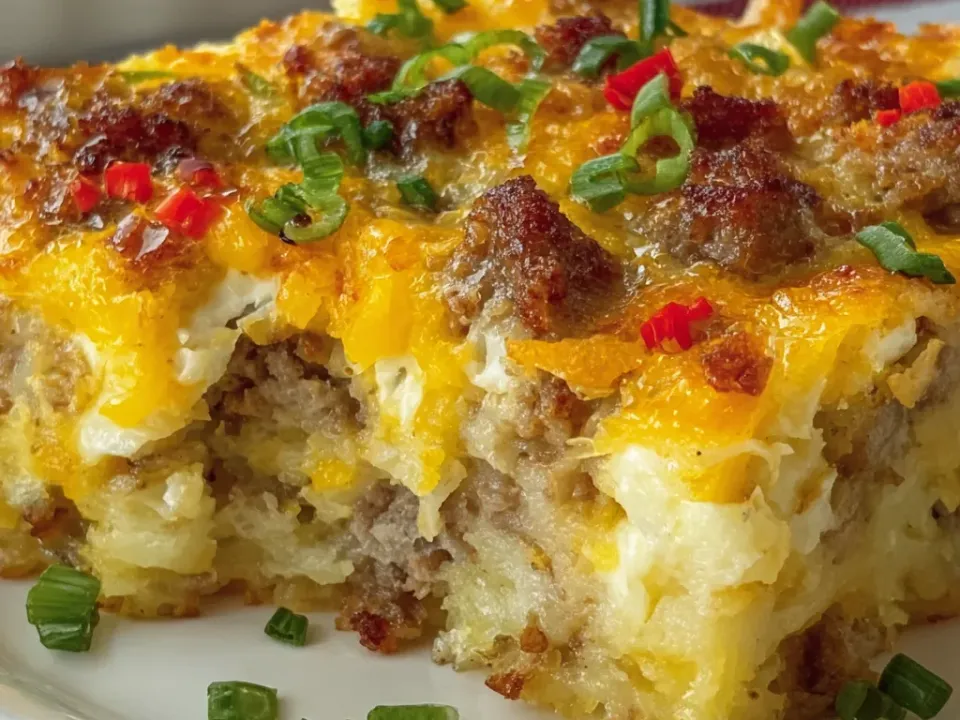
A pound of breakfast sausage browned and drained, spread over a thawed 30-ounce bag of shredded hash browns in a greased 9 x 13-inch dish.
Eight ounces of softened cream cheese whisked smooth and then whisked into eight eggs and a cup of milk goes over the top, with cheddar added in two stages.
Why This Recipe Works
- Cream cheese in the custard rather than in dollops. Whisked into the eggs it enriches the whole casserole, which is what makes this version noticeably richer than a plain sausage and egg bake.
- The hash browns go in thawed here. Frozen shredded potato in an oven bake releases its water into the custard as it thaws, and 45 to 50 minutes is not long enough to drive it off.
- The sausage is cooked and drained first. A pound of raw breakfast sausage would render a great deal of fat into an egg custard, and fat is what makes a custard weep.
- The cheddar goes on in two stages. A cup and a half bakes into the surface for the full time and half a cup goes on for the last five minutes, so the top is both set and freshly melted.
- 160°F in the centre rather than a clock. A 9 x 13 dish of egg custard sets from the edges inward, and the middle is the only place worth measuring.
The One Decision That Changes The Whole Casserole
Step 3 is the fork in the road. What you do with eight ounces of cream cheese in the thirty seconds before the eggs go in decides which of two quite different casseroles you end up with — and only one of them is what the recipe is describing.
Is the cream cheese fully softened and whisked smooth before a single egg is added?
Yes — softened at room temperature and whisked alone first
Whisk it to a smooth paste, then whisk in the eggs, milk and seasonings. The custard goes into the dish uniform and pale.
The cream cheese disperses through the whole custard, so every slice is rich rather than some being plain egg and others being pockets of cheese. This is what the recipe means by an enriched custard.
No — cold, or added straight to the beaten eggs
You get lumps that will not whisk out, and pouring them over the potatoes distributes them at random.
Cold cream cheese cannot emulsify into a thin liquid. The lumps survive 50 minutes at 375°F and the slices come out unevenly seasoned, with plain egg between them.
Ingredient Notes
- Cream cheese, softened
- Eight ounces of full-fat block, genuinely soft, whisked alone before the eggs. This is the defining ingredient and the one most easily got wrong.
- Frozen shredded hash browns, thawed
- A 30-ounce bag, thawed. The line says thawed and it matters — this is an oven bake, unlike the slow-cooker breakfast casseroles that take them frozen.
- Breakfast sausage
- A pound, browned and drained. Bulk sausage rather than links, so it breaks into pieces that distribute through the dish.
- Large eggs
- Eight, with a cup of whole milk. That is the structure of the casserole; fewer eggs and it will not hold a cut edge.
- Cheddar, divided
- Two cups: a cup and a half at step 5 and half a cup for the final five minutes at step 7.
How to Make It
Heat the oven
Heat the oven to 375°F and lightly grease a 9 x 13-inch baking dish.
Brown the sausage
Cook the sausage in a skillet until browned and fully cooked; drain excess fat.
Make the custard, cream cheese first
Whisk the cream cheese until smooth, then whisk in the eggs, milk, salt, pepper and garlic powder.
Build the dish
Spread the hash browns in the baking dish and scatter the sausage over them.
Pour and cheese
Pour the egg mixture evenly over the casserole and top with 1 1/2 cups cheddar.
Bake to a set centre
Bake for 45 to 50 minutes, until the center is set and reaches 160°F.
The last of the cheese
Top with the remaining cheddar during the final 5 minutes.
Rest and finish
Rest for 10 minutes and finish with scallions if using.
Success Tips
- Take the cream cheese out of the fridge an hour ahead and whisk it alone first.
- Thaw the hash browns and blot them if they look wet.
- Drain the sausage well — rendered fat is what makes a custard split.
- Pour the custard evenly across the dish rather than into one corner.
- Measure the centre with a thermometer; the edges set long before the middle.
Serving Ideas
Cut into squares with hot sauce, fruit and coffee. It holds well on a warm plate, which makes it a good centrepiece for a table that arrives in stages.
Storage and Reheating
Refrigerate
Refrigerate in an airtight container for up to 4 days. It slices cleanly cold and reheats a portion at a time.
Freeze
Freeze cooled squares for up to 2 months, wrapped individually. Cream cheese custards hold up better in portions than as a whole slab.
Reheat
Reheat covered at 325°F for 15 to 20 minutes, or in the microwave in short bursts. Gentle heat keeps the egg tender rather than rubbery.
Frequently Asked Questions
There were lumps of cream cheese all through it.
It went into the eggs before it was smooth. Whisk the softened cream cheese on its own at step 3, then add the eggs and milk to it.
There was liquid at the bottom of the dish.
Usually hash browns that were still icy. This recipe calls for them thawed, and an oven bake this length cannot drive off the water frozen potato releases.
How is this different from the crockpot breakfast casserole?
That one is a slow-cooker recipe with ten eggs, peppers and onion and no cream cheese. This is an oven bake built around a block of cream cheese whisked into the custard.
Can I put it together the night before?
You can assemble the potatoes and sausage ahead, but make the custard in the morning. Egg sitting on thawed potato overnight draws out water and loosens the set.