
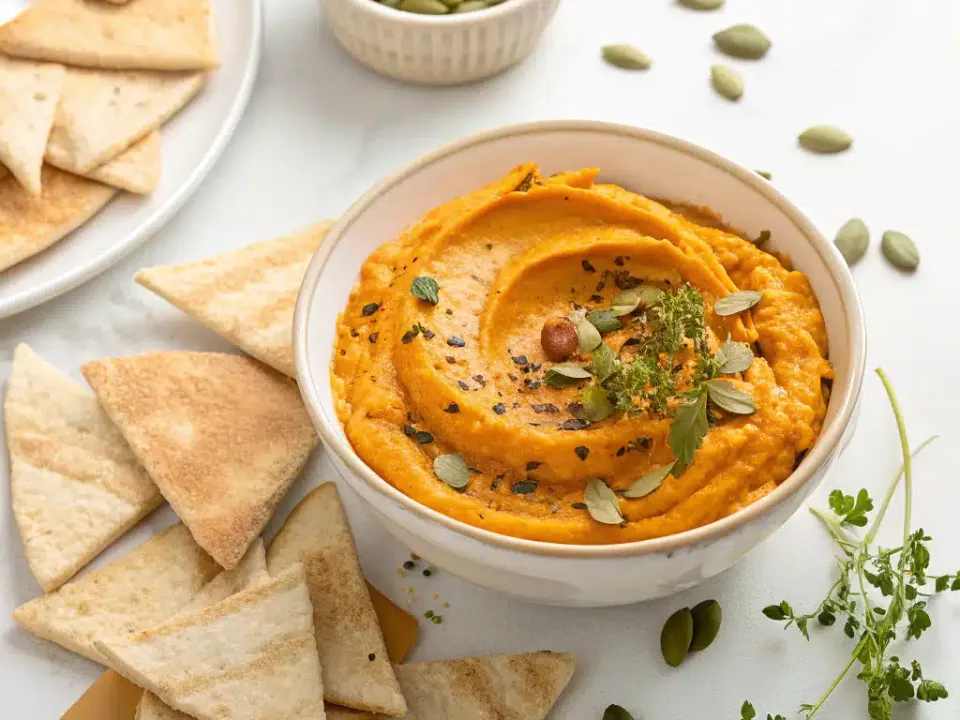
Hummus with a can of pumpkin in it, which sounds like a novelty and turns out to be mostly just a smoother, milder hummus with a warm edge.
The pita chips are the part worth doing from scratch — ten minutes in the oven and they are better than anything from a bag.
Why This Recipe Works
- Blending the tahini, lemon and garlic alone first is a real technique, not a formality. The acid loosens the tahini into a pale cream, which is what makes the finished hummus light rather than dense.
- Pumpkin puree replaces some of the chickpea bulk, so the dip is softer and needs less oil to reach a scoopable texture.
- Cumin, smoked paprika and a quarter teaspoon of cinnamon read as warm rather than sweet — the cinnamon is small enough to support the pumpkin without turning it into dessert.
- Aquafaba rather than water keeps the body. Water thins hummus; the starchy chickpea liquid loosens it while holding it together.
Chips and Dip, At the Same Time
The reason this lands in under half an hour is that nothing waits. The oven handles the chips while the processor handles the hummus.
In the oven
- Cut
Six pitas into eight wedges each, tossed with olive oil, garlic powder, salt, pepper and everything bagel seasoning.
- 10 to 12 minutes at 375°F
Single layer across two sheets, flipped once halfway, until crisp and golden.
- Off the sheet
Cooled on a rack rather than the hot tray, so the undersides crisp instead of sweating.
In the food processor
- First 30 seconds
Tahini, lemon juice and garlic alone, blended until pale and creamy. This is the step that makes the hummus light rather than dense.
- Next 30 to 60 seconds
Pumpkin, chickpeas, cumin, smoked paprika, cinnamon, cayenne and salt, with the olive oil streamed in while the motor runs.
- A further 1 to 2 minutes
Loosened with 2 to 4 tablespoons of the reserved chickpea liquid and blended until ultra-smooth. Longer than feels necessary, and the reason it is not grainy.
They meet on the platter
The chips need time on the rack to crisp, which is exactly the time the hummus needs to be tasted for lemon and salt, swirled into a shallow bowl, and topped with oil, smoked paprika, pepitas and parsley.
Ingredient Notes
- Pumpkin puree
- Plain puree, not pie mix. Pie mix is sweetened and spiced for dessert and turns the whole bowl in the wrong direction.
- Tahini
- Three tablespoons, blended first with the lemon. Stir the jar well before measuring — the separated oil at the top is not the same ingredient as the paste underneath.
- Aquafaba
- The liquid from the chickpea can. Reserve it before draining; it is the difference between creamy and merely thinner.
- Toasted pepitas
- The only crunch in the bowl, and the visual signal of what the dip is. Worth toasting even if they came toasted.
How to Make It
Bake the pita chips
375°F (190°C). Cut each pita into 8 wedges, toss with olive oil, garlic powder, salt, pepper and everything bagel seasoning if using. Single layer on two sheets, 10 to 12 minutes, flipping halfway, until crisp and golden. Cool on a rack.
Start the tahini base
Blend the tahini, lemon juice and garlic in a food processor for 30 seconds, until light and creamy. Scrape the sides down.
Add everything else
Pumpkin puree, chickpeas, cumin, smoked paprika, cinnamon, cayenne if using, and salt. Process 30 to 60 seconds, then stream in the olive oil with the motor running.
Loosen and blend smooth
Add 2 to 4 tablespoons of the reserved chickpea liquid until it is creamy and dippable, then keep blending a full 1 to 2 minutes. This is longer than feels necessary and it is what makes it ultra-smooth.
Taste and finish
Adjust lemon and salt. Swirl into a shallow bowl, drizzle with olive oil, dust with smoked paprika, and top with toasted pepitas and parsley.
Success Tips
- Give the hummus the full one to two minutes of blending at the end. Most home hummus is under-blended, and that is what makes it grainy.
- Keep the pita in a single layer. Overlapping wedges steam and stay leathery in the middle.
- Cool the chips on a rack rather than the hot sheet, so the underside crisps instead of sweating.
- Season the hummus at the end. Tahini brands vary in salt and the chips are already salted.
Serving Ideas
A shallow bowl with a spoon swirl holds the oil and pepitas better than a deep one. Cucumber, carrot and endive work alongside the chips for people avoiding bread.
Storage and Reheating
Refrigerate
Refrigerate the hummus in an airtight container up to 5 days, with a thin layer of olive oil on top to stop it drying. Keep the chips at room temperature in a sealed container for 2 to 3 days.
Freeze
The hummus freezes up to 3 months and thaws well with a stir and a splash of oil. The chips do not freeze — they go soft.
Reheat
Serve the hummus at room temperature rather than reheated; take it out of the fridge twenty minutes ahead. Refresh softened chips in a 350°F oven for 3 to 4 minutes.
Frequently Asked Questions
Can I use store-bought chips?
Yes, and the hummus stands on its own. You lose the garlic-and-everything-seasoning layer the baked wedges bring, so season the hummus a little more assertively if you do.
Can I make it without a food processor?
A blender works but needs more liquid and more scraping, and the texture will be slightly looser. The tahini-and-lemon step matters even more there, since a blender struggles to emulsify it later.
Mine is too thick. What now?
Add the reserved chickpea liquid a tablespoon at a time with the motor running. It thickens further in the fridge, so make it slightly looser than you want it if you are serving it cold.