
Thirteen ingredients and fifty-five minutes, all in one Dutch oven.
Two proteins with completely different timings, which is why one is browned first and taken out and the other arrives in the last few minutes.
Why This Recipe Works
- Browning the sausage first leaves fond the whole pot is built on.
- Softening the vegetables in that fat carries the flavour into them.
- Cooking tomato paste briefly deepens it rather than leaving it raw.
- Simmering the rice covered lets it absorb the broth evenly.
- Adding shrimp on top at the end steams them without overcooking.
Ingredient Notes
- Fully cooked smoked sausage
- Twelve ounces, sliced into rounds. Already cooked, so browning is for colour and flavour rather than doneness.
- Red bell pepper
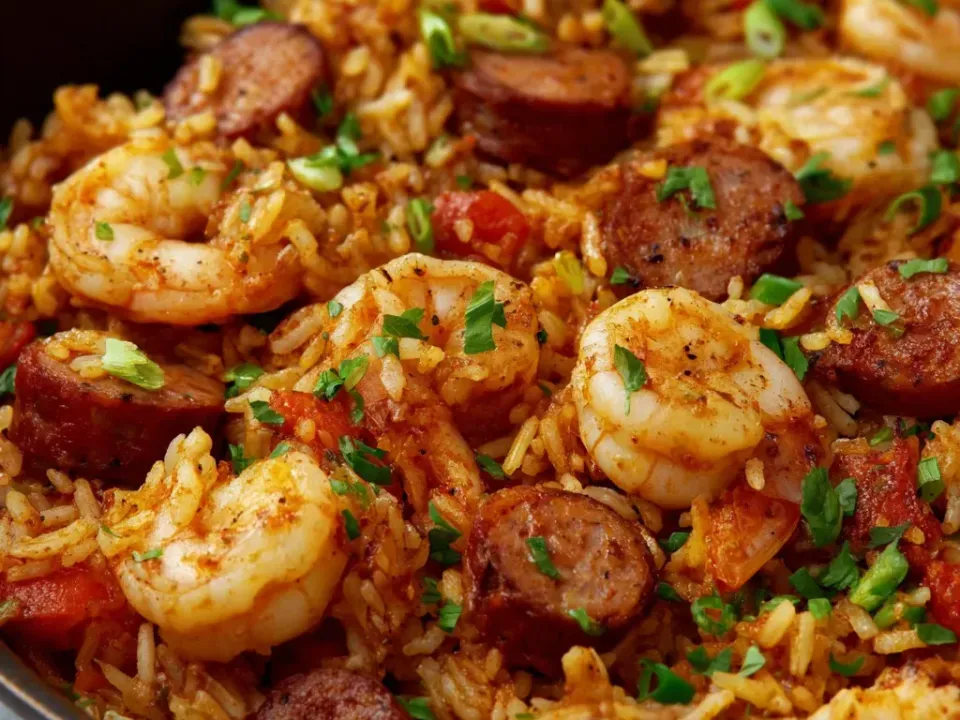
- One, diced. This is the red dice visible through the rice — not tomato.
- Tomato paste
- One tablespoon. Small, and it is what tints the rice red-orange rather than any chopped tomato.
- Large shrimp
- A pound, peeled and deveined, added in the last few minutes and cooked until pearly and opaque.
How to Make It
Sausage rounds browned, then removed
Brown the sausage rounds in a Dutch oven and remove to a plate.
Onion, celery and pepper softened, then paste and spices
Soften onion, celery, and red bell pepper in the same pot; add garlic, tomato paste, paprika, and thyme.
Rice and broth in, covered and simmered
Stir in rice and broth, cover, and simmer until the rice is almost tender.
Sausage back, shrimp arranged on top
Return the sausage and arrange the shrimp over the rice.
Covered until the shrimp are opaque
Cover and cook just until the shrimp are pearly/white and opaque and the rice is tender.
Green onion, parsley — jambalaya-style
Finish with green onion and parsley and describe it as jambalaya-style rather than making a traditional-authenticity claim.
One Pot, and Everything Enters at a Different Moment
A pound of shrimp needs about four minutes. Twelve ounces of sausage wants a hard sear. A cup and a half of rice needs twenty minutes covered. Putting all three into one pot at once is how this dish goes wrong, so nothing here goes in at the same time as anything else.
First, and then OUT
12 oz of FULLY COOKED smoked sausage, sliced into ROUNDS and browned
Removed to a plate straight after. The sausage is already cooked, so this is purely for colour and for the fond it leaves in the pot - which every later stage is built on. The sausage stays in rounds rather than crumbled. It comes out because twenty more minutes of simmering would only dry it.
Into the sausage fat
1 diced onion, 2 diced celery ribs and 1 diced RED BELL PEPPER
Softened in what the sausage left behind. The red dice are red pepper, not tomato - and it goes in here, early, so it softens into the dish rather than sitting on top of it.
Once they have softened
2 cloves garlic, 1 tbsp TOMATO PASTE, 1 tsp smoked paprika, 1/2 tsp dried thyme
The paste gets a moment in the hot pot before liquid arrives, which cooks off its raw edge and deepens it. This one tablespoon plus the paprika is what tints the rice RED-ORANGE - there is no chopped tomato anywhere in the recipe.
Then the long stretch
1 1/2 cups long-grain rice and 3 cups chicken broth, COVERED
Simmered UNTIL THE RICE IS ALMOST TENDER - almost, not fully, because there is one more covered stage to come and the rice will finish during it. Covered throughout so the liquid is absorbed evenly rather than evaporating off the top.
Last, and only for a few minutes
the sausage returned, and 1 lb of shrimp ARRANGED OVER THE RICE
On top rather than stirred in, so they steam under the lid rather than boiling in the middle of the pot. Cooked JUST UNTIL PEARLY/WHITE AND OPAQUE - that is doneness - which takes a few minutes at most. This is the stage with no margin: shrimp go from perfect to rubbery faster than anything else in the dish.
Off the heat
3 sliced green onions and 2 tbsp parsley
Both visible components the title names neither of. This is JAMBALAYA-STYLE cooking, not a traditional regional recipe.
Success Tips
- Brown the sausage properly; that fond is the base of the whole pot.
- Keep the pot covered while the rice simmers so it absorbs evenly.
- Watch the shrimp closely — a couple of minutes past opaque and they toughen.
Serving Ideas
Six servings from the pan, red-orange rice with whole pink shrimp, browned sausage rounds and diced red pepper through it, scattered with sliced green onion and chopped parsley.
Frequently Asked Questions
Why do the shrimp go in last?
They need only a few minutes. Added with the rice they would spend twenty minutes cooking and come out rubbery.
Is the red dice tomato?
Red bell pepper. The rice's red-orange colour comes from a tablespoon of tomato paste instead.
Is this traditional jambalaya?
It is jambalaya-style. This recipe makes no claim of tradition, region or authenticity.