
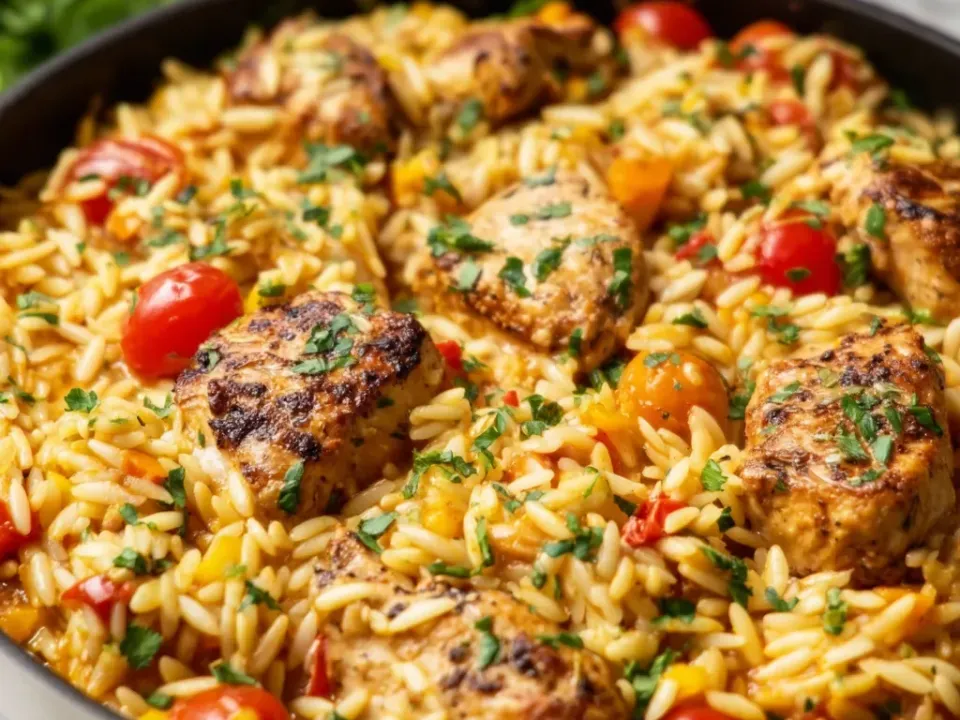
One deep skillet, forty-five minutes, and orzo that cooks in the broth rather than in a separate pot of water.
The restraint at the end is the point. Cream and Parmesan go in only in the last moments and only in the quantity needed to bring the orzo together — not to make a white, glossy sauce.
Why This Recipe Works
- Browning the thigh pieces first leaves fond in the pan that the orzo later cooks in.
- Cooking the orzo in three cups of broth means it absorbs flavour rather than water.
- Stirring often stops orzo settling and catching on the base of a dry-ish pan.
- Four minutes is enough for cherry tomatoes to soften while still looking fresh.
- Adding cream and Parmesan only at the end keeps the dish from turning into a cream sauce with orzo in it.
Ingredient Notes
- Fresh cherry tomatoes
- A cup and a half, halved, in for the last four minutes. Fresh, and they define this version — there are no sun-dried tomatoes in this recipe.
- Heavy cream
- A third of a cup against three cups of broth. Deliberately small: enough to make the orzo cohesive, not enough to make it look creamy.
- Yellow bell pepper
- One, diced, cooked with the onion at the start. It is visible in the finished skillet alongside the red of the tomatoes.
- Parsley
- A third of a cup, and the recipe says heavily. It is a green layer over the whole pan rather than a scattering.
How to Make It
Brown, then out
Season chicken with salt and pepper. Brown in olive oil in a deep skillet, then transfer to a plate.
Onion and yellow pepper
Cook onion and yellow pepper 3 minutes; add garlic and Italian seasoning for 30 seconds.
Orzo and broth together
Stir in orzo and broth. Return chicken and simmer gently, stirring often, 10 to 12 minutes.
Tomatoes for four minutes
Add cherry tomatoes for the final 4 minutes so they soften but remain fresh-looking.
Just enough cream
Stir in cream and Parmesan only at the end, using just enough to make the orzo cohesive rather than visibly white and heavily creamy.
165F, then parsley
Cook until chicken reaches 165 degrees Fahrenheit and orzo is tender; finish heavily with parsley.
How Little Cream Is Actually In This
The name promises a creamy dish and the recipe deliberately does not deliver one. Seen in proportion, the reason is obvious: the cream is the fifth-largest liquid ingredient and it goes in last.
- Low-sodium chicken broth3 cups
- Dry orzo1 1/2 cups
- Halved cherry tomatoes1 1/2 cups
- Heavy cream1/3 cup
- Grated Parmesan1/2 cup
- Chopped parsley1/3 cup
The bar is relative volume only. The orzo cooks in the broth, not in water, which is where its flavour comes from - and where nine tenths of the liquid goes. The cream is a third of a cup against three cups of broth and it is stirred in at the very end, using, in the recipe's own words, just enough to make the orzo cohesive rather than visibly white and heavily creamy. There are 1 1/2 cups of FRESH cherry tomatoes and no sun-dried tomatoes at all.
Success Tips
- Stir often during the ten to twelve minutes; orzo settles and sticks if it is left alone.
- Hold the cream back until the very end and add only what is needed.
- Give the tomatoes exactly their four minutes so they still look fresh.
Serving Ideas
Four servings from the dark skillet, the browned chicken thigh pieces sitting in orzo studded with the softened cherry tomatoes and diced yellow pepper, under heavy chopped parsley.
Frequently Asked Questions
Should there be sun-dried tomatoes in this?
No. This version is defined by fresh cherry tomatoes and orzo.
Why is it not very creamy?
Because it is not meant to be. A third of a cup of cream into three cups of broth binds the orzo without giving it a white, glossy sheen.
How is this different from the Cajun chicken orzo?
That one is Cajun-seasoned, tinted orange with tomato paste and deliberately creamy. This one is Italian-seasoned with fresh cherry tomatoes and yellow pepper, and restrained on the cream.