

Fish Recipes
New England Clam Chowder Recipe: Creamy, Cozy, and Irresistible!

There’s something magical about a steaming bowl of New England Clam Chowder that feels like a warm hug on a chilly day. I discovered this creamy coastal treasure during a weekend trip to Boston, where the scent of fresh seafood and rich broth wafted through a tiny harborside restaurant. The first spoonful—velvety, studded with tender clams and potatoes—transported me instantly. This classic American soup balances simplicity with incredible depth, making it perfect for both casual family dinners and impressive entertaining. Let me share my favorite version that captures all the authentic flavors you’d find along the New England coast.
Table of Contents
Recipe
Why You’ll Love This New England Clam Chowder
The Perfect Balance of Flavors and Textures
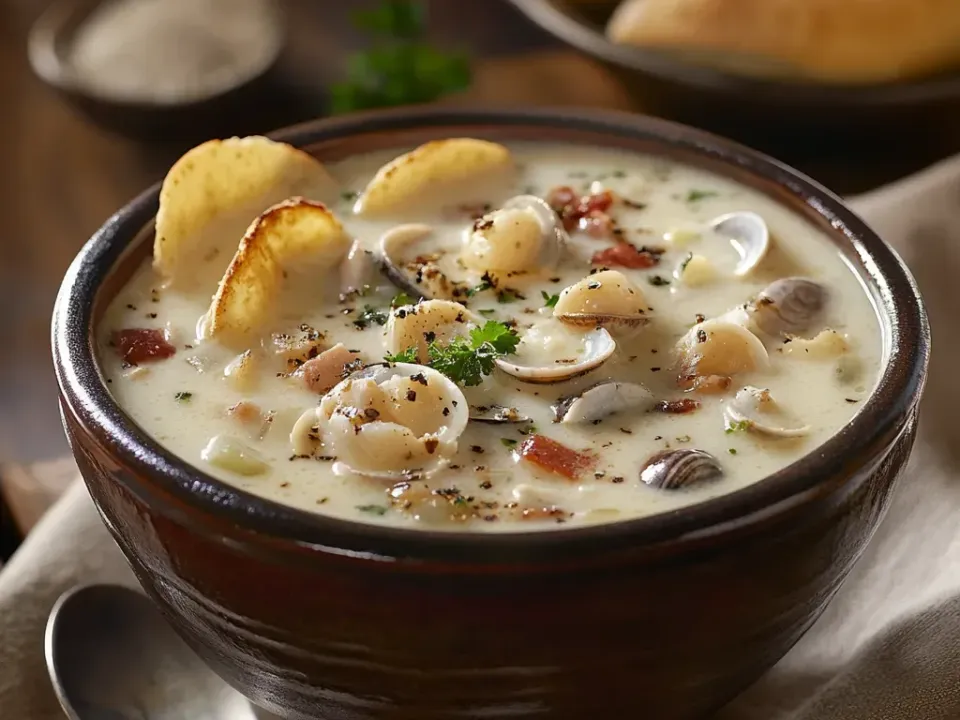
This New England Clam Chowder delivers incredible depth without complicated techniques. The briny sweetness of fresh clams mingles with smoky bacon and earthy potatoes, creating layers of flavor that develop with each spoonful. I love how the creamy base coats your spoon while chunks of potato and tender clams provide satisfying texture. Unlike some restaurant versions that rely on excessive thickeners, this homemade approach lets the natural ingredients shine through. The gentle hint of thyme and bay leaf elevates everything without overwhelming the delicate seafood essence.
A Surprisingly Simple Comfort Food
Don’t let its restaurant-quality reputation fool you—this New England Clam Chowder comes together with surprising ease. Even on my busiest weeknights, I can have this chowder simmering away in under 15 minutes of prep time. The ingredients are straightforward pantry and refrigerator staples, with the exception of fresh clams (though canned work beautifully too). What I particularly appreciate is how this recipe scales effortlessly, making it perfect for feeding just myself or a hungry crowd. The hands-off simmering time gives me space to prepare a simple side like my Creamy Cowboy Soup.
Essential Tips & Tricks
Selecting and Preparing Your Clams
The foundation of exceptional New England Clam Chowder begins with the clams themselves. Fresh clams should smell briny but never fishy, with tightly closed shells (or ones that close when gently tapped). I prefer littlenecks or cherrystones for their tender texture and sweet flavor. To clean fresh clams, soak them in cold water with a tablespoon of salt for 20 minutes—this encourages them to expel any sand. If using fresh clams seems daunting, high-quality canned clams make a fantastic substitute. Just be sure to reserve their juice—that liquid gold contains concentrated clam flavor that enriches your chowder beautifully.
Creating the Perfect Creamy Base
The signature velvety texture of authentic New England Clam Chowder comes from a careful balance. Start by rendering bacon slowly to release its smoky fat—this becomes the flavor foundation. When adding flour to make the roux, cook it just until it smells slightly nutty but hasn’t browned. This prevents a pasty taste while ensuring proper thickening power. For the dairy component, I find equal parts heavy cream and whole milk create the ideal richness without becoming too heavy. Add the dairy gradually while whisking to prevent curdling, and never allow the chowder to boil once the cream has been added—a gentle simmer preserves that silky smoothness.
Serving Ideas & Creative Variations
Perfect Pairings to Complete Your Meal
New England Clam Chowder shines brightest when served with thoughtfully chosen accompaniments. My absolute favorite pairing is a basket of warm sourdough bread with salted butter—the tangy bread is perfect for dipping into that creamy broth. For a complete seafood feast, consider serving smaller portions as a starter before my Maple Glazed Sheet Pan Salmon. A simple side salad with vinaigrette provides welcome brightness against the chowder’s richness. For serving, I love using shallow, wide bowls that showcase the chowder’s beautiful ingredients while allowing it to cool to the perfect eating temperature.
Delicious Twists on the Classic Recipe
While traditional New England Clam Chowder is perfect as is, I occasionally enjoy these creative variations. For a luxurious upgrade, add chunks of lobster meat or lump crab in the final minutes of cooking. When corn is in season, I love adding fresh kernels for sweet pops of texture and color. For a smoky-spicy twist, replace regular bacon with chorizo and add a pinch of smoked paprika. If you’re watching calories, you can substitute half the cream with unsweetened almond milk—you’ll maintain creaminess while lightening the overall richness. These small adaptations respect the chowder’s essence while letting you customize to your taste preferences.
Storage & Troubleshooting Guide
Proper Storage and Reheating Methods
New England Clam Chowder actually improves overnight as flavors meld, making it perfect for make-ahead meals. Store cooled chowder in airtight containers in the refrigerator for up to 3 days. When reheating, do so gently over medium-low heat, stirring occasionally to prevent scorching. You’ll likely need to add a splash of milk or cream as the chowder thickens considerably when chilled. For longer storage, freeze the chowder without the dairy components, then add fresh cream and milk when reheating. This prevents the unpleasant texture changes that can happen when dairy products freeze and thaw.
Fixing Common Chowder Challenges
Even experienced cooks occasionally encounter issues with New England Clam Chowder. If your chowder seems too thin, create a small amount of slurry (equal parts cornstarch and cold water) and whisk it in while the soup simmers. Conversely, if it’s too thick, gradually add warm milk or clam juice until reaching your desired consistency. Should your chowder break or appear slightly curdled, transfer a cup to a blender with a tablespoon of cold butter, blend until smooth, then whisk back into the pot. For clams that seem rubbery, they were likely overcooked—next time, add them later in the process or reduce your cooking time.
Frequently Asked Questions
Can I make New England Clam Chowder ahead of time?
Absolutely! It actually tastes better the next day. Store in the refrigerator for up to 3 days and reheat gently, adding a splash of cream if needed to maintain the creamy consistency.
What’s the difference between New England and Manhattan clam chowder?
New England Clam Chowder has a cream base, while Manhattan uses tomatoes for a red broth. New England is typically thicker and richer, while Manhattan has a more acidic, brighter flavor profile.
Can I use frozen clams instead of fresh?
Yes! Thawed frozen clams work well, especially when fresh aren’t available. Just be sure to include their juice for authentic flavor, and adjust your cooking time slightly as they may need less time to heat through.
What’s the best potato variety for chowder?
Yukon Gold potatoes are ideal because they hold their shape while still becoming tender. Their buttery flavor and waxy texture prevent them from dissolving into the chowder while cooking.
How can I make my New England Clam Chowder thicker?
For a thicker chowder, make a slurry with 1 tablespoon cornstarch and 2 tablespoons cold water. Whisk into the simmering chowder and cook for 2-3 minutes until it reaches your desired thickness.
Final Thoughts
This New England Clam Chowder recipe balances traditional techniques with accessible ingredients to create something truly special. I find myself returning to it throughout the year—not just on chilly evenings but whenever I crave that perfect combination of comfort and elegance. There’s something deeply satisfying about ladling steaming chowder into bowls for family and friends, watching their expressions as they take that first creamy, clam-studded spoonful. For more seafood inspiration, visit our Pinterest collection where I’ve gathered my favorite coastal recipes!