
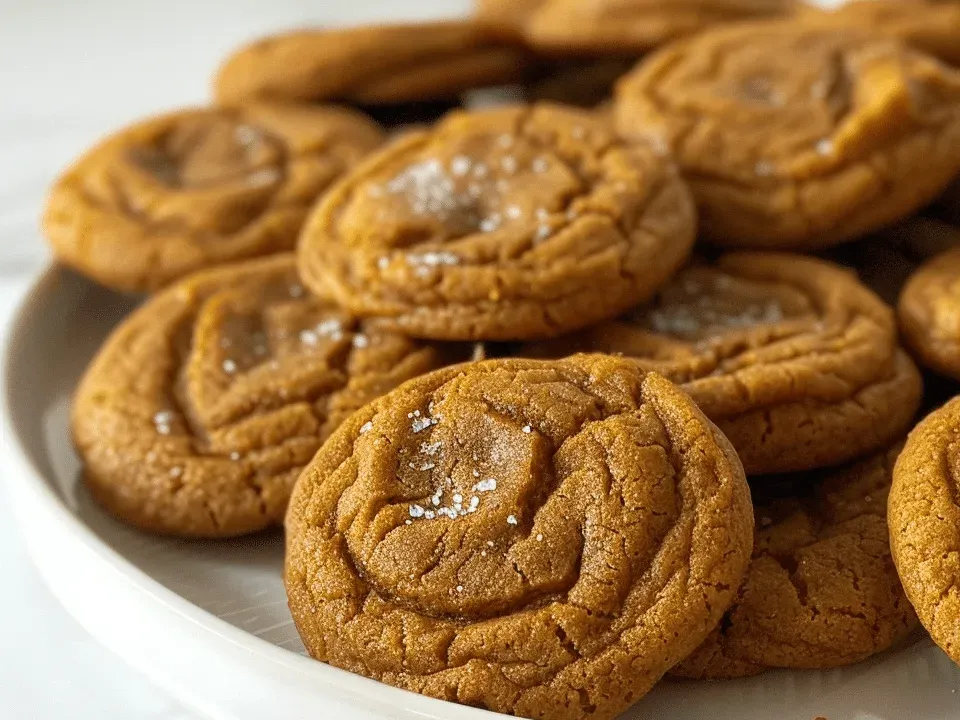
Soft pumpkin cookies that stay cookies rather than turning into little cakes, with maple in both the dough and the glaze.
Twenty minutes of work and 11 to 13 minutes a batch, for two dozen.
Why This Recipe Works
- Maple appears twice — two tablespoons in the dough and two more in the glaze. In the dough it is a background note; in the glaze it is the flavour you actually taste, because nothing has cooked it away.
- Brown sugar dominates the sugar mix at three quarters of a cup to a third. Molasses brings moisture and chew, which is what a soft cookie needs, while the granulated sugar gives enough structure to spread properly.
- A teaspoon each of cinnamon and pumpkin pie spice is generous for two cups of flour, and it needs to be — half a cup of pumpkin brings colour and moisture but very little flavour of its own.
- The pinch of salt in the glaze is doing the same work as salted caramel. A cup of powdered sugar with maple in it is very sweet, and a little salt is what stops it being cloying.
Why a Yolk and Not a Whole Egg
Pumpkin cookies have one famous failure mode: they come out cakey. Four decisions in this recipe push against that, and the most interesting is the one about the egg.
One yolk, no whiteDough that holds a scooped shape
Egg white is mostly water and it is what makes a pumpkin cookie puff into a small muffin. The yolk brings fat and emulsifying power without the water, so the dough stays dense and the cookie stays a cookie.
Only half a cup of pumpkinDough noticeably thicker than a batter
Restrained on purpose. Pumpkin puree is largely water, and recipes that use a whole can are the ones that bake into cake. Half a cup carries the flavour and the colour without flooding the dough.
Creamed butter, not meltedVisibly paler and fluffier after a few minutes
Softened butter beaten with both sugars forces air into the fat, and that air is the lift. It is also why there is no baking powder here — the creaming and a teaspoon of soda are doing the whole job.
Pulled at 11 to 13 minutesEdges set, centres still looking soft
The shorter end is usually right. These carry on setting on the hot sheet, so a cookie that looks properly done in the oven has already gone past. Underdone-looking centres are the target.
Ingredient Notes
- Egg yolk only
- One yolk, no white. It is the single most important choice in the recipe for texture.
- Pumpkin puree
- Half a cup, not a whole can. Puree rather than pie filling, and the modest quantity is deliberate.
- Maple syrup, twice
- Two tablespoons in the dough and two in the glaze. Not a duplication — the glaze is a separate component.
- Chopped pecans
- Half a cup, marked optional. They add crunch to a deliberately soft cookie and leaving them out changes nothing structural.
How to Make It
Whisk the dry ingredients
Whisk the flour, baking soda, cinnamon, pumpkin pie spice and salt.
Cream the butter and sugars
Cream the softened butter with the brown and granulated sugars.
Beat in the wet ingredients
Beat in the pumpkin puree, egg yolk, maple syrup and vanilla.
Combine
Combine with the dry ingredients and add the pecans if using.
Scoop
Scoop 2-tablespoon portions onto baking sheets.
Bake
Bake at 350°F for 11 to 13 minutes.
Cool
Cool the cookies completely.
Glaze
Whisk the powdered sugar, maple syrup, milk and pinch of salt, and glaze the cooled cookies.
Success Tips
- Soften the butter properly; do not melt it.
- Use the yolk only.
- Pull them while the centres still look underdone.
- Cool completely before glazing, or the glaze will vanish into the cookie.
Serving Ideas
Coffee or tea, and a cookie tin. They keep their softness better than most, which makes them a sensible choice when the baking happens a day before the eating.
Storage and Reheating
Refrigerate
Airtight at room temperature up to 5 days. The brown sugar and the yolk are what keep them soft that long.
Freeze
Freeze the scooped dough up to 3 months and bake from frozen with an extra minute or two. That works better than freezing baked cookies, whose glaze goes tacky.
Reheat
Not needed. Ten seconds in a microwave brings a day-old one close to fresh.
Frequently Asked Questions
Mine came out cakey rather than chewy.
Almost always too much moisture — a whole egg instead of the yolk, or extra pumpkin. Both are the classic causes, and this recipe is built specifically to avoid them. Measure the half cup of pumpkin rather than eyeballing it.
My glaze was too thin and ran off.
Start with one teaspoon of milk rather than two. The range exists because powdered sugar varies in how much it absorbs; add the second teaspoon only if the glaze is too stiff to drizzle.
The cookies spread flat.
The butter was too warm going in. Creaming needs softened butter, not melted or nearly melted — if the dough feels loose, chilling the scooped portions for fifteen minutes before baking will rescue the batch.