
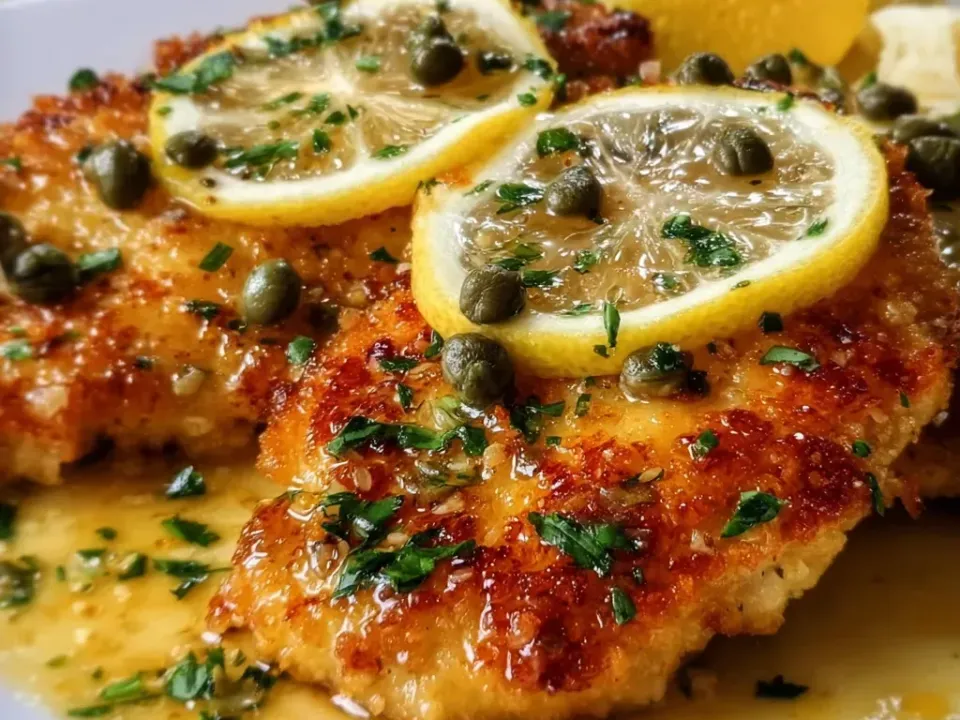
Twelve ingredients, one skillet, thirty-five minutes. The chicken is out of the pan before the sauce is even started, and comes back only to be coated.
A quarter cup of lemon juice is a lot of acid for half a cup of broth, and that is deliberate. The butter whisked in at the end is what holds it together.
Why This Recipe Works
- A light flour dredge gives the cutlets a surface that browns, and thickens the sauce slightly when the pan is deglazed.
- Thin cutlets cook in three to four minutes a side, so they colour before they dry.
- Twenty seconds of garlic on reduced heat is enough; the pan is still hot from frying and garlic burns fast in it.
- Whisking the second tablespoon of butter in at the end emulsifies the sauce so the lemon does not taste raw and sharp.
Ingredient Notes
- Capers
- Two tablespoons, drained. They are a defining part of this dish and are visible in every serving — not a seasoning to leave out.
- Lemon, juiced and sliced
- A quarter cup of juice for the sauce and a whole lemon thinly sliced to simmer in it. The slices soften in three minutes and stay on the plate.
- Butter, divided
- Two tablespoons split in half. One fries with the oil, one is whisked in at the end, and swapping them would give a different sauce.
How to Make It
Season and dredge
Season chicken with salt and pepper and dredge lightly in flour, shaking off excess.
Pan-fry golden
Heat olive oil and 1 tablespoon butter in a skillet over medium-high heat. Pan-fry cutlets 3 to 4 minutes per side until golden.
Out at 165F
Transfer chicken when it reaches 165 degrees Fahrenheit.
Build the pan sauce
Reduce heat to medium. Add garlic for 20 seconds, then broth, lemon juice, capers, and lemon slices. Simmer 3 minutes.
Butter to finish
Whisk in the remaining butter.
Coat and serve
Return chicken briefly to coat in the lemon-butter caper sauce and finish with parsley.
What the Sauce Is Balanced On
A piccata sauce is four things in tension, and every one of them is a named ingredient rather than an adjustment made by taste. Take any one away and the other three stop working.
- Acid1/4 cup fresh lemon juice, plus 1 lemon thinly sliced
- The largest single volume in the sauce after the broth, and the reason the dish is named for lemon rather than butter. The slices simmer for the same three minutes and stay in the finished dish.
- Salt2 tbsp capers, drained
- Capers season the sauce in a way salt alone cannot: sharp, briny bursts rather than an even background. They are a defining visible component of the plate.
- Fat2 tbsp unsalted butter, divided, and 2 tbsp olive oil
- One tablespoon of butter fries with the oil; the second is whisked in at the end, off the hardest heat, and is what emulsifies a quarter cup of lemon juice into a sauce instead of leaving it sharp and thin.
- Body1/2 cup low-sodium chicken broth and the flour dredge left in the pan
- The broth carries the volume and the flour that came off the cutlets thickens it slightly during the three-minute simmer. This is why the chicken is dredged lightly and the excess shaken off - too much would make it pasty.
The recipe's own final move is the balance: whisk in the remaining butter, then return the chicken briefly to coat rather than to cook.
Success Tips
- Shake off the excess flour — a heavy dredge gums up the sauce later.
- Take the chicken out at 165 rather than leaving it in while the sauce simmers; it returns only to be coated.
- Whisk the last butter in rather than stirring it, and off the hardest heat.
Serving Ideas
Four servings, two golden cutlets to a white plate, spooned over with the lemon-butter sauce so the capers and softened lemon slices land on top, then finished with parsley.
Frequently Asked Questions
Can I leave the capers out?
No. Capers are one of the defining visible components of this dish; without them it is a lemon-butter chicken, not a piccata.
Can the chicken simmer in the sauce instead?
It should not. The cutlets are dredged and pan-fried for their golden surface, and three minutes back in a simmering sauce would soften it.
Is a quarter cup of lemon juice too much?
It is the right quantity, and the butter whisked in at the end is what balances it. Reducing the acid without reducing the butter changes the sauce.