
Twelve ingredients and thirty minutes, with two visits to a very hot oven.
The glaze goes on after the first cook, not before — honey at 450 degrees would burn long before the fish was done.
Why This Recipe Works
- Inch cubes give enough surface for edges to char while the centres stay moist.
- A single layer is what lets every face meet dry heat rather than steam.
- Cooking before glazing keeps the honey from scorching over a long roast.
- A brief simmer thickens the glaze so it clings to a cube rather than running off.
- One to two minutes back under high heat caramelises without overcooking the fish.
Ingredient Notes
- Skinless salmon fillet
- A pound and a half, cut into one-inch cubes. It is salmon even though the finished glaze covers every face of the fish.
- Honey
- Three tablespoons, and the largest measure in the glaze. It goes on after the first cook — honey under a 450 degree roast would blacken.
- Hot sauce and red pepper flakes
- A tablespoon and half a teaspoon. Two forms of heat: one liquid and sharp, one dry and slower.
- Extra hot-honey glaze
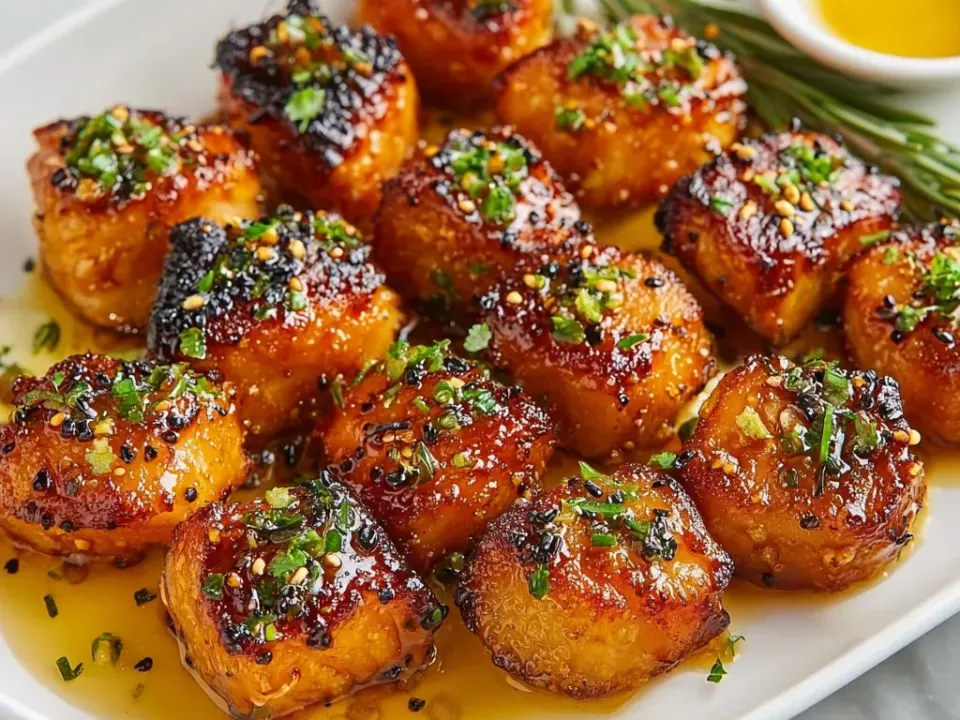
- A small dish alongside. It is a serving element rather than an optional extra, and it is in the photograph.
How to Make It
450°F oven or 400°F air fryer, cubes oiled
Heat oven to 450°F or air fryer to 400°F. Toss salmon cubes with oil, salt, and pepper.
One layer, cooked until edges begin to char
Cook in a single layer until browned and beginning to char at the edges.
The glaze, simmered briefly to amber
Simmer honey, hot sauce, vinegar, red pepper flakes, and sesame oil briefly into an amber glaze.
Glazed, then back to high heat for a minute or two
Brush or toss the salmon cubes with glaze and return to high heat 1 to 2 minutes to caramelise all visible faces. Cook fish to 145°F or until opaque and easily flaked.
Sesame, herb, and a dish of glaze alongside
Finish with sesame and chopped herb and serve with a small dish of extra glaze. Do not add rice or vegetables.
The One Dish Where You Cannot Look
Most fish recipes let you judge doneness by eye - salmon turns from translucent to opaque and you can see it happen. Not here. These cubes are GLAZED AND PART-CHARRED ON EVERY VISIBLE FACE, so completely that you cannot see the salmon underneath at all. Which means the check has to come from a thermometer or a fork, not from a glance.
- Cut to ONE INCH, evenly1 1/2 lb of SKINLESS salmon fillet in 1-INCH CUBES. Even sizing matters more than usual when you cannot see inside: a batch of mixed cubes finishes at different moments, and the small ones will be dry by the time the large ones are safe. One inch is also the size that gives enough surface area to char while the centre stays moist.
- The FIRST cook - dry heat, single layer, NO glaze yetTossed with 1 tbsp oil, 1/2 tsp salt and 1/4 tsp pepper, then cooked at 450F in the oven or 400F in an air fryer in a SINGLE LAYER until BROWNED AND BEGINNING TO CHAR AT THE EDGES. Glaze is deliberately absent at this stage: 3 tbsp of honey held at 450F for the length of a full roast would blacken and turn bitter long before the fish was ready. And single layer is not a suggestion - stacked cubes release steam onto each other and never char.
- The glaze, built while the fish cooks3 tbsp honey, 1 tbsp hot sauce, 1 tsp cider vinegar, 1/2 tsp red pepper flakes and 1 tsp toasted sesame oil, simmered BRIEFLY into an AMBER glaze. Briefly is the whole instruction - honey reduced too far sets hard as it cools and will not brush onto anything.
Check before you continue
145°F, or opaque and separating easily with a fork — Instant-read thermometer in a cube, or a fork
This is the safety standard for the dish, and the reason it needs stating at all is the glaze. On any other salmon dish the flesh tells you where it is; here every face is dark caramelised and part-charred, so a cube that LOOKS finished and one that is genuinely at temperature are indistinguishable. Take the reading. If a thermometer is awkward in a 1-inch cube, break one open - opaque throughout and separating easily is the same standard expressed the other way.
- Glazed, then 1 TO 2 MINUTES back under high heatBrushed or tossed with the glaze and returned to CARAMELISE ALL VISIBLE FACES. One to two minutes and no more: it is enough for honey to catch and darken, and short enough that a fish already at temperature does not dry out. This is the step that produces the surface the photograph shows - and it is also the step that makes the checkpoint above necessary.
- Sesame, herb, chilli2 tsp sesame seeds and 2 tbsp of chopped parsley or coriander. Neither is named in the title and both are visible components of the finished platter, along with the chilli from the glaze.
- A SMALL DISH of extra glaze, and nothing elseThe extra glaze is part of the serving, not a suggestion - it sits beside the platter. Step 5 closes the rest: no rice, no vegetables, no other starch.
Success Tips
- Cut the cubes evenly at an inch; smaller ones overcook while larger ones are still raw.
- Give them space in a single layer — crowded cubes steam and never char.
- Watch the second visit to the heat closely; a honey glaze goes from amber to burnt fast.
Serving Ideas
Four servings on a white platter, the cubes dark caramelised and part-charred in a pooled amber glaze, scattered with chopped herb, sesame and chilli, with a small dish of extra glaze alongside. No rice and no vegetables.
Frequently Asked Questions
How do I tell when the salmon is cooked?
By temperature or by texture — 145 degrees Fahrenheit, or opaque and separating easily with a fork. The glaze covers every face, so colour will not tell you.
Why glaze after cooking rather than before?
Three tablespoons of honey would burn well before the salmon was done at 450 degrees. Glazing at the end gives one to two minutes of caramelising instead.
What is served with it?
A small dish of extra glaze, and that is all — step 5 rules out rice and vegetables.