
Ten ingredients and thirty-five minutes, most of it slicing.
The salmon takes about five minutes in the pan. Everything else is prepared cold and arranged around it.
Why This Recipe Works
- Patting the cubes dry is what lets them brown before the glaze goes in.
- Searing first and glazing second gives a lacquer rather than a boiled coating.
- Cutting salmon into cubes means every piece has caramelised surface on it.
- Cool avocado and cucumber against hot glazed fish is the point of the bowl.
- Pouring the remaining pan glaze over the rice carries the flavour down through it.
Ingredient Notes
- Skinless salmon, cut into 1-inch cubes
- A pound and a quarter. Cubes rather than fillets — the whole point is caramelised surface on every side of every piece.
- Honey with soy sauce, rice vinegar and sesame oil
- Two tablespoons, two tablespoons, a teaspoon and a teaspoon. Whisked cold and added to the pan only once the cubes have browned.
- Cooked short-grain white rice
- Two cups. Short-grain specifically — it holds together under the glaze rather than scattering loose in the bowl.
- Avocado, cucumber and shredded greens
- One, one, and two cups. All three raw and all three visible; the title names none of them.
How to Make It
Honey, soy, rice vinegar and sesame oil whisked
Whisk honey, soy sauce, rice vinegar, and sesame oil.
Cubes patted dry, seared, then turned in the glaze
Pat salmon cubes dry and sear in a hot lightly oiled skillet until browned; add the glaze and turn until lacquered.
Cooked to 145°F or opaque, then removed promptly
Cook salmon to 145°F or until opaque and separating easily; remove promptly so the cubes stay moist.
Rice divided, avocado, cucumber and greens arranged alongside
Divide white rice among bowls and arrange avocado, cucumber, and shredded greens alongside.
Salmon added, pan glaze spooned over, sesame scattered
Add glazed salmon cubes, spoon over any remaining pan glaze, and scatter with sesame seeds.
Served immediately
Serve immediately.
Five Minutes Hot, Everything Else Cold
This is a composed bowl, not a plate of salmon bites: what is UNDER and AROUND the fish matters as much as the fish itself. So the bowl is built in four parts, and only one of them ever meets heat.
The glaze - WHISKED COLD, and held back
2 tbsp HONEY, 2 tbsp LOW-SODIUM SOY SAUCE, 1 tsp RICE VINEGAR and 1 tsp SESAME OIL whisked together before the pan is even hot. It waits. Honey at searing temperature scorches long before salmon browns, so this goes in AFTER the cubes have colour and not a moment earlier. Low-sodium soy is specified because the glaze reduces in the pan and concentrates as it does.
The salmon - PATTED DRY, SEARED, then LACQUERED
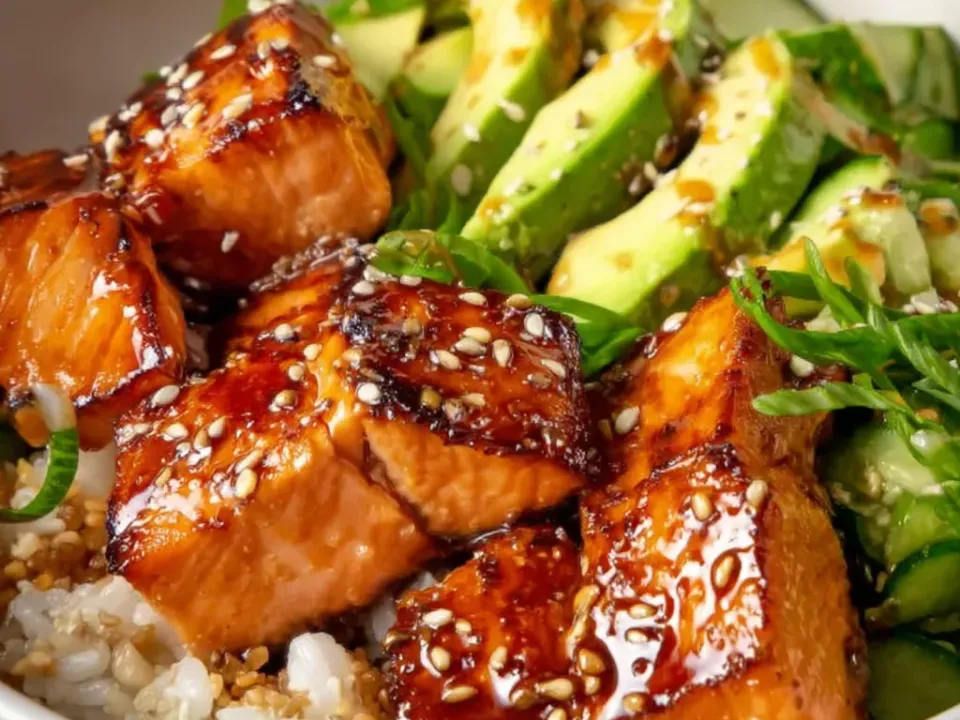
1 1/4 lb of SKINLESS SALMON in 1-INCH CUBES, PATTED DRY and SEARED in a HOT LIGHTLY OILED SKILLET UNTIL BROWNED. Dry is not a nicety - surface moisture boils off first and a wet cube steams itself pale. Then the glaze goes in and the cubes are TURNED UNTIL LACQUERED, a dark amber surface on every face. Cubes rather than a fillet exist precisely so there are six glazed faces per piece.
The RICE - short-grain, white, and the base of the bowl
2 cups of COOKED SHORT-GRAIN WHITE RICE DIVIDED AMONG BOWLS. This is the component that makes it a bowl rather than a plate of bites. Short-grain holds together under a glaze; long-grain scatters and the drizzle runs to the bottom. It is FLECKED WITH SESAME.
The COLD THIRD - avocado, cucumber, shredded greens
1 sliced AVOCADO, 1 sliced CUCUMBER and 2 cups of SHREDDED GREEN CABBAGE OR LETTUCE ARRANGED ALONGSIDE - alongside rather than mixed in, in visible sections. The title names none of these three and all three are part of the bowl. They are also the reason the bowl works: cool crisp raw vegetable against hot lacquered fish is the whole contrast the dish is built on.
SALMON COOKED TO 145°F OR UNTIL OPAQUE AND SEPARATING EASILY, then REMOVED PROMPTLY SO THE CUBES STAY MOIST - cubes cook quickly, so for safety CHECK THE LARGEST PIECE FIRST. Glazed cubes added to the built bowls, ANY REMAINING PAN GLAZE SPOONED OVER, and 2 tsp of SESAME SEEDS SCATTERED. SERVE IMMEDIATELY: the greens wilt under warm glaze and the avocado darkens, so this bowl is assembled to be eaten rather than held.
Success Tips
- Pat the cubes genuinely dry; wet salmon steams instead of searing.
- Add the glaze after the browning, not before — honey burns at searing heat.
- Check the largest cube first, and take the pan off as soon as it reads.
Serving Ideas
Four bowls of short-grain white rice with lacquered dark amber salmon cubes, sliced avocado, sliced cucumber and shredded greens, drizzled with the remaining pan glaze and scattered with sesame seeds.
Frequently Asked Questions
Can I serve the salmon on its own instead?
Not as this recipe. It is a composed bowl — rice underneath, avocado, cucumber and shredded greens alongside.
How do I know when the cubes are done?
145 degrees Fahrenheit, or opaque and separating easily with a fork. Cubes cook far faster than a fillet, so check the largest piece first and take them off the heat as soon as it reads.
Why add the glaze after searing?
Honey scorches at the heat needed to brown salmon. Searing dry first and adding the glaze after gives you both a browned surface and a lacquer that stays amber rather than turning bitter.