
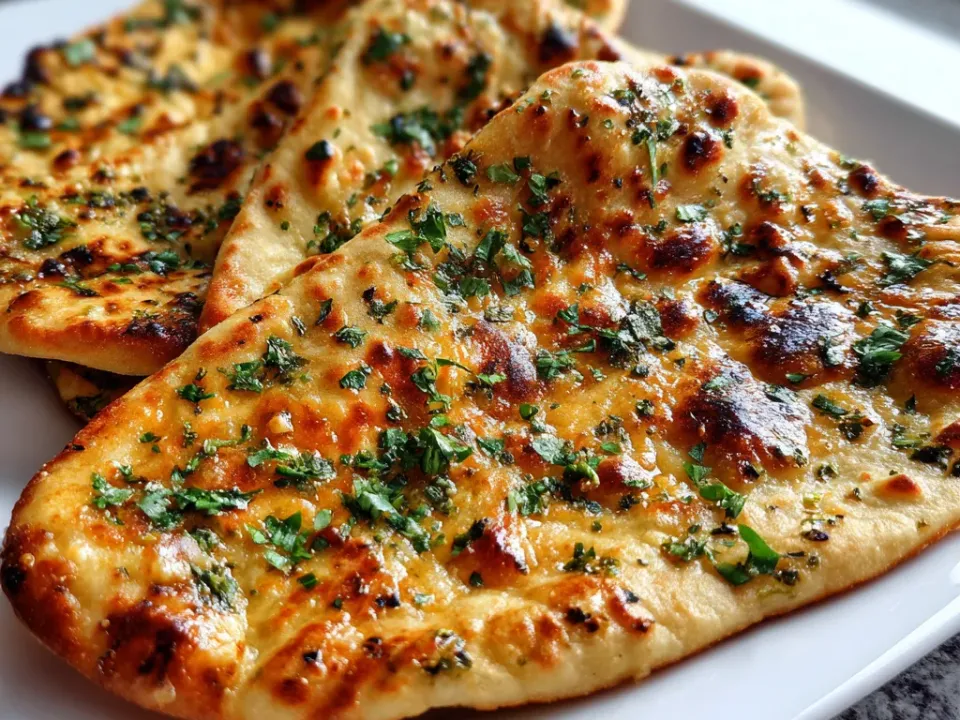
A gluten-free flour blend with psyllium husk powder, baking powder, baking soda, salt and sugar, brought together with Greek yogurt, warm milk, olive oil and cider vinegar into a soft dough.
It rests ten minutes while a cast-iron skillet heats, then is divided into eight, rolled between parchment and cooked one at a time until blistered, with melted ghee brushed on after the flip.
Why This Recipe Works
- Psyllium husk in place of gluten. A tablespoon of it is what gives the dough enough structure to be rolled thin and lifted into a pan without tearing, and the thirty-second knead and ten-minute rest are there to hydrate it.
- Greek yogurt, thick rather than pourable. Three-quarters of a cup adds moisture, softness and acidity all at once, which is why the recipe wants a thick dairy-free yogurt if you swap it.
- Cider vinegar or lemon juice against baking soda. That is the reaction doing the lifting here — there is no yeast anywhere in the list, which is why there is no proving time.
- Rolled between two sheets of parchment. Gluten-free dough sticks to everything and cannot be floured heavily without going dry; the parchment sandwich is how you get an even quarter inch.
- The ghee goes on the cooked side, after the flip. Brushing raw dough would burn the fat before the naan was through; brushing the cooked face lets it soak in while the second side colours.
- The heat is adjusted between breads at step 10 — medium to medium-high, to maintain steady browning. A cast-iron pan climbs as it sits, and eight naan cooked at one setting would go from pale to scorched.
Gluten-Free Dough, Handled In Five Moves
A gluten-free flatbread has no gluten network to trap steam, so everything that makes this pliable rather than crumbly happens in how the dough is hydrated and how hard the pan is. Five stages, in order.
Combine dryWhisked, not stirred — the raising agents have to be evenly through
The flour blend, psyllium husk powder, baking powder, baking soda, salt and sugar whisked together before any liquid.
Bring togetherSoft dough, added liquid in teaspoons
A well made in the centre, then yogurt, warm milk or water, olive oil and vinegar stirred in with a spatula until a soft dough forms. Extra liquid a teaspoon or two at a time if it is dry.
Hydrate30 seconds kneading, 10 minutes resting
Kneaded gently in the bowl for thirty seconds, then covered and rested for ten minutes while the pan heats.
Portion and roll1/4 inch thick, 5–6 inches wide
Divided into 8 portions of 60–65g, kept under a towel, and each rolled between two sheets of parchment to a quarter inch, about 5–6 inches wide.
Cook and brush1–2 minutes per side
One at a time in a lightly oiled hot skillet until bubbles form and the underside has deep golden spots, then flipped, brushed with ghee and pressed gently with a spatula.
How to Make It
Whisk the dry ingredients
Whisk the gluten-free flour, psyllium husk powder, baking powder, baking soda, salt and sugar in a large bowl.
Add the wet
Make a well; add the yogurt, warm milk or water, olive oil and vinegar. Stir with a spatula until a soft dough forms. If dry, add 1–2 teaspoons liquid at a time.
Knead briefly and rest
Knead the dough gently in the bowl for 30 seconds to hydrate the psyllium. Cover and rest 10 minutes while you heat the pan.
Heat the skillet
Preheat a cast-iron or heavy skillet over medium-high heat for 3–4 minutes. Lightly oil the surface.
Divide into eight
Divide the dough into 8 equal portions, about 60–65g each. Keep covered with a towel to prevent drying.
Roll and top
Roll or pat each portion between two sheets of parchment to 1/4-inch thickness, about 5–6 inches wide. Sprinkle nigella, sesame or minced garlic on top and press lightly to adhere, if using.
First side
Cook one naan at a time: lay it in the hot skillet and cook 1–2 minutes until bubbles form and the underside has deep golden spots.
Flip and brush
Flip; brush the cooked side with melted ghee or olive oil. Cook 1–2 minutes more, pressing gently with a spatula for even char.
Keep them warm
Transfer to a towel-lined plate to keep warm. Brush with more ghee and sprinkle cilantro and a pinch of salt, if desired.
Repeat, adjusting the heat
Repeat with the remaining dough, adjusting the heat to maintain steady browning — medium to medium-high.
Optional broiler method
Place the rolled naan on a preheated baking steel or sheet under the broiler for 60–90 seconds per side until blistered.
Serve
Serve warm with curry, soups or dips. Store leftovers covered once cool.
Ingredient Notes
- Gluten-free all-purpose flour blend (with xanthan gum)
- Two cups, 260g, and the parenthesis matters — a blend without xanthan gum behaves differently and the recipe adds none separately.
- Psyllium husk powder (fine)
- One tablespoon, fine rather than whole husk. It is the structure in this dough and the reason for the thirty-second knead and ten-minute rest.
- Plain Greek yogurt (or thick dairy-free yogurt)
- Three-quarters of a cup. Thick is the operative word in the swap; a thin yogurt changes the hydration the rest of the recipe is set against.
- Apple cider vinegar or lemon juice
- A tablespoon. It reacts with the half teaspoon of baking soda — this is the lift, in a dough with no yeast.
- Melted ghee or butter (or olive oil) for brushing
- Two tablespoons, brushed on the cooked side after the flip and again on the plate. Not a cooking fat — the pan is only lightly oiled.
- Optional toppings
- Nigella seeds, sesame, minced garlic and coriander, all listed as optional. Seeds and garlic are pressed into the raw side before cooking; coriander goes on at the end.
Success Tips
- Weigh the eight portions rather than eyeballing them.
- Roll between parchment — flouring gluten-free dough dries it out.
- Wait for bubbles and dark spots before the first flip.
- Keep the unrolled portions under a towel while you work.
- Drop the heat a notch if the fourth naan is colouring faster than the first.
Serving Ideas
Curry, soups or dips, as the recipe's own last step suggests. They are best straight off the pan, which is why the towel-lined plate is part of the method rather than an afterthought.
Storage and Reheating
Refrigerate
Store leftovers covered once cool, as the recipe says. They stay pliable for a day at room temperature; refrigerating firms them up.
Freeze
Freeze cooled naan interleaved with parchment for up to 2 months. Reheat from frozen rather than thawing on the counter.
Reheat
A dry hot skillet for thirty seconds a side brings the blisters back. A microwave softens them but loses the char.
Frequently Asked Questions
Can I leave out the psyllium husk?
It is the structural ingredient in this dough — the thing standing in for gluten. Without it the dough will not roll thin or lift into the pan in one piece.
Can this be made dairy-free?
The recipe already names the swaps: thick dairy-free yogurt, dairy-free milk or water, and olive oil in place of the ghee for brushing.
Why is there no yeast or rising time?
The lift comes from baking powder and baking soda reacting with the vinegar and yogurt. The ten-minute rest is for hydrating the psyllium, not for proving.
What if I have no cast-iron pan?
Any heavy skillet, preheated 3–4 minutes as the recipe says. The recipe also offers a broiler method: 60–90 seconds a side on a preheated steel or sheet.