
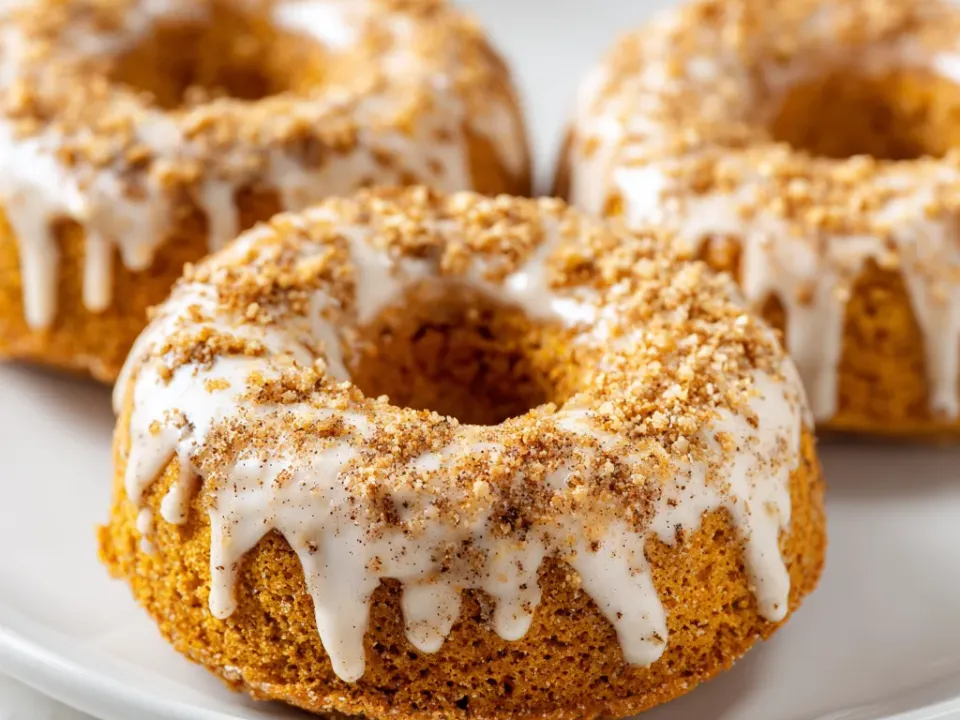
Baked in a donut pan rather than fried, which means no oil thermometer, no draining, and a batch out of the oven about thirty minutes after you start.
The spice mix does the heavy lifting: cinnamon, nutmeg, cloves and ginger against pumpkin puree and brown sugar.
Why This Recipe Works
- Brown sugar rather than all white keeps the crumb moist — it holds onto water in a way granulated sugar does not, which matters in a gluten-free bake.
- Three quarters of a cup of pumpkin puree is both flavour and moisture, so the batter needs less fat than a plain donut and still bakes soft.
- Baking at 350°F in a shallow cavity means twelve minutes total, short enough that the outside never dries out waiting for the middle.
- Two finishes from one batter: cinnamon sugar brushed on warm, or a maple glaze once cooled. The donut itself is not sweet enough to need both.
Five Places It Goes Wrong
Gluten-free batter has no gluten network to hide a mistake in. Each of these has a moment where you can still catch it.
Measuring the flour
245g on a scale, or spooned and levelled rather than scooped
A scooped cup can carry a third more flour than a spooned one. This is the difference between tender and dry, and it is decided before anything is mixed.
Folding wet into dry
Stop while a few small lumps remain
Overmixing a gluten-free batter turns it gummy. There is no gluten to develop, so extra mixing buys nothing and costs texture.
Filling the pan
Two thirds full, no more
Overfilled cavities close over the centre hole and bake unevenly, and you lose the ring shape the pan exists for.
Straight into a hot oven
Oven fully preheated, batter piped just before baking
Batter that stands loses its lift, and a cool oven lets it spread before it sets. Both show up as collapsed donuts.
At 10 minutes
Tops spring back, or 205°F internal
Start checking early rather than trusting the clock. The window between done and dry is short in a shallow cavity.
Ingredient Notes
- Gluten-free flour blend
- Must contain xanthan gum. A blend without it has nothing holding the crumb together and the donuts fall apart on the rack.
- Pumpkin puree
- Plain puree, not pie filling. Pie filling is pre-sweetened and much wetter, and it is the usual cause of a batter that pours instead of falling.
- Room-temperature eggs and milk
- They emulsify into the sugar and oil instead of seizing the fat. Cold ingredients give a slightly coarser crumb.
- The two finishes
- Cinnamon sugar needs the butter brush to stick and works on warm donuts. Maple glaze needs cooled ones or it slides straight off.
How to Make It
Heat the oven and prepare the pans
350°F (175°C). Grease two 6-cavity donut pans, or use a baking spray that contains flour.
Whisk the dry ingredients
Gluten-free flour blend, baking powder, baking soda, cinnamon, nutmeg, cloves, ginger and salt.
Mix the wet ingredients
In a second bowl, whisk both sugars with the eggs until smooth, then whisk in the pumpkin puree, oil, milk and vanilla.
Fold, gently
Add the dry to the wet and fold until just combined. A few small lumps are fine and are better than a smooth, overworked batter.
Fill and bake
Spoon or pipe into the cavities, two thirds full. Bake 10 to 12 minutes, until the tops spring back or a tester comes out clean.
Cool before finishing
Five minutes in the pan, then onto a rack. Warm donuts take cinnamon sugar; cooled ones take glaze.
Finish
For cinnamon sugar, brush warm donuts with melted butter and toss to coat. For maple glaze, whisk powdered sugar, maple syrup, vanilla, salt and milk until smooth, then dip and let set.
Success Tips
- Pipe the batter from a zip-top bag with a corner snipped off. It fills the ring evenly, which a spoon struggles to do.
- Replace baking powder and soda every three to six months. Flat, unevenly risen donuts are often just tired leavening.
- Check at 10 minutes even if the recipe says 12. Ovens vary more than batters do.
- If the batter looks thin, confirm it was puree and not pie filling before adding a tablespoon or two more flour.
Serving Ideas
Best the day they are baked, with coffee, chai or hot cider — the warm spices suit all three. On a brunch board they hold their own next to yogurt and fresh pears.
Storage and Reheating
Refrigerate
Airtight at room temperature for 1 to 2 days, with a paper towel in the container to absorb moisture. Glazed donuts keep up to 5 days refrigerated.
Freeze
Freeze unglazed up to 2 months, in a single layer first and then bagged. Add cinnamon sugar or glaze after thawing rather than before.
Reheat
300°F oven for 5 to 7 minutes, or an air fryer at 320°F for 3 to 4. A microwave works in a pinch but softens a sugar coating.
Frequently Asked Questions
Do I need a donut pan?
It gives the right shape and an even bake, and the 2/3-full rule depends on it. A muffin pan works in a pinch — bake a few minutes longer, since the batter sits deeper.
Why did mine come out dense?
Almost always too much flour or too much mixing. Weigh the flour at 245g and fold only until combined. Both mistakes happen before the pan goes in the oven, so neither can be corrected by baking longer.
Can I make them dairy-free?
Yes. Use a plant milk and dairy-free butter for the coating or glaze. The donut itself contains no dairy beyond the milk, so nothing else changes.
Can I make them without eggs?
Use two flax eggs — 2 tablespoons ground flax with 5 tablespoons water, rested 5 minutes. Expect a slightly denser, moister crumb, since the eggs were doing some of the lifting.