
A full tablespoon of freshly grated ginger leads the glaze, whisked with low-sodium soy sauce, rice vinegar, honey, garlic and sesame oil.
Two tablespoons of that mixture are brushed on the salmon as it finishes searing; the rest is simmered with a cornstarch slurry into a glossy glaze spooned over at the table.
How to Make It
Ginger-soy mixture whisked, 2 tbsp set aside
Whisk the soy sauce, rice vinegar, honey, ginger, garlic and sesame oil. Set aside 2 tbsp of the mixture for brushing.
Asparagus cooked, rice kept warm
Steam or sauté the asparagus until crisp-tender and keep the cooked white rice warm.
Salmon seared to 145°F and brushed
Heat the oil in a skillet over medium-high heat. Sear the salmon until browned and 145°F in the centre, brushing with the reserved ginger-soy mixture in the final minute.
Remaining mixture thickened into a glaze
Pour the rest of the ginger-soy mixture into a small saucepan, bring it to a simmer and whisk in the cornstarch slurry until glossy and lightly thickened.
Glazed, garnished and served with rice, asparagus and lemon
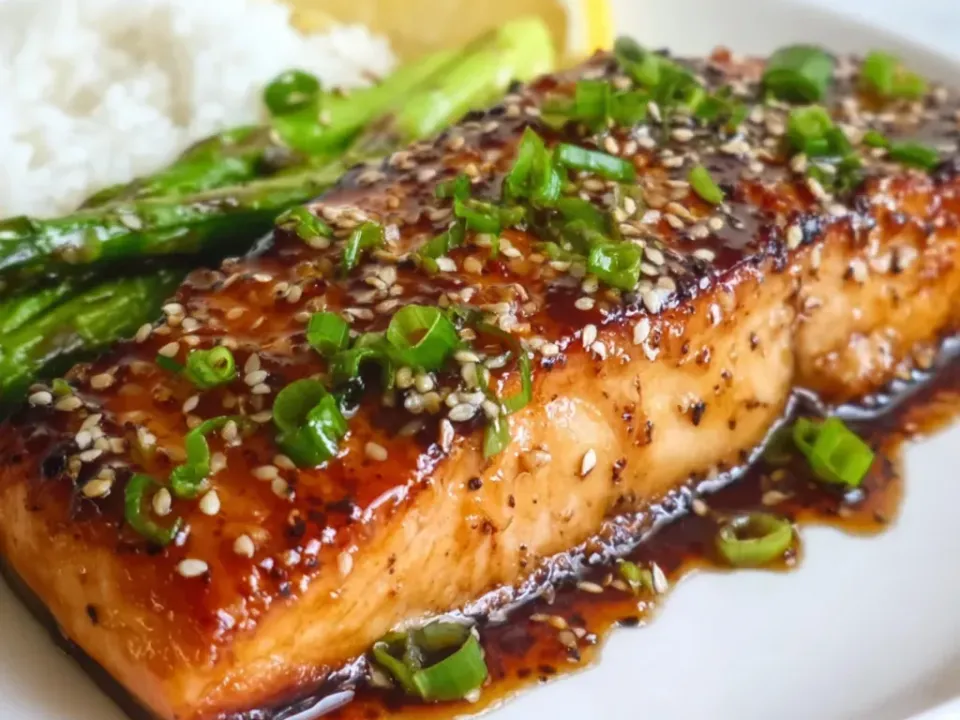
Spoon the glaze over the salmon, finish with sesame seeds and green onions, and serve with the white rice, asparagus and lemon wedges.
What Goes on the Plate
Each plate is built from four parts.
Finish
Sesame seeds, green onions and a lemon wedge on the side.
Salmon
A seared fillet at 145°F under the glossy ginger-soy glaze.
Asparagus
Steamed or sautéed spears, crisp-tender.
White rice
A mound of warm cooked white rice.
Ingredient Notes
- Fresh ginger
- One tablespoon, finely grated, is the main flavour of the glaze.
- Low-sodium soy sauce
- Three tablespoons. Soy is a declarable allergen.
- Asparagus, rice and lemon
- Twelve ounces of asparagus, three cups of cooked white rice and a lemon in wedges complete the plate.
Frequently Asked Questions
Is this a teriyaki glaze?
No. It is a ginger-forward soy glaze sweetened with honey and sharpened with rice vinegar, with no mirin.
How do I know the salmon is cooked?
It reaches 145°F in the centre, or is opaque and flakes easily.
What allergens does it contain?
Soy from the soy sauce and sesame from the oil and seeds.
Why This Recipe Works
- Setting aside some of the mixture before it touches the fish keeps the brushing and the glaze separate.
- Brushing only in the final minute lets the honey caramelise without scorching.
- A small cornstarch slurry turns the thin mixture into a glaze that clings to the salmon.
- Rice vinegar keeps the glaze bright against the honey and soy.
Success Tips
- Grate the ginger on a fine grater so it melts into the glaze.
- Pat the salmon dry before searing for a better crust.
- Whisk the slurry in slowly and stop once the glaze coats a spoon.
Serving Ideas
Plate each fillet beside a mound of white rice and a bundle of asparagus, spoon the glaze over the salmon, and add a lemon wedge.