
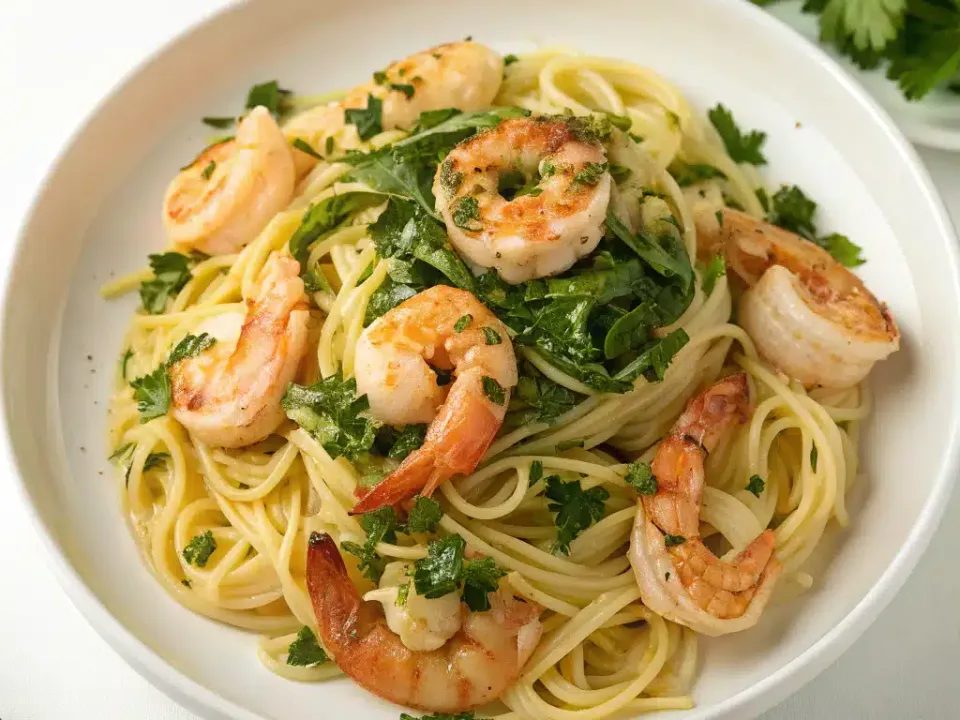
The sauce in this pasta is butter and wine, and butter and wine do not naturally combine into anything glossy. What makes them do it is half a cup of hot, starchy pasta water and vigorous tossing.
That is why the recipe tells you to reserve three quarters of a cup and hold some back. The sauce is adjusted in the pan, at the end, by how much of it goes in.
Why This Recipe Works
- Patting the shrimp very dry is what allows a sear in 1 to 2 minutes a side; wet shrimp steam instead and turn rubbery waiting for colour.
- Removing the shrimp before the garlic goes in means they are not sitting in the pan through the deglaze and the reduction.
- Deglazing with wine lifts the browned bits the shrimp left, so the sauce carries the sear rather than starting from plain butter.
- Starch in the reserved pasta water is the emulsifier — it is what lets butter and wine hold together as one glossy sauce.
Ingredient Notes
- Dry white wine
- Half a cup, with low-sodium chicken stock offered as the alternative. It is the deglazing liquid, not a flavour poured over at the end.
- Lemon, zest and juice
- A teaspoon of zest and 2 tablespoons of juice, both added after the reduction rather than during it.
- Heavy cream
- A quarter cup, optional. Without it the sauce is a butter emulsion; with it the dish becomes a creamy one.
How to Make It
Cook the pasta, keep the water
Boil the spaghetti or linguine in well-salted water until al dente, and reserve 3/4 cup of the cooking water before draining.
Dry and season the shrimp
Pat the shrimp very dry, then season with half a teaspoon of salt and a quarter teaspoon of pepper.
Sear and remove
Heat a tablespoon of butter with the olive oil over medium-high and sear the shrimp 1 to 2 minutes per side until just opaque. Take them out.
Bloom the garlic
Drop the heat to medium, add the remaining butter, and cook the garlic and red pepper flakes 30 to 45 seconds until fragrant. Any longer and the garlic turns bitter.
Deglaze and add lemon
Pour in the wine or stock, scraping up the brown bits, and simmer 1 to 2 minutes to reduce slightly. Add the lemon zest and juice.
Toss the pasta in
Add the drained pasta and half a cup of hot pasta water, and toss vigorously until the sauce turns glossy and emulsified. Vigorously is the operative word.
Bring it together
Return the shrimp and their juices, add the Parmesan and parsley, and toss, loosening with more pasta water as needed. Season with the remaining salt and pepper.
Optional cream
For a creamy version, stir in a quarter cup of heavy cream. Serve with extra Parmesan and lemon wedges.
One Pan, Four Stages
Everything after the pasta happens in a single skillet, and each stage leaves something behind for the next one.
The sear
1-2 minutes per side, just opaque1 tbsp butter, 1 tbsp olive oil, 1 lb dried shrimp
Browned bits stuck to the pan, which are the foundation of the sauce.
The aromatics
30-45 seconds, fragrant2 tbsp butter, 5 cloves garlic, red pepper flakes
Garlic flavour infused into the fat rather than scattered raw over the finished dish.
The deglaze
Simmer 1-2 minutes to reduce slightly1/2 cup dry white wine or stock, lemon zest and juice
Lifts the fond off the pan and adds the acid that cuts the butter.
The emulsion
Toss vigorously until glossyDrained pasta plus 1/2 cup hot pasta water
Starch binds butter and wine into one glossy sauce that coats the strands.
Then tasteShrimp and their juices back in with the Parmesan and parsley, loosened with the rest of the reserved pasta water until silky.
Success Tips
- Reserve more pasta water than you think you need. The sauce tightens as it sits and the recipe asks for 3/4 cup for a reason.
- Take the shrimp out after the sear. They finish when they go back in at the end, and leaving them in overcooks them.
- Toss, do not stir. A gentle stir will not emulsify butter and wine.
Serving Ideas
Four servings, with lemon wedges and extra Parmesan at the table.
Frequently Asked Questions
Can I make this without wine?
Yes. The recipe offers low-sodium chicken stock in place of the half cup of dry white wine.
My sauce is greasy rather than glossy. What went wrong?
It has not emulsified. Add more hot pasta water and toss vigorously — the starch in that water is what binds the butter into the sauce.
How do I make the creamy version?
The recipe's own final step: stir in a quarter cup of heavy cream at the end.