
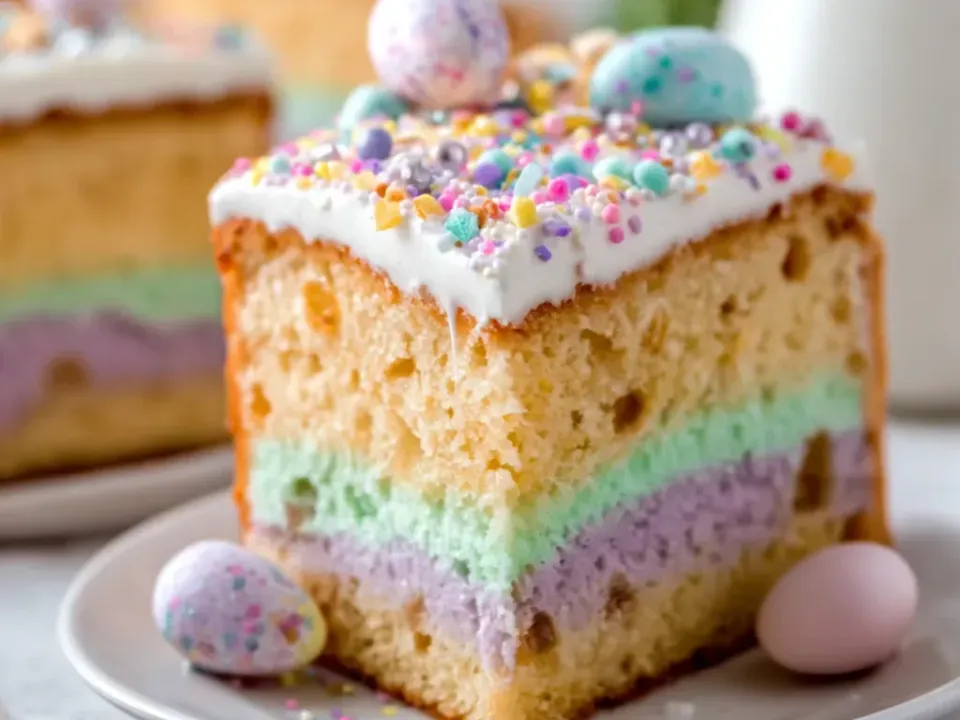
The colour in this cake is baked into the sponge rather than spread between the layers. One vanilla batter is divided three ways: one bowl stays plain, one is tinted pastel green and one pastel purple.
Each batter bakes in its own 8-inch pan. Once cool, the layers are stacked with thin buttercream, covered in white frosting and finished with rainbow sprinkles and candy-coated chocolate eggs.
How to Make It
Oven at 350°F, three pans lined
Heat the oven to 350°F and grease and line three 8-inch round cake pans.
Dry ingredients whisked, butter and sugar creamed
Whisk the flour, baking powder and 1/2 tsp salt. Beat 1 cup butter with the granulated sugar until fluffy, then beat in the eggs one at a time and 1 tbsp vanilla.
Batter finished and tinted three ways
Add the dry mixture in three additions, alternating with the milk. Divide the batter among three bowls: leave one plain, tint one pastel green and one pastel purple.
Layers baked until a tester is clean
Spread each batter into a pan and bake 22 to 25 minutes, until the centres spring back and a tester comes out clean. Cool 10 minutes in the pans, then turn out and cool completely.
Vanilla buttercream beaten
Beat 1 1/2 cups butter until smooth, then gradually beat in the powdered sugar, heavy cream, 2 tsp vanilla and 1/4 tsp salt until thick and white.
Stacked, frosted and decorated
Stack the plain, green and purple layers with thin buttercream between them. Frost the top and sides in white and finish with rainbow sprinkles and the candy-coated chocolate eggs.
Building the Three Pastel Layers
The stack goes together in a set order so the colours read cleanly in every slice.
Plain vanilla layer
The base of the cake, set on the plate first and spread with a thin layer of buttercream.
Pastel green layer
Laid in the middle over the buttercream, followed by another thin spread.
Pastel purple layer
Placed on top, flat side up, so the finished cake has a level surface for frosting.
White buttercream coat
Spread over the top and sides to hide the colours until the cake is cut.
Scatter rainbow sprinkles over the top and add the pastel candy-coated chocolate eggs.
Ingredient Notes
- Pastel gel food colouring
- Green and purple gel colours, added a little at a time until each batter reaches a soft pastel shade.
- Butter, divided
- One cup softened butter goes into the sponge and one and a half cups into the buttercream.
- Candy-coated chocolate eggs
- Twelve speckled pastel eggs, one for every slice.
Success Tips
- Weigh the tinted batters into the three pans so the green and purple layers bake to the same height as the plain one.
- Chill the stacked Easter layers for 15 minutes before the final coat of white buttercream so crumbs stay locked in.
- Press the pastel candy eggs into the frosting just before serving so their colour does not bleed.
Why This Recipe Works
- Creaming the butter and sugar until fluffy gives the sponge a soft, even crumb that holds a clean slice.
- Gel colouring tints the batter without thinning it, so the green and purple layers bake exactly like the plain one.
- Alternating the dry mixture with the milk keeps the batter smooth and stops it from turning tough.
- A thick buttercream made with cream and a pinch of salt stays white and spreads without tearing the crumb.
Serving Ideas
Cut tall wedges so every slice shows the plain, green and purple layers, and set a candy egg on top of each piece.
Storage and Reheating
Refrigerate
Keep the frosted cake covered in a cool room for up to a day, or refrigerate for longer and let slices come back to room temperature before serving.
Frequently Asked Questions
Is the colour in the frosting or the cake?
In the cake. The green and purple layers are tinted batter baked into the sponge; the frosting stays white.
How do I know the layers are baked?
The centres spring back when pressed and a tester inserted in the middle comes out clean, after 22 to 25 minutes.