
Mississippi pot roast without the two seasoning packets: a scratch gluten-free blend, whole pepperoncini, a splash of their brine, and a stick of butter over a chuck roast.
Eight hours on Low, fifteen minutes of work, and no browning stage at all.
Why This Recipe Works
- Chuck is the right cut and no other cheap roast behaves like it. Its connective tissue breaks down into gelatin over a long, low braise, which is what makes the gravy feel rich without any cream in it.
- Pepperoncini brine does the job an acidic ingredient does in any braise: it cuts through a very rich pot. A quarter cup sounds like a lot until you remember there is half a cup of butter in there with it.
- The seasoning blend goes on dry and on top rather than being stirred into liquid. It sits against the meat as it renders, which seasons the roast itself rather than only the juices.
- There is no searing step, which is unusual for a braise and is a genuine time saving here. With this much seasoning, brine and butter, the browning would be adding less than it usually does.
What Replaces the Packets
A classic Mississippi pot roast is two supermarket packets — ranch seasoning and au jus gravy mix — and both routinely contain wheat. This version rebuilds them from scratch, and each ingredient in the blend is standing in for something specific.
| In the recipe | Usually | Here | Why it matters |
|---|---|---|---|
| Ranch seasoning packet | Buttermilk powder, wheat-based anti-caking agents, MSG | Dried parsley, dried dill, onion powder, garlic powder, salt and pepper | Parsley and dill are the two herbs that actually make a seasoning taste like ranch. The dairy in a packet is there for a dip, not for a braise, and it is not missed in a pot with half a cup of butter in it. |
| Au jus gravy packet | Wheat flour, hydrolysed wheat protein, caramel colour | Nutritional yeast, mustard powder, coconut sugar, beef broth | The packet is doing savouriness plus thickening plus colour. Nutritional yeast covers the savoury depth, mustard powder adds the sharpness, and the sugar rounds the edge that pepperoncini brine leaves behind. |
| The thickener | Wheat flour | 1 tablespoon tapioca starch | It goes in dry, with the blend, rather than as a slurry at the end. Tapioca thickens clear and glossy rather than cloudy, and one tablespoon against a cup of total liquid is enough because the roast contributes the rest. |
| Regular butter | — | Plant-based butter | This swap is part of the recipe. With the packets already gone, it is the only remaining dairy, so this is what makes the whole recipe dairy-free as well as gluten-free. |
Ingredient Notes
- Salt, pepper and garlic powder appearing twice
- Not a mistake in the list. The first set is the rub that goes directly on the roast in step 1; the second set belongs to the seasoning blend mixed in step 2. Two stages, two measurements.
- Nutritional yeast
- A tablespoon, and the least familiar thing here. It is what replaces the savoury depth of an au jus packet; without it the blend tastes like herbs rather than like gravy.
- Pepperoncini and their brine
- Eight to ten whole peppers plus a quarter cup of the liquid. They are mild rather than hot — this is a tangy pot roast, not a spicy one.
- Tapioca starch
- A tablespoon, mixed into the dry blend rather than added as a slurry later. This is the only thickener in the recipe.
How to Make It
Season the roast
Rub the roast on all sides with a teaspoon of kosher salt, half a teaspoon of black pepper and a teaspoon of garlic powder.
Mix the gluten-free blend
Combine the parsley, dill, onion powder, garlic powder, mustard powder, salt, pepper, nutritional yeast, coconut sugar and tapioca starch in a small bowl.
Load the crockpot
Put the roast in first, then sprinkle the blend evenly over the top.
Add the tang
Scatter the pepperoncini over the roast and pour in the brine, beef broth and apple cider vinegar.
Butter on top
Set the butter on top of the roast. It melts down through the seasoning as the roast cooks and becomes the gravy.
Cook low and slow
Low for 8 hours, for the best result, or High for 4 to 5, until the roast is fork-tender.
Check, shred and serve
A chuck roast is safe well before it is ready: it passes the 145°F minimum for whole-muscle beef hours before it shreds. Fork-tender is the cue that matters — if it resists, it needs longer, not hotter. Shred it, toss it through the juices and serve.
Success Tips
- Use chuck. Round or brisket will cook through but will not shred the same way.
- Do not add extra liquid at the start. The roast releases plenty.
- Give it the full 8 hours on Low if you can — connective tissue does not hurry.
- If it will not shred, it is undercooked rather than overcooked. Put the lid back on.
Serving Ideas
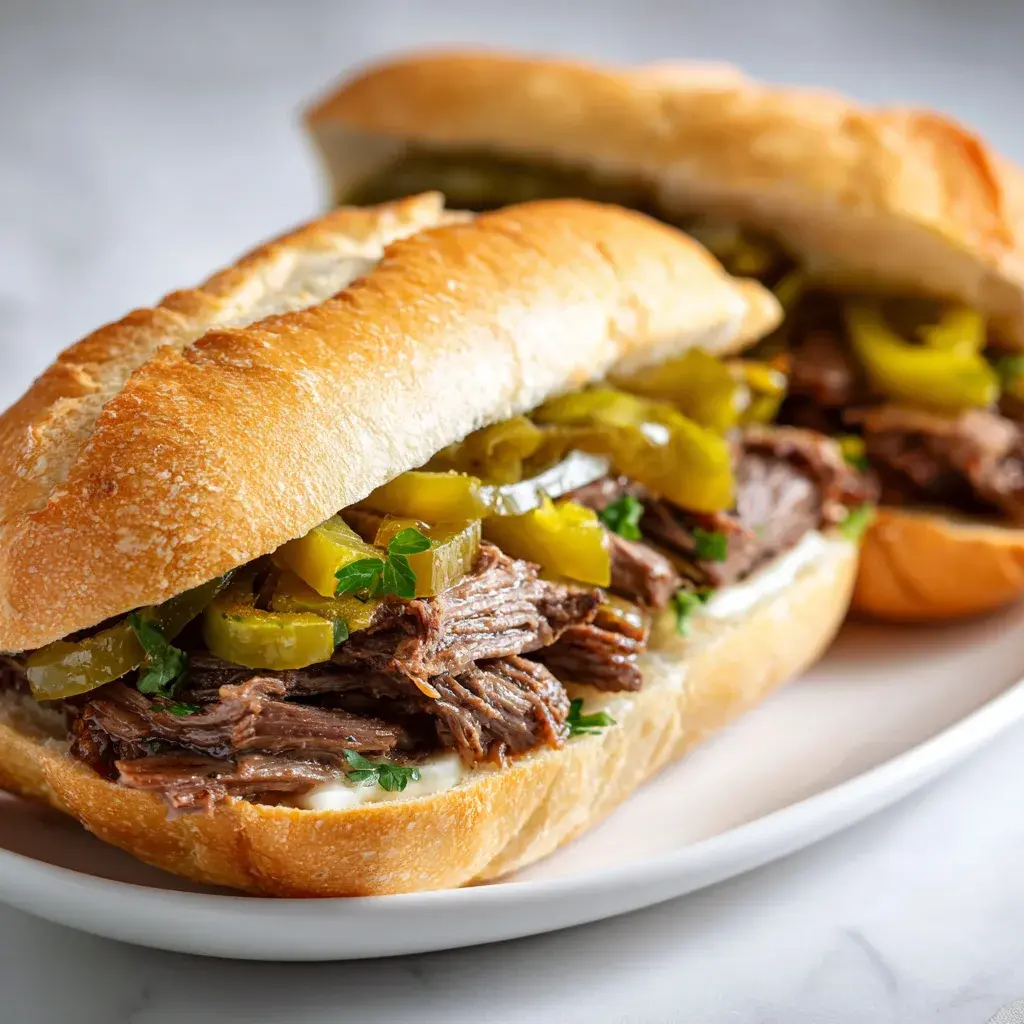
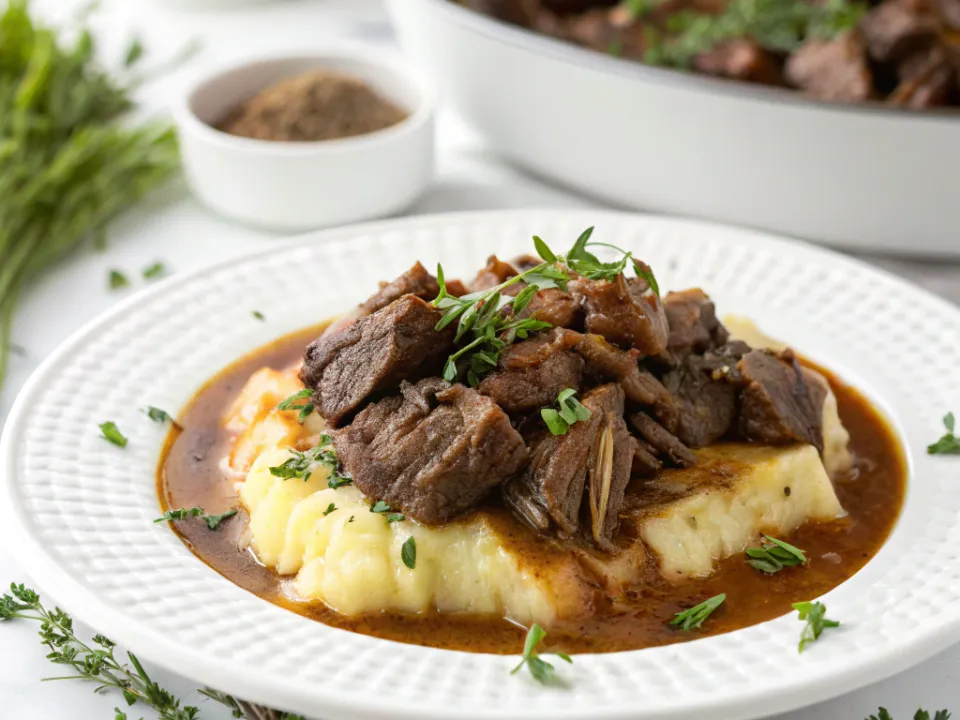
Mashed potatoes or gluten-free rice, because the point of this dish is the gravy and it needs somewhere to go. Leftovers make an excellent filling for sandwiches or baked potatoes.
Storage and Reheating
Refrigerate
Refrigerate up to 4 days in the juices, which keep the meat from drying. It reheats better than most beef because of the fat and gelatin.
Freeze
Freezes well up to 3 months, shredded and covered in its own liquid. Freezing it dry is what makes reheated pot roast stringy.
Reheat
Gently, covered, on the stove or in a low oven with a little of the juices. High heat tightens the shredded meat.
Frequently Asked Questions
Will the pepperoncini make it spicy?
No. Pepperoncini are one of the mildest chillies sold, and eight to ten of them across three pounds of beef read as tangy rather than hot. The heat you might expect never really arrives.
What if I have no nutritional yeast?
The roast still works, but the blend loses the savoury backbone that stands in for the au jus packet. A teaspoon of gluten-free soy sauce or coconut aminos added with the broth gets closest.
Is this genuinely gluten-free?
That is the whole reason the blend exists — the two packets a classic version uses are the usual gluten source. Check the broth and the pepperoncini brine, which are the two bought ingredients left, and the recipe is clear.