

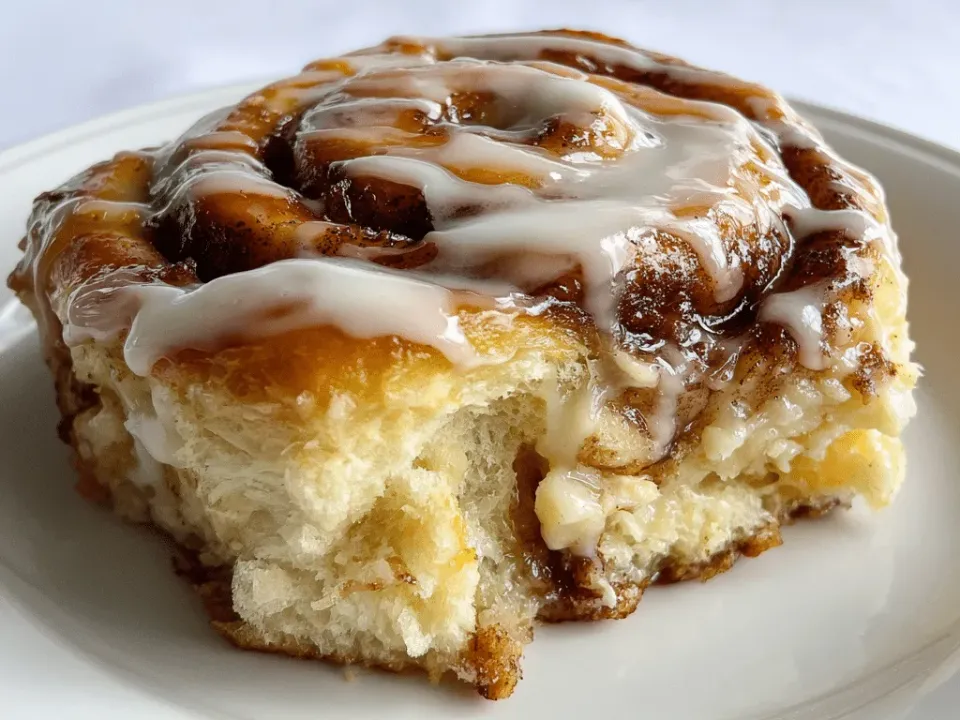
Cinnamon rolls from a can, turned into a custard casserole in a slow cooker and glazed while warm.
Fifteen minutes of work, two hours unattended, and the oven stays free — which is the whole argument for making it this way.
Why This Recipe Works
- Quartering the rolls exposes far more cut surface than leaving them whole, so the custard is absorbed rather than sitting around them.
- Four eggs with half a cup of heavy cream is a genuine custard ratio. This is a bread pudding in structure, not a tray of warmed cinnamon rolls.
- Maple syrup rather than more sugar adds moisture as well as sweetness, and it works with the cinnamon in a way plain sugar does not.
- Glazing while warm lets the icing melt into the surface instead of sitting on top as a separate layer.
Less Time Than It Looks
Almost everything else in a slow cooker rewards patience. This does the opposite, and the source says so outright in step 4: do not cook it longer than that. Five points decide whether it comes out as custard or as scrambled egg.
The insert, before anything
Greased well, or lined with parchment or a liner
Egg custard and sugar together weld to a bare insert. This is decided in step 1 or not at all, and no amount of care at the end recovers it.
Cutting the rolls
Even quarters
The source asks for even pieces so they cook uniformly. Uneven chunks mean some are saturated and dense while others are still dry in the middle when the custard sets around them.
Pouring the custard
Evenly over the whole surface
The rolls need to absorb it before it cooks. Poured into one corner, that corner turns to bread pudding and the rest bakes dry.
Doneness, at 2 to 2 1/2 hours
Puffed, set, and not wet when a knife is slipped in
The single most important point. This is a custard, and custards go from set to curdled quickly — the source's warning that it needs less time than it looks like it should is there because a slow cooker gives no visual cue that you have gone too far.
After the heat goes off
Uncovered, 10 minutes
Uncovered matters. Left under the lid the trapped steam condenses straight back down onto a casserole that has just finished setting, and the ten minutes is also when it firms enough to serve in pieces.
Ingredient Notes
- Refrigerated cinnamon rolls
- Two 12.4-ounce cans, each roll quartered. The icing that comes in the cans is not used — this recipe makes its own glaze in step 6.
- Eggs and heavy cream
- Four eggs and half a cup of cream. This is the custard, and it is the reason the dish sets rather than simply warming through.
- Maple syrup
- A quarter cup in the custard. It sweetens and adds moisture at the same time, which is why the recipe needs no sugar in the base at all.
How to Make It
Prepare the insert
Grease the slow cooker insert well, or line it with parchment or a slow cooker liner so the casserole lifts out cleanly.
Cut and scatter the rolls
Cut each cinnamon roll into quarters, keeping the pieces even so they cook uniformly, and scatter them across the bottom of the insert.
Make and pour the custard
Whisk the eggs, heavy cream, maple syrup, melted butter, vanilla and cinnamon together until smooth, then pour evenly over the rolls.
Cook
Cover and cook on Low for 2 to 2 1/2 hours, until the centre is puffed and set and no longer wet when a knife is slipped into it. Do not cook it longer — this casserole needs less time than it looks like it should.
Rest uncovered
Turn the cooker off and leave the casserole uncovered for 10 minutes to firm up before serving.
Glaze
Whisk the powdered sugar with the cream or milk and the vanilla until pourable, and drizzle it over the warm casserole.
Success Tips
- Line the insert. It is the difference between lifting it out and digging it out.
- Cut even quarters.
- Check at two hours and take it seriously. Overcooking a custard is not recoverable.
- Rest it uncovered so the steam escapes rather than dripping back.
Serving Ideas
Warm, spooned into bowls, with the glaze still soft. It is a Christmas-morning dish more than a dessert, and it holds on Warm for a while if people are eating at different times.
Storage and Reheating
Refrigerate
Refrigerate up to 3 days, covered. It firms considerably when cold, which makes it easier to portion.
Freeze
Not recommended. Egg custard weeps on thawing and the texture does not recover.
Reheat
A short burst in the microwave per portion, or covered in a low oven. Add a little fresh glaze afterwards — the original will have soaked in.
Frequently Asked Questions
How do I know if I have overcooked it?
It will look slightly curdled and weep liquid as it stands, and the texture goes rubbery rather than soft. The source's warning is unusually direct for a reason — check at two hours and trust the knife rather than the clock.
Can I use homemade cinnamon rolls?
Yes, though the timing is likely to shift. Canned rolls are a consistent size and moisture level; homemade ones vary, and a drier roll will absorb more custard and may need slightly longer. Judge it by the knife test rather than the clock.
Can I assemble it the night before?
You can cut the rolls and mix the custard separately and refrigerate both, but do not combine them overnight — the rolls turn to paste after that many hours in liquid. Pour the custard over in the morning and start the crock.