
Six ingredients and eleven minutes, in one hot skillet.
The eggs are specified as pasteurized. Their yolks are meant to stay liquid, and that specification is the reason it is safe to serve them that way.
Why This Recipe Works
- Oil heated until it shimmers is what crisps an egg white rather than poaching it.
- Cheese laid down first fries into a lacy browned lattice under each egg.
- Cracking one egg per cheese patch keeps the whites separate and crisp.
- Spooning hot oil around the whites sets them without cooking the yolks.
- Finishing off the heat keeps the herbs green and the pepper sharp.
Ingredient Notes
- Pasteurized shell eggs
- Four. Pasteurized specifically, because the yolks are served liquid — that is what makes it safe rather than a matter of preference.
- Crumbled feta and crumbled blue cheese
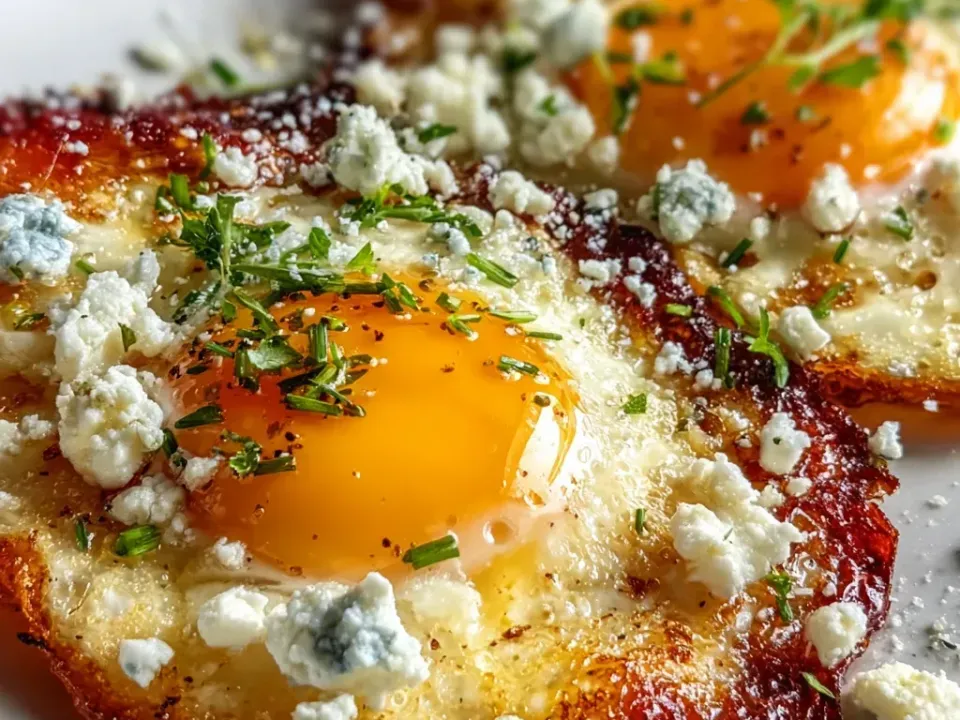
- A third of a cup and two tablespoons. Feta is the primary cheese; the blue is what gives the grey-veined crumbles visible on the finished plate.
- Olive oil
- Two tablespoons, heated until it shimmers. Shallow but genuinely hot — that is what crisps the edges.
- Chopped parsley and cracked black pepper
- A tablespoon and a quarter teaspoon, both off the heat. The title names neither.
How to Make It
Olive oil heated in a skillet until shimmering
Heat olive oil in a nonstick or cast-iron skillet over medium-high heat until shimmering.
Feta and blue cheese scattered into four patches, left to sizzle
Scatter feta and blue cheese into four small areas and let the edges begin to sizzle.
An egg cracked over each patch, fried to set whites and liquid yolks
Crack one pasteurized egg over each cheese patch and fry until whites are fully set and the edges become lacy and deeply browned while yolks remain liquid.
Hot oil spooned around the whites, never over the yolks
Spoon hot oil around the whites as needed without covering the yolks.
Transferred carefully, finished with parsley and cracked pepper
Transfer carefully to a plate and finish with chopped parsley and cracked black pepper.
Fully firm yolks for anyone who should avoid undercooked egg
For anyone who should avoid undercooked egg, continue cooking until yolks are fully firm.
A Liquid Yolk Is a Decision, Not an Accident
This is an eleven-minute recipe with six ingredients, and one of those ingredients is specified in a way that is easy to read past. The eggs are PASTEURIZED, and they are pasteurized because the yolks are meant to come out of the pan still liquid. That is the gate below - with the technique that gets the edges lacy on one side of it, and the finish on the other.
- The oil must SHIMMER before anything goes in2 tbsp of OLIVE OIL over MEDIUM-HIGH heat UNTIL SHIMMERING. This is the whole difference between a fried egg and a poached one sitting in fat. Shimmering oil is hot enough to set and brown a white on contact; warm oil lets the white spread and cook slowly through, and no lace ever forms.
- The CHEESE goes in FIRST - and this is the technique1/3 cup crumbled FETA and 2 tbsp crumbled BLUE CHEESE scattered into FOUR SMALL AREAS and left until THE EDGES BEGIN TO SIZZLE. This is what makes the dish: cheese hitting hot oil fries and fuses into a lacy browned lattice, and the egg is then cracked onto that lattice rather than onto bare pan. The cheese is a MIX with FETA AS THE PRIMARY - the blue is a smaller quantity and it is what gives the grey-veined crumbles.
- ONE egg per patch, kept separateFour patches, four eggs, each cracked over its own. Crowding them merges the whites into a single sheet, and a merged white steams rather than crisping at its edges.
Check before you continue
Whites FULLY SET and edges lacy - yolks REMAIN LIQUID — PASTEURIZED shell eggs, and a decision about who is eating
The safety advice here is two sentences and they are not interchangeable. USE PASTEURIZED SHELL EGGS WHEN INTENTIONALLY SERVING LIQUID YOLKS - the yolk in this dish never reaches a temperature that would make an ordinary egg safe, so the safety is bought at the shop rather than at the stove. And HIGHER-RISK DINERS SHOULD RECEIVE EGGS COOKED UNTIL THE YOLKS ARE FULLY FIRM, which step 6 states as a real alternative rather than a footnote. Decide which you are making before the eggs go in the pan.
- Spoon oil AROUND the whites, never OVER the yolksThe whites nearest the yolk are the last to set, and basting them with hot oil finishes them without turning the pan up. But oil spooned over a yolk films it opaque and grey, and the BRIGHT ORANGE liquid yolk is part of how this plate looks.
- TRANSFER CAREFULLYA lacy cheese edge is brittle and an unset yolk is fragile. Slide rather than lift, and take the cheese lattice with the egg rather than leaving it welded to the pan.
- 1 tbsp PARSLEY and 1/4 tsp CRACKED PEPPER, off the heatBoth are visible components the title names neither of. Added on the plate rather than in the pan, so the parsley stays green and the pepper keeps its bite.
Success Tips
- Wait for the oil to shimmer; a cool pan gives soft pale whites and no lace.
- Keep the four cheese patches apart so each egg sets on its own.
- Spoon oil around the whites only — over the yolk it films and clouds it.
Serving Ideas
Two servings of fried eggs with lacy deeply browned crisp edges and bright liquid yolks, scattered with crumbled feta and blue cheese, chopped parsley and cracked black pepper.
Frequently Asked Questions
Why pasteurized eggs?
Because the yolks are served liquid. Pasteurized shell eggs make that safe. Anyone who should avoid undercooked egg should have theirs cooked until the yolks are fully firm.
How do I get the lacy browned edges?
Hot oil and cheese in the pan first. The cheese fries into a lattice under and around the white, and the shimmering oil crisps the edge rather than poaching it.
Is it feta or blue cheese?
Both. A third of a cup of feta as the main cheese with two tablespoons of blue — the blue is what gives the grey-veined crumbles you can see on the plate.