
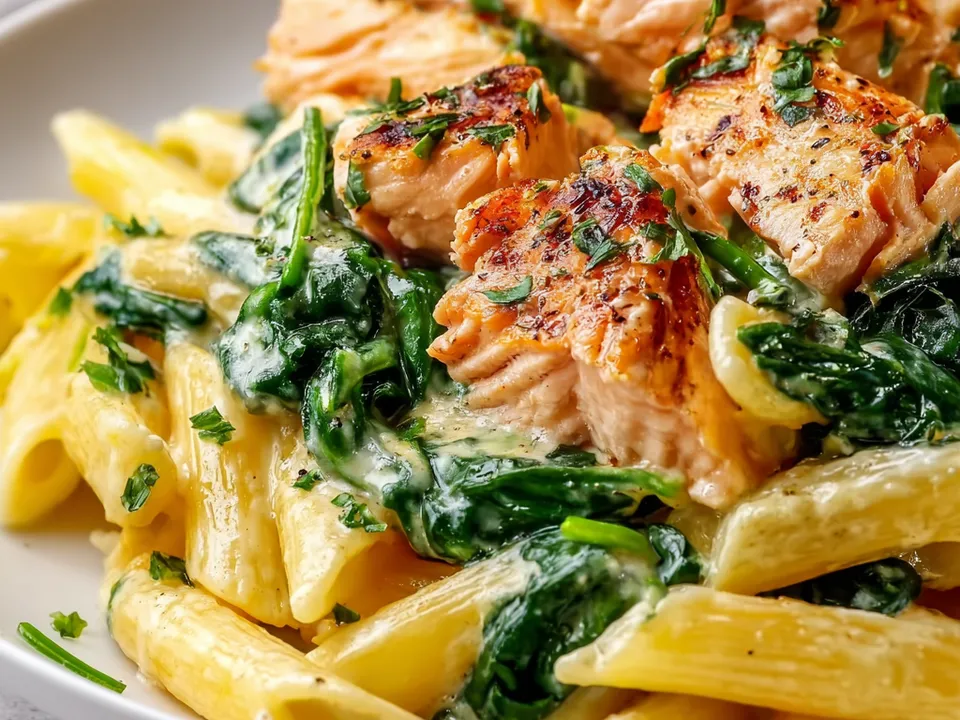
Salmon in a cream pasta usually ends up as flakes distributed through the sauce. This recipe is built to avoid that: inch-and-a-half chunks, seared for colour, transferred carefully, and folded back in at the very end.
The sauce is finished before the fish returns. Cream, broth, spinach, Parmesan and lemon are all done and settled, so the salmon only has to be warmed through and coated.
Why This Recipe Works
- Cutting the salmon into inch-and-a-half chunks gives pieces big enough to survive being moved twice.
- Searing over medium-high heat browns the outside before the interior passes 145 degrees Fahrenheit.
- Four minutes of simmering thickens the cream and broth enough to coat penne.
- Lemon juice with the spinach cuts the richness of a cup of cream.
Ingredient Notes
- Skinless salmon
- A pound in 1 1/2-inch chunks, seared to 145 degrees Fahrenheit. Skinless, because the browning shown is on the flesh.
- Baby spinach
- Four cups, which wilts down to very little. It goes in with the Parmesan and lemon.
- Penne
- Twelve ounces. A short tube that sits alongside salmon chunks rather than tangling around them.
How to Make It
Pasta, and keep the water
Cook penne until al dente; reserve 1/2 cup pasta water.
Sear the salmon to 145F
Season salmon and sear in oil over medium-high heat until browned and 145 degrees Fahrenheit; transfer carefully.
Build the sauce
Melt butter, add garlic for 30 seconds, then add cream and broth and simmer 4 minutes.
Spinach, Parmesan, lemon
Stir in spinach, Parmesan and lemon juice until spinach wilts.
Fold the salmon in gently
Toss with penne, then fold salmon in gently to keep browned chunks intact. Finish with parsley.
Keeping the Chunks Whole
The finished plate is judged on whether the salmon is still in pieces. Four moments decide that, and three of them are about handling rather than heat.
Cutting the fish
Chunks of 1 1/2 inches, not smaller
Smaller pieces cook through before they brown and fall apart the first time they are moved. This size survives being seared, transferred and folded.
In the pan
Browned on the surface and reading 145F, then out
145F is the standard, and it arrives quickly. Left in while the sauce is built, the chunks would pass it and dry.
Transferring
Lifted with a fish slice, not gripped with tongs
Tongs concentrate pressure on one point of a piece that is already flaking. A flat lift keeps it in one piece.
The final assembly
Pasta tossed through the sauce FIRST, then salmon folded in
Tossing 12 oz of penne around the salmon breaks it apart. Folding it into an already-sauced pasta is the last chance to keep the browned chunks visible.
Success Tips
- Transfer the seared salmon with a fish slice rather than tongs; tongs break chunks.
- Toss the pasta through the sauce first, then fold the salmon in — not the other way round.
- Fold, do not stir. The browned surfaces are the point.
Serving Ideas
Four servings on plates, the penne in white cream sauce with wilted spinach and the seared salmon chunks intact on top, finished with parsley.
Frequently Asked Questions
My salmon broke up into flakes.
It was stirred rather than folded, or added before the pasta. It goes in last and gently.
How done should the salmon be?
145 degrees Fahrenheit, or opaque and easily flaked, at the sear.
Skin on or off?
Skinless. The browning the finished dish shows is on the flesh.