
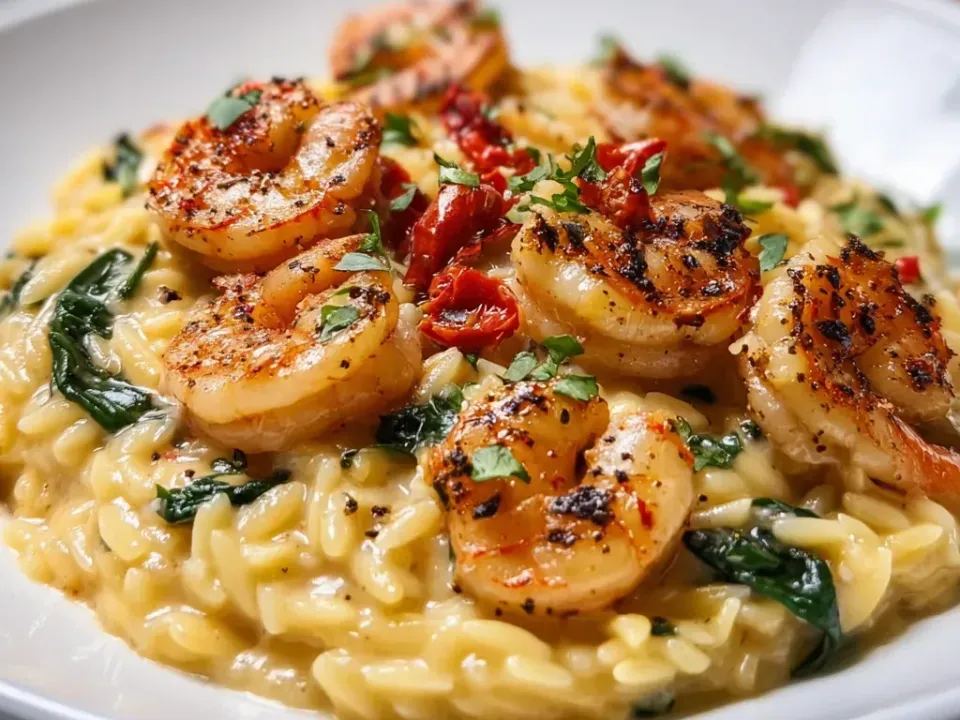
Twelve ingredients, forty minutes and one skillet. The shrimp are seared, removed, and the orzo cooks in the pan they left behind.
This is the creamy one: three quarters of a cup of heavy cream is what makes the dish.
Why This Recipe Works
- Searing hard enough to darken the edges builds fond that the orzo later cooks in.
- Toasting the orzo in the fat for a minute gives it a nuttier flavour than boiling alone.
- Stirring often stops orzo settling and catching on a pan that has just been used for searing.
- Adding the cream once the orzo is nearly tender lets it finish in dairy rather than boil in it.
- Folding in spinach and Parmesan off the boil wilts one and melts the other without splitting the sauce.
Ingredient Notes
- Heavy cream
- Three quarters of a cup against two cups of broth. That ratio is what makes the orzo visibly creamy and yellow rather than clear-sauced.
- Sun-dried tomatoes
- A third of a cup, sliced, in with the cream. They are the dark red pieces through the finished bowl.
- Orzo
- One cup, toasted dry with the garlic before any liquid. It cooks in the pan the shrimp seared in.
- No artichoke
- There is none in this recipe.
How to Make It
Sear to dark edges, then out
Season shrimp with salt and pepper. Sear in olive oil over medium-high heat until dark edges form and the shrimp reach 145 degrees Fahrenheit; transfer immediately.
Toast the orzo with garlic
Reduce heat to medium. Add garlic and orzo and toast 1 minute.
Broth, stirring often
Add broth and simmer, stirring often, until the orzo is nearly tender.
Cream, tomatoes, spinach, Parmesan
Stir in cream and sun-dried tomatoes and cook until the orzo is creamy and yellow. Fold in spinach and Parmesan.
Shrimp back to warm through
Return shrimp only to warm through, then finish with parsley and black pepper.
Four Rungs in One Pan
Every rung uses the pan in the state the one before it left. The shrimp are only present for the first and the last, and everything that gives this dish its character happens while they are on a plate.
Sear - hard enough to darkenDark edges, 145F, straight out
1 1/4 lb of large shrimp seasoned with 1/2 tsp salt and 1/4 tsp pepper, seared in 1 tbsp olive oil over medium-high until DARK EDGES form and they read 145F, then transferred immediately. Those dark edges matter: a gentle poach would not make them, and the fond they leave is what the next three rungs are built on.
Toast - one dry minute1 minute, no liquid yet
Heat down to medium, then 3 garlic cloves and 1 cup of orzo toasted for 1 minute in the fat before ANY liquid. A minute of dry heat is what makes toasted orzo taste different from boiled orzo; skip it and the grain only ever carries the sauce.
Simmer - stirring oftenUntil nearly tender
2 cups of broth, simmered until the orzo is NEARLY tender, stirred often. Nearly, not fully: there is still cream to go in and the grain will keep absorbing. Stirring often matters more here than usual because the pan has just been used for a hard sear and carries hot spots.
Cream - and the colour arrivesCreamy and yellow
3/4 cup of heavy cream with 1/3 cup of sliced sun-dried tomatoes, cooked until the orzo is creamy and YELLOW, then 3 cups of spinach and 1/3 cup of Parmesan folded in. This rung is what makes the dish creamy rather than a lemon-and-butter orzo. The shrimp then return for warmth only.
Success Tips
- Let the shrimp actually darken at the edges; a pale sear leaves the pan without fond.
- Stir the orzo often — a searing pan has hot spots and orzo finds them.
- Add the cream when the orzo is nearly tender rather than at the start.
Serving Ideas
Four white bowls of the creamy yellow orzo with wilted spinach and sun-dried tomato through it, the dark-edged shrimp arranged on top, scattered with chopped parsley and coarse black pepper.
Frequently Asked Questions
Should there be artichokes in this?
No. This recipe carries no artichoke.
How is this different from the lemon garlic shrimp orzo?
The sauce. That one is a clear lemon-garlic butter with no cream, no spinach and no sun-dried tomato. This one is creamy and yellow and carries all three.
Why sear the shrimp so hard?
The dark edges are part of what the finished bowl shows, and the fond they leave is what the orzo cooks in. They come out at 145 degrees and go back only to warm.