
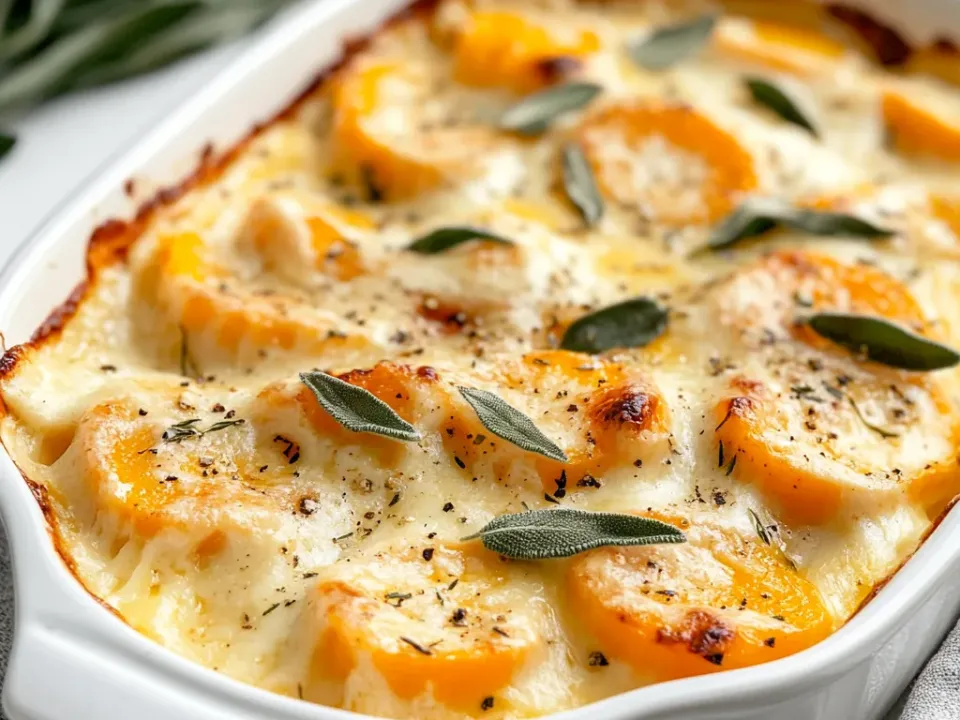
Butternut squash sliced thin and layered with sweet onions and Gruyère, baked slowly in sage cream under a Parmesan crust.
It takes an hour and a quarter, most of it hands-off, and it holds well on a table where several dishes are landing at once.
Why This Recipe Works
- Slicing thin and overlapping lets the layers knit as they cook, which is what makes a gratin hold a slice instead of collapsing into a spoonful.
- Softening the onions first is not optional — raw onion sliced this thin still tastes raw after an hour under cream, and it releases water into the dish.
- Covering for the first 25 minutes steams the squash tender, and uncovering for the last 20 to 25 lets the top brown. Doing only one of the two gives you a raw or a pale gratin.
- Nutmeg with cream and squash is a classic for a reason, and a quarter teaspoon is enough to notice. The optional lemon zest works against the richness from the other direction.
How the Dish Is Built
Nothing is stirred together. The gratin is a stack, and each thing in it is there because of what sits above or below it.
Parmesan panko, butter, sage leaves
The crust, added dry and dotted with the rest of the butter. Panko and Parmesan brown together into something that stays crisp against the cream underneath.
The cream, poured through
Cream, milk, Parmesan, nutmeg, sage, thyme and lemon zest whisked together and poured over, then pressed down gently to submerge. Pouring at the end rather than layering wet means the liquid finds its way down through every gap.
The same again
Remaining squash, remaining onions, remaining Gruyère. Two rounds is what a 2-quart dish holds at the depth the bake time assumes.
Onions and Gruyère, half of it
Onions already cooked soft and sweet, and half a cup of Gruyère. The cheese sits inside the stack, not just on it, so the middle of the dish tastes of cheese too.
Squash, half of it
Slices overlapping slightly, like roof tiles. Overlap is what makes the finished gratin sliceable rather than a heap — the layers knit together as the starch softens.
Buttered dish
Two tablespoons of softened butter, some of it on the dish itself. It stops the bottom layer welding to the base, which matters when you are trying to lift out a clean slice an hour later.
Ingredient Notes
- Butternut squash
- Two pounds, peeled, seeded and sliced 1/8 to 1/4 inch. The neck of the squash gives you the most usable even slices; the bulb end is hollow and awkward.
- Gruyère or sharp white cheddar
- A cup, layered inside the stack. Gruyère melts smoothly and tastes nutty against the squash; sharp cheddar is the alternative and brings more bite.
- Fresh sage
- A tablespoon chopped into the cream, plus whole leaves for the top. The leaves on top crisp in the last uncovered stretch and are worth the trouble.
How to Make It
Heat the oven, butter the dish
400°F (200°C), 2-quart baking dish buttered.
Soften the onions
Warm the olive oil in a skillet over medium and cook the sliced onions with a pinch of salt until soft and sweet, 6 to 8 minutes. Stir in the garlic for 30 seconds, then take the pan off the heat.
Whisk the cream
Combine the cream, milk, 1/4 cup of the Parmesan, nutmeg, salt, pepper, chopped sage, thyme and lemon zest if using.
Layer
Half the squash into the dish, slightly overlapping, then half the onions and 1/2 cup of Gruyère. Repeat with the remaining squash, onions and Gruyère.
Pour and press
Pour the cream mixture evenly over the layers and press down gently so everything is submerged.
Add the crust
Mix the remaining 1/4 cup Parmesan with the panko and scatter over the top. Dot with the butter and lay on a few sage leaves.
Bake covered, then uncovered
Cover with foil and bake 25 minutes. Uncover and bake another 20 to 25 minutes, until the squash is tender and the top is golden and bubbling. Broil 1 to 2 minutes for more colour if you like.
Rest
Rest 10 to 15 minutes to set before slicing, and finish with a crack of black pepper.
Success Tips
- Even slices matter more than thin ones. A mandoline is the easy route; a sharp knife and patience gets there too.
- Cook the onions properly soft before they go in.
- Press the layers down so nothing sits proud of the cream — anything above the liquid dries out rather than cooking.
- Rest the full 10 to 15 minutes. Cut straight away, a gratin runs.
Serving Ideas
A holiday side next to roast meat, or a main for four with a sharp green salad and bread. It sits happily for twenty minutes on a crowded table.
Storage and Reheating
Refrigerate
Refrigerate covered up to 4 days. It slices more neatly cold than hot.
Freeze
Not recommended. Cream splits on thawing and the squash goes watery.
Reheat
Covered in a 325°F oven for 20 to 25 minutes, uncovering for the last five to bring the crust back. Individual portions reheat faster and hold their shape better than the whole dish.
Frequently Asked Questions
Can I assemble it ahead?
Layer the squash, onions and Gruyère and refrigerate up to a day ahead, but hold the cream and the panko topping until you bake. Sliced squash sitting in cream overnight goes soft, and panko added early is damp before it ever sees the oven.
The squash is still firm but the top is brown. What now?
Cover it with foil again and keep baking. The top is protected once it is covered and the squash will carry on softening. Next time, slice thinner and check that the slices were even.
Can I make it less rich?
Use the milk-and-cream split rather than all cream, and skip the panko topping. Going further than that changes the dish — the cream is what carries the sage and cooks the squash, so there is a limit to how much can come out.