
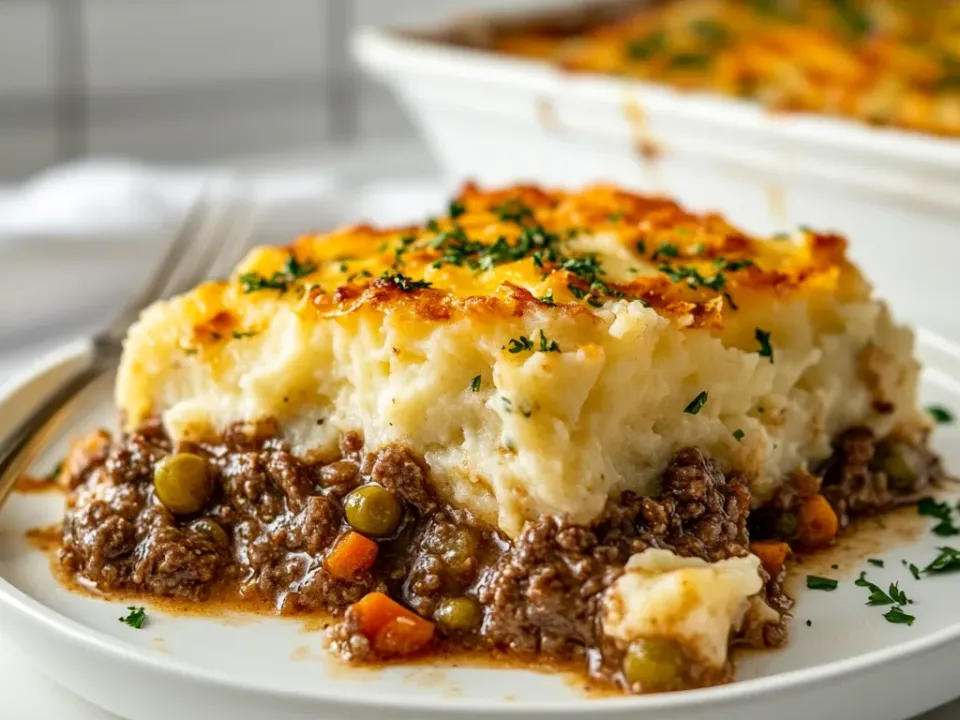
Ground beef browned with onion and carrot, deepened with tomato paste and Worcestershire, then thickened with a tablespoon of flour and a cup of beef broth into a proper gravy.
Two pounds of russet mash with butter, milk and cheddar goes over the top, with more cheddar scattered on, and the whole skillet goes into a 400°F oven.
Why This Recipe Works
- The filling is built into a gravy before the mash goes on. Flour, broth and a three-to-four-minute simmer mean the layer underneath sets rather than staying wet and lifting the potato off it.
- Tomato paste cooked out for a full minute with the garlic. Two tablespoons of raw paste stirred into broth tastes tinny; the minute in a hot pan caramelises it and is where most of the depth comes from.
- Russets rather than a waxy potato. They mash light and dry, which is exactly what a topping that has to hold its own weight over gravy needs.
- Cheddar in the mash as well as on it. Half a cup through the potato seasons the whole layer; the half cup on top is what browns and gives the finished surface.
- An oven-safe skillet from the start. The filling never has to be transferred, so it goes under the mash at full heat and the bake is 20 to 25 minutes rather than 40.
The Pan And The Pot, Together
Twenty-five minutes of prep only holds if the potatoes and the filling are made at the same time. They meet at step 6, and neither can wait for the other without cooling.
In the pan of salted water
- First thing, about 15 minutes
Two pounds of peeled russet chunks boiled until fork-tender, then drained properly. Drained properly is the load-bearing part — wet potatoes make a loose mash that sinks into the gravy.
- Straight after draining
Mashed with four tablespoons of butter, half a cup of whole milk, half the cheddar and half the salt. Mashed while hot, so the butter and cheese melt in rather than sitting in streaks.
In the oven-safe skillet
- As the potatoes boil
Ground beef, diced onion and diced carrots cooked together until the beef is browned, then the fat drained. The carrots go in early because they need the full browning time to soften.
- One minute
Garlic and two tablespoons of tomato paste, cooked out. This minute is what turns the paste from raw and metallic to sweet and deep.
- 3 to 4 minutes
A tablespoon of flour sprinkled over, then Worcestershire, broth, peas, thyme, the remaining salt and pepper. Simmered until thickened into gravy.
Step 6, in the skillet
The cheesy mash is spread over the hot filling and the remaining half cup of cheddar goes on top. Twenty to twenty-five minutes at 400°F until bubbling and lightly browned, then five minutes of rest.
Ingredient Notes
- Russet potatoes
- Two pounds, peeled and chunked. Russets are the floury kind and mash dry; a waxy potato goes gluey under a masher and slides off the filling.
- Ground beef
- One pound. This recipe is published as a beef shepherd's pie and stays beef — the traditional lamb version is a different dish with a different name.
- Tomato paste
- Two tablespoons, cooked for a full minute before any liquid arrives. That minute is not optional if you want depth rather than acidity.
- Sharp cheddar, divided
- One cup split evenly: half into the mash, half over the top. Sharp rather than mild — the mash is otherwise butter, milk and potato.
- All-purpose flour
- A single tablespoon, sprinkled over the meat rather than made into a roux. With one cup of broth that is the right amount to bind a gravy without turning it to paste.
How to Make It
Heat the oven
Heat the oven to 400°F.
Boil and mash the potatoes
Boil the potatoes in salted water until fork-tender, about 15 minutes. Drain and mash with butter, milk, 1/2 cup cheddar and half the salt.
Brown the beef and vegetables
Cook the ground beef, onion and carrots in a large oven-safe skillet until the beef is browned. Drain excess fat.
Cook out the paste
Stir in garlic and tomato paste for 1 minute.
Build the gravy
Sprinkle in the flour, then stir in Worcestershire, beef broth, peas, thyme, remaining salt and pepper. Simmer for 3 to 4 minutes, until thickened.
Top it
Spread the mashed potatoes over the beef filling and sprinkle with the remaining cheddar.
Bake
Bake for 20 to 25 minutes, until bubbling and lightly browned.
Rest
Rest for 5 minutes before serving.
Success Tips
- Start the potatoes first; everything else is timed around their fifteen minutes.
- Drain the potatoes well and let them steam dry for a moment before mashing.
- Cook the tomato paste for the full minute, until it darkens.
- Spread the mash from the edges inward so it seals against the sides of the skillet.
- Rough the surface of the mash with a fork — the ridges are what brown.
Serving Ideas
It is a complete plate. A green vegetable or a sharply dressed salad is all it wants; the gravy and the mash between them cover starch and sauce.
Storage and Reheating
Refrigerate
Refrigerate in the skillet or an airtight container for up to 4 days. It slices more cleanly cold than hot.
Freeze
Freeze cooled portions for up to 3 months. Mashed potato with cheese in it freezes better than plain mash, which can turn grainy.
Reheat
Reheat covered at 350°F for 25 to 30 minutes, uncovering for the last ten to re-brown the top.
Frequently Asked Questions
Shouldn't shepherd's pie be made with lamb?
Traditionally, yes — the lamb version is what the name originally described, and the beef version is often called cottage pie. This recipe is published as a beef shepherd's pie and is written that way.
The mash sank into the filling.
The gravy was not thick enough or the mash was too loose. Simmer the filling the full three to four minutes after the flour goes in, and drain the potatoes thoroughly before mashing.
What if I do not have an oven-safe skillet?
Transfer the finished filling to a 9 x 13-inch dish before topping it. It works, but the filling loses some heat in the move and the bake may want the longer end of the range.
The top did not brown.
Rough the mash with a fork before it goes in — a smooth surface has nothing to catch the heat. A minute or two under the grill at the end will finish it if the twenty-five minutes has not.