
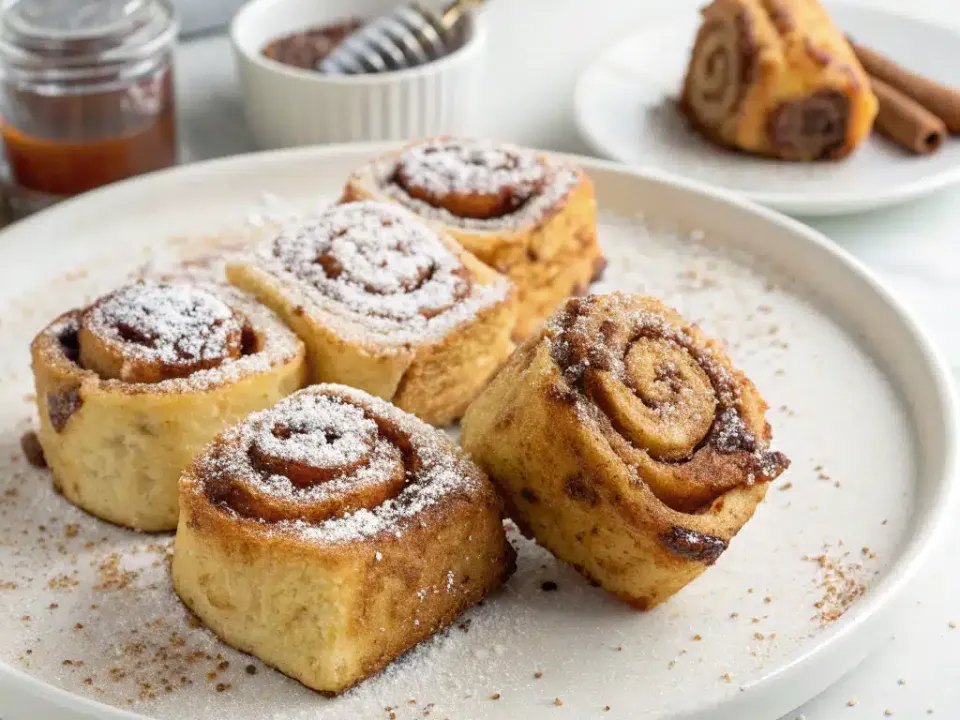
Two cans of refrigerated cinnamon roll dough, each roll cut into four, soaked in a custard of eggs, milk, cream, maple syrup and warm spice.
They cook in butter in a nonstick skillet in two batches, then get a glaze made from the icing packets that came in the cans, loosened with cream cheese, milk and vanilla.
Why This Recipe Works
- The icing is already in the box. Reserving those packets and turning them into a cream cheese glaze is the thing that stops this tasting like a shortcut — the dough and its own icing were designed together.
- Cream alongside the milk. A quarter cup of heavy cream in a four-egg custard is what keeps the inside soft after the outside has gone deeply golden, which is a harder balance with milk alone.
- Maple syrup goes in the custard, not only on the plate. Two tablespoons sweeten the soak itself, so the flavour is through the bite rather than sitting on top of it.
- Cinnamon and nutmeg in the custard as well as in the dough. The rolls bring their own cinnamon; the extra teaspoon and a half plus the nutmeg are what make the coating taste spiced rather than just sweet.
- An eighth of a teaspoon of salt in a sweet custard. Small, and doing real work — without it the maple and the icing flatten into one note.
The Five Minutes That Decide The Texture
Everything in this recipe hinges on one short window: how long the cut dough sits in the custard before it hits the pan. It gets five minutes, and both directions away from that number fail in their own way.
Before soaking
Each roll cut into 4 pieces
Quarters, not halves. The cut faces are what absorb the custard; a bigger piece takes the same five minutes and stays raw dough in the middle.
Minute 0
The pieces go into the whisked custard and are gently tossed
Gently is the operative word. The dough is soft and will smear if it is stirred like batter.
Minutes 0 to 5
Nothing — this is the rest
Five minutes so they absorb flavor, which is what the rest is for. The cinnamon and nutmeg are in the custard, so this is when the seasoning actually reaches the dough.
Minute 5
Half the bites into foaming butter
Half, in a single layer. The second load is not a compromise; a crowded pan steams the pieces and they never take the deep colour you want.
Up to 30 minutes ahead
The fridge, if you are making them later
To make ahead: soak up to 30 minutes in the fridge and cook just before serving. That is the outer limit, not an invitation to soak overnight.
How to Make It
Quarter the rolls
Cut each cinnamon roll into 4 pieces to create bite-size nuggets.
Whisk the custard
In a large bowl, whisk eggs, milk, cream, maple syrup, vanilla, cinnamon, nutmeg and salt until smooth.
Soak for five minutes
Add the cinnamon roll pieces to the custard, gently toss to coat, and rest 5 minutes so they absorb flavor.
Heat the pan
Heat a large nonstick skillet over medium; melt 1 tbsp butter until foamy.
Cook in two batches
Cook half the bites in a single layer, turning often, until deeply golden and cooked through, 5–7 minutes. Add more butter as needed and repeat with the remaining bites.
Cinnamon sugar, if you want it
Optional: toss the hot bites in a bowl with cinnamon sugar for extra crunch.
Build the glaze
Warm the reserved icing with cream cheese, milk and vanilla; whisk until pourable.
Glaze and serve
Drizzle the glaze over the bites. Serve immediately with extra maple syrup if desired.
Air fryer, as an alternative
Arrange the soaked bites in a greased basket. Air fry at 375°F (190°C) for 6–8 minutes, shaking once, until golden.
Making them ahead
Soak the pieces up to 30 minutes in the fridge and cook just before serving. Reheat leftovers in a 350°F oven for 5–7 minutes.
Ingredient Notes
- Refrigerated cinnamon roll dough, icing packets reserved
- Two 12.4 oz cans. The reserved icing is not a garnish — it is an ingredient in the glaze at step 7, so open the cans over a bowl and put the packets aside first.
- Heavy cream
- A quarter cup, alongside half a cup of milk. It is what keeps the middle tender through a five to seven minute fry.
- Pure maple syrup
- Two tablespoons in the custard. It sweetens the soak rather than the surface, which is why the recipe still offers more syrup at the table.
- Unsalted butter (for skillet)
- Two tablespoons to start, and the recipe says to add more as needed between batches. Unsalted, because the custard already carries its own salt.
- Optional coating: granulated sugar and cinnamon
- A quarter cup of sugar with a teaspoon of cinnamon, tossed through while the bites are hot. It is genuinely optional — it adds crunch, not sweetness the recipe needs.
Success Tips
- Set the icing packets aside before the cans go in the bin.
- Quarter the rolls rather than halving them, or the centres stay doughy.
- Toss the soaked pieces gently — the dough smears if it is stirred hard.
- Cook half the batch at a time and let the pan stay hot between loads.
- Warm the glaze only until it pours; overheated cream cheese goes grainy.
Serving Ideas
Extra maple syrup at the table, and something sharp alongside — berries or a cut orange — against a plate this sweet. They are best eaten straight from the pan.
Storage and Reheating
Refrigerate
Refrigerate leftovers in an airtight container for up to 3 days. Keep the glaze separate if you have any left; it sets firm in the fridge.
Freeze
Freeze cooked bites in a single layer, then bag them, for up to 2 months. Glaze after reheating rather than before.
Reheat
Reheat in a 350°F oven for 5–7 minutes. That crisps the outside again, which a microwave will not do.
Frequently Asked Questions
Can I use homemade cinnamon rolls instead?
The recipe is built around refrigerated dough and the icing packet that comes with it, and the five-minute soak is timed to that dough. Baked homemade rolls behave differently and there would be no packet for the glaze.
Can I soak them longer than five minutes?
Up to 30 minutes in the fridge, which is the make-ahead the recipe gives. Beyond that the pieces stop holding their shape in the pan.
Do they work in an air fryer?
Yes — the recipe includes it: a greased basket at 375°F (190°C) for 6–8 minutes, shaking once.
What if I skip the cream cheese in the glaze?
You are left with the reserved icing loosened with milk and vanilla, which still pours. The cream cheese is there to cut the sweetness rather than to thicken it.