
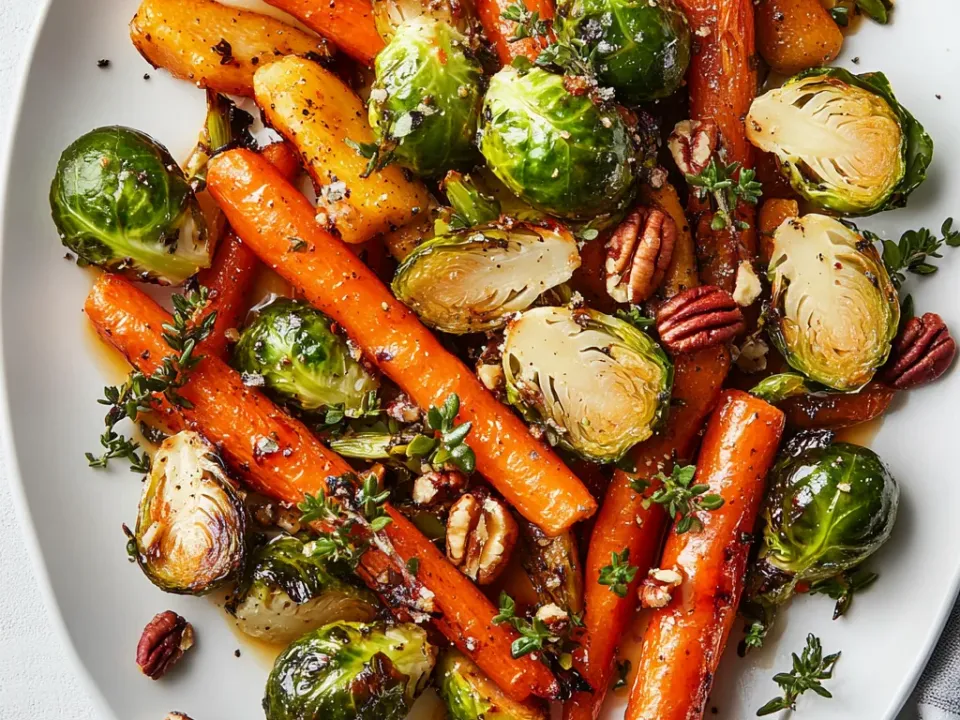
A single sheet-pan side for a holiday table: brussels sprouts, carrots, parsnips and red onion roasted hard, with green beans, cranberries and pecans joining late.
Fifty-five minutes, most of it in the oven, and it goes straight from the pan to a platter.
Why This Recipe Works
- 425°F is high enough to caramelise rather than merely cook. Roasted vegetables at a lower temperature go soft without ever browning, and the browning is the entire flavour of this dish.
- Maple syrup and balsamic together give both the sweetness that helps caramelisation and the acidity that stops it being cloying — neither works as well alone.
- Orange used twice, zest at the start and juice at the end, gets two different things from one fruit: aroma that survives the heat and a fresh glaze that would have evaporated.
- Adding cranberries and pecans off the heat is the difference between a garnish and a burnt one. Both are sugar and oil respectively, and both scorch quickly at 425°F.
Five Vegetables, Two Timings
Brussels sprouts, carrots and parsnips are dense and slow. Green beans are thin and fast. Putting them all on the pan together is the obvious mistake, and the recipe splits them by twenty minutes.
Minute zero
Brussels sprouts, carrots, parsnips, red onion — tossed with the whole dressing
Oil, maple, balsamic, garlic, rosemary, thyme, orange zest, salt and pepper all go on now. The dressing needs the full roast to reduce and glaze rather than sitting wet on the surface.
20 minutes
Nothing — but everything is tossed and the pan rotated
Rotating matters in a 425°F oven, where the back of a sheet pan runs hotter than the front. This is also the moment to check whether the pan is too crowded to colour.
20 minutes, same moment
12 oz green beans, plus butter dotted over
Green beans need only 10 to 12 minutes at this temperature. Added at the start they would be grey and collapsed by the time the parsnips were done.
Out of the oven
Dried cranberries, toasted pecans
Both would burn on a 425°F pan — cranberries scorch and nuts turn acrid. They go on the hot vegetables and warm through in residual heat only.
Last, off the heat
2 tbsp fresh orange juice, then flaky sea salt
The zest went in at the start and survived the roast; the juice goes on now and glazes. Acid added to a hot pan out of the oven coats rather than evaporates.
Ingredient Notes
- Brussels sprouts
- A pound and a half, trimmed and halved. Halved rather than whole — the cut face is what sits against the pan and caramelises.
- Parsnips
- A pound, in batons. Sweeter than carrots and prone to burning at their thin ends, which is why even batons matter.
- Orange, zest and juice
- A teaspoon of zest and 2 tablespoons of juice, used at opposite ends of the recipe. One line in the ingredient list, two separate moments.
- Flaky sea salt
- For finishing, distinct from the kosher salt in the dressing. It is for texture and pop on the surface, not for seasoning the vegetables through.
How to Make It
Heat the oven and line the pans
425°F (220°C), with a large rimmed sheet pan — or two — lined with parchment.
Dress the vegetables
In a large bowl, combine the brussels sprouts, carrots, parsnips and red onion. Toss with the olive oil, maple syrup, balsamic, garlic, rosemary, thyme, orange zest, kosher salt and black pepper until evenly coated.
First roast
Spread in a single layer, using two pans if crowded. Roast 20 minutes, then toss and rotate the pan.
Add the green beans
Add the green beans to the pan and dot the vegetables with butter if using. Roast another 10 to 12 minutes, until caramelised at the edges and tender inside.
Add the cranberries and pecans
Out of the oven, sprinkle over the cranberries and toasted pecans. Squeeze the orange juice over the top and toss gently to glaze.
Season and serve
Taste and adjust, finish with a pinch of flaky sea salt, and transfer to a warm platter to serve immediately.
Success Tips
- Single layer, always. Two pans is better than one crowded one.
- Rotate the pan at the twenty-minute mark.
- Hold the green beans until then.
- Cranberries, pecans and orange juice all go on after the oven, never before.
Serving Ideas
Straight onto a warm platter — a cold platter takes the heat out of roasted vegetables immediately. It sits well next to any roast and is substantial enough to be the main vegetable dish rather than one of several.
Storage and Reheating
Refrigerate
Refrigerate up to 3 days. The vegetables soften and lose their crisp edges, which is unavoidable.
Freeze
Not recommended. Roasted vegetables go watery and limp after thawing, and the texture was the point.
Reheat
Spread on a sheet pan in a hot oven for 8 to 10 minutes rather than microwaving. It is the only method that recovers any of the caramelisation.
Frequently Asked Questions
Can I prepare it ahead?
Trim and cut all the vegetables up to a day ahead and refrigerate them, which is most of the twenty minutes of prep. Do not dress them early — salt draws water out and you will be roasting wet vegetables. Toss with the dressing just before they go in.
Mine came out soft rather than browned.
Almost always a crowded pan. Vegetables piled up release steam faster than the oven can drive it away, so they braise in their own moisture. Using two pans is not optional advice — it is the difference between the two outcomes.
Can I swap the vegetables?
Yes, as long as you keep the timing split. Anything dense — squash, sweet potato, cauliflower — goes in at the start with the sprouts. Anything thin or delicate joins the green beans at twenty minutes.