
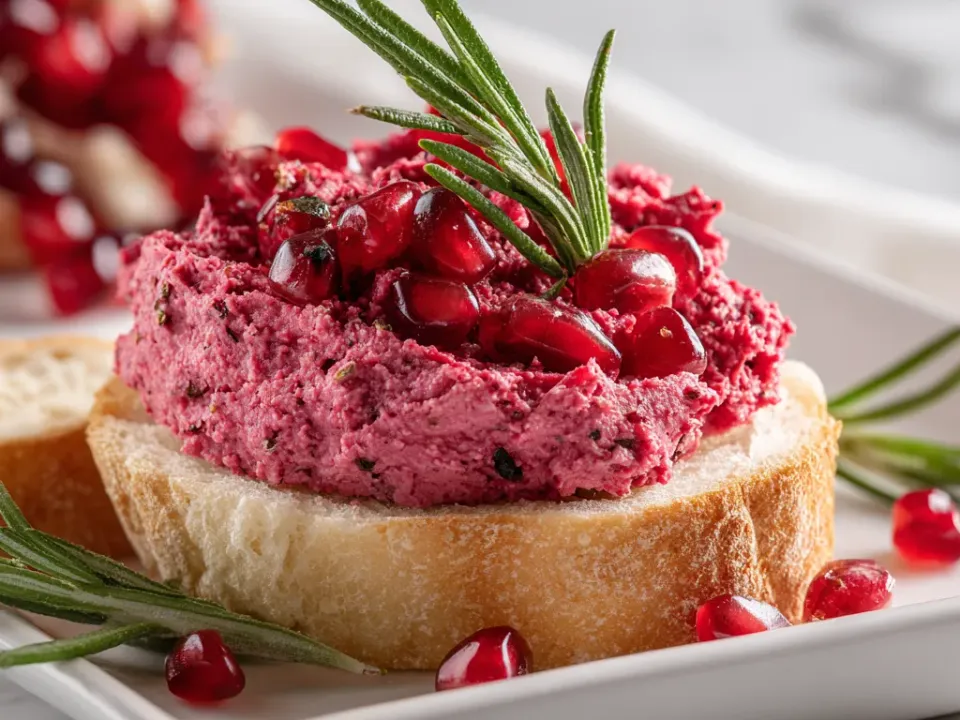
A compound butter for a holiday table: deep pink, faintly tart, and finished in twenty minutes with no cooking at all if you buy the molasses.
It sits somewhere between a condiment and a small gift — a wrapped log keeps for a fortnight and looks like far more effort than it was.
Why This Recipe Works
- Pomegranate molasses is doing something honey and fruit cannot do together: it is sour and sweet and deeply concentrated at once, so a few tablespoons flavour a whole cup of butter.
- A quarter teaspoon of fine sea salt in a sweet spread is what stops it cloying. The adjustment step names salt first for exactly that reason.
- Orange zest and pomegranate are a traditional pairing, and the zest brings aroma that the molasses on its own does not have.
- Beating rather than stirring lightens the texture, so it spreads on a warm roll instead of tearing it.
Built, Not Cooked
Only one step in this recipe involves heat, and it is optional. Everything else is assembly, in an order that matters more than it looks.
The base, beaten first
A cup of softened butter beaten smooth and creamy on its own before anything joins it. Beating it first is what lets it take up the liquids without splitting — flavourings added to unbeaten butter sit in streaks.
The tang
Three tablespoons of pomegranate molasses, or half a cup of pomegranate juice reduced to the same three tablespoons and cooled completely. Cooled completely is not optional: warm syrup into softened butter melts it.
The sweetness and the aromatics
A tablespoon of honey or maple syrup, a teaspoon of orange zest, half a teaspoon of cinnamon, a quarter teaspoon of fine sea salt, and optional vanilla and clove or cardamom. All in together, beaten until fluffy.
The correction
Step 4 is to taste and adjust — more salt for contrast, more honey for sweetness, more molasses for tang. A compound butter is the rare recipe you can taste at full strength before committing it.
The look, if you want it
A teaspoon of molasses held back and streaked through with a butter knife gives a marbled effect. Purely visual, and it is the difference between a beige spread and something that photographs.
Then a choice of format rather than a further step: a jar for soft spreading straight from the fridge, or a parchment log twisted at the ends and chilled 30 to 60 minutes for slices. Either way it needs 10 to 15 minutes out of the fridge before serving, because cold butter tears bread.
Ingredient Notes
- Pomegranate molasses
- Three tablespoons, or half a cup of juice reduced yourself. Bought molasses is more concentrated and more consistent; a home reduction is cheaper and you control how far it goes.
- Unsalted butter
- A cup, two sticks, genuinely softened. Unsalted matters because the recipe adds its own quarter teaspoon and then asks you to adjust.
- Pomegranate arils
- Two tablespoons, for garnish or a gentle fold-in. Folded in they soften and bleed within a day, so scattering on top at serving is the better choice.
How to Make It
Reduce the juice, if you are not buying molasses
In a small saucepan over medium heat, simmer 1/2 cup of pomegranate juice until syrupy and reduced to about 3 tablespoons, 6 to 10 minutes. Cool completely.
Beat the butter
In a mixing bowl, beat the softened butter with a spatula or hand mixer until smooth and creamy.
Add everything else
Add the pomegranate molasses or cooled reduction, honey, orange zest, cinnamon, salt and the optional vanilla and spice. Beat until fluffy and well combined.
Taste and adjust
A pinch more salt for contrast, extra honey for sweetness, or more molasses for tang.
Marble it, optionally
Reserve a teaspoon of molasses and gently streak it through the butter with a butter knife.
Choose a format
Transfer to a jar for soft spreading, or spoon onto parchment and shape into a 6-inch log, twisting the ends to seal.
Chill and serve
Chill the log 30 to 60 minutes to firm. Let it sit 10 to 15 minutes before serving so it spreads easily, and top with pomegranate arils if using.
Success Tips
- Genuinely soft butter, not melted. This is the whole technique.
- Cool the reduction completely if you made your own.
- Taste before you shape it. Once it is a chilled log, adjusting means starting over.
- Take it out of the fridge before it reaches the table.
Serving Ideas
Serve it on warm rolls, toast, pancakes, muffins, roasted vegetables, or melted over hot proteins as a glaze. The vegetable and glaze uses are the surprising ones — this is sweet enough for breakfast and sharp enough for dinner.
Storage and Reheating
Refrigerate
Refrigerate up to 2 weeks, wrapped or sealed. The orange zest fades first, so it is at its best in the first week.
Freeze
Freeze the wrapped log up to 3 months. Slice it straight from frozen and let the slices come to temperature on the plate.
Reheat
Not applicable — it is served soft, not warm. Ten to fifteen minutes out of the fridge is all it needs.
Frequently Asked Questions
What if I cannot find pomegranate molasses?
Make it: the first step reduces half a cup of pomegranate juice to about three tablespoons over 6 to 10 minutes. Cool it completely before it meets the butter, or it will melt the emulsion you are about to build.
Jar or log?
A jar stays soft and is easier for a breakfast table. A log gives you neat rounds to put on a dinner plate or on top of something hot, and it is what makes this work as a gift.
Can I use salted butter?
Yes, but leave out the quarter teaspoon of fine sea salt and taste before adding any. Salt brands vary enough that starting from salted butter and then salting again is how this ends up too salty.