
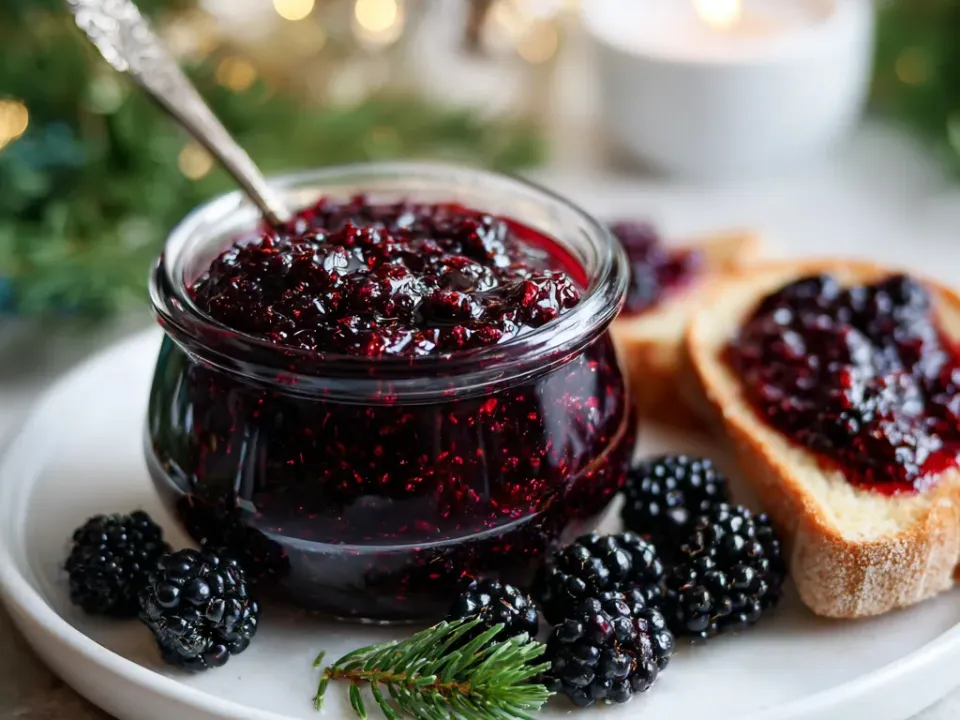
A fruit butter rather than a compound butter: two pounds of blackberries cooked down with sugar, orange and warm spice until a spoon leaves a trail.
It takes about an hour and a quarter, most of it a low simmer that needs stirring but not watching, and it makes two and a half cups.
Why This Recipe Works
- Macerating for ten minutes before any heat means the sugar has already pulled juice out of the fruit, so the pan starts wet and nothing catches.
- Orange juice and zest do two different jobs here — the juice adds the acidity that helps a fruit butter set, and the zest adds an aroma that survives forty minutes of simmering.
- Adding the spices near the end rather than the start keeps them bright. Cinnamon and clove simmered for the full hour go dull and slightly bitter.
- The single tablespoon of dairy butter at the end is for sheen, and it is optional. It changes the look far more than the taste.
How You Know It Is Done
A fruit butter has no fixed cooking time, because how fast it thickens depends on your pan, your heat and how wet the fruit was. There are five physical cues instead, and the last one is the only real answer.
After 10 minutes of macerating
The berries have released their juices
Sugar draws liquid out of the fruit before any heat is applied. Starting the pan before this has happened means the sugar sits on dry fruit and catches.
The first cook
Berries broken down and bubbling, 10 to 15 minutes on medium
This is the structural collapse of the fruit. Only after it has happened is there anything worth reducing.
The long simmer
Thick and glossy, 30 to 40 minutes on low, stirred frequently
Glossy is the visual signal that enough water has gone. Stirring frequently is not optional — the sugar concentration climbs as it reduces and a fruit butter scorches on the base without warning.
After the spices
A spoon leaves a faint trail through the pan
Five to ten minutes more once the cinnamon, cloves and vanilla go in. A trail that closes instantly means there is still too much water.
The chilled plate
A dollop holds a soft mound and does not run
The only test that accounts for cooling. A fruit butter is much looser hot than cold, so judging it in the pan is how you end up with syrup in a jar. If it runs, keep simmering.
Ingredient Notes
- Blackberries
- 32 ounces, fresh or frozen, and they work as equals. Frozen berries release more water, so expect the simmer to run towards the longer end of the range.
- Two sugars
- Three quarters of a cup granulated and a quarter cup light brown. The brown sugar adds a molasses depth that suits the spice; granulated alone tastes flatter.
- One medium orange
- Zested and juiced, about a third of a cup of juice. Both, and both matter — one for set and one for aroma.
- Optional lemon juice
- A tablespoon at the end, for brighter acidity. Worth adding if your berries were very ripe and the pan tastes flat.
How to Make It
Macerate
In a heavy saucepan, combine the blackberries, granulated sugar, brown sugar, orange zest, orange juice and salt. Let it sit 10 minutes until the berries release their juices.
Cook down
Set over medium heat and cook, stirring often, until the berries break down and bubble, 10 to 15 minutes. Reduce to low and simmer 30 to 40 minutes, stirring frequently, until thick and glossy.
Blend and strain
Puree smooth with an immersion blender. For a seedless butter, push it through a fine-mesh sieve back into the pot.
Spice and finish
Stir in the cinnamon, cloves, vanilla and optional lemon juice. Simmer 5 to 10 minutes more until a spoon leaves a faint trail, then swirl in the butter for sheen if using.
Test it
Spoon a small dollop onto a chilled plate. If it holds a soft mound and does not run, it is ready. If it is thin, simmer a little longer.
Jar it
Cool 15 minutes, then ladle into clean, warm jars leaving a little headspace. Seal, cool to room temperature and refrigerate.
Or use a slow cooker
Combine everything except the vanilla and butter in a slow cooker and cook uncovered on High 3 to 4 hours, stirring occasionally and venting the lid so steam escapes. Blend smooth, stir in the vanilla and butter, and cook 15 minutes more to thicken.
Success Tips
- Chill the test plate before you start.
- Stir frequently during the long simmer. A scorched fruit butter tastes burnt all the way through.
- Sieve it if you dislike seeds — blackberry seeds are noticeable and there is no removing them later.
- Judge it cold, not hot.
Serving Ideas
On toast, scones or a cheeseboard, where the acidity works against something rich. In warm jars with a label it is one of the better things to give away at Christmas, which is what the yield is really for.
Storage and Reheating
Refrigerate
Refrigerate up to 3 weeks in sealed jars. This is a refrigerator preserve as written — it is not water-bath processed, so it is not shelf stable.
Freeze
Freeze in jars with headspace up to 6 months. Fruit butters freeze better than jams because there is no gelled structure to break.
Reheat
Not needed. If it firms up more than you want in the fridge, let it stand at room temperature for twenty minutes rather than warming it.
Frequently Asked Questions
Is the slow cooker version as good?
It is an alternative and it works, with one important detail: the lid stays off or vented, because a covered slow cooker traps the steam that needs to leave. It trades an hour of stirring for three to four hours of occasional attention.
Can I keep it in the cupboard?
Not as written. The recipe seals warm jars and refrigerates them, which is a refrigerator preserve rather than a canned one. Shelf storage needs proper water-bath processing, which this recipe does not include.
Can I use other berries?
Raspberries and blueberries both work with the same method, though sweetness and water content vary, so lean on the chilled-plate test rather than the times. Raspberries are seedier still, which makes the sieve step more worthwhile.