
Ten items and two hours, assembled from two cooled chocolate layers.
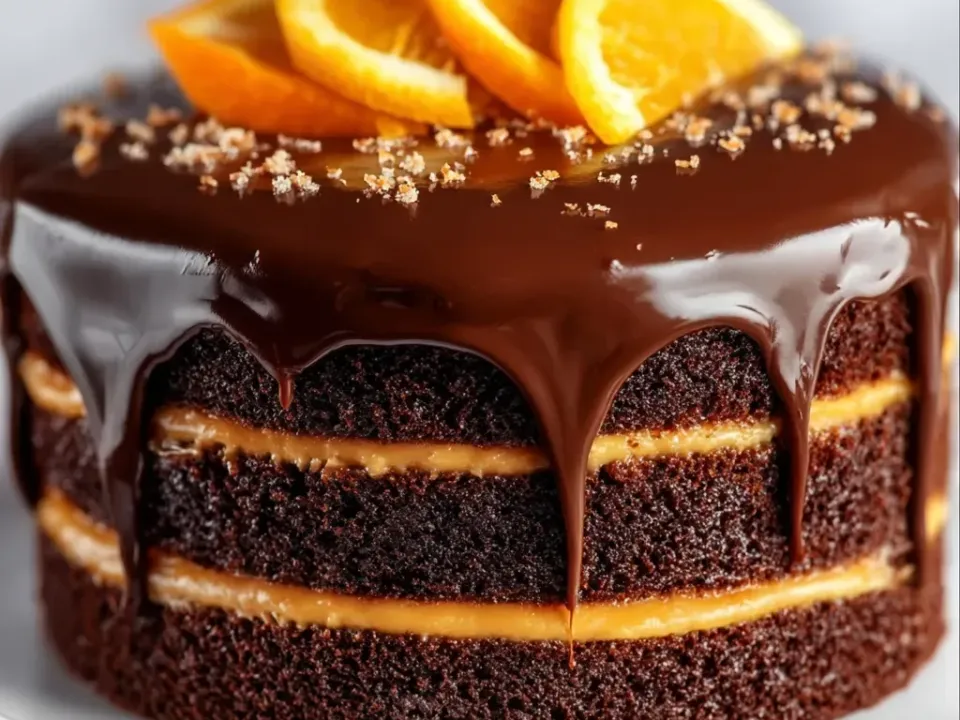
Only the top of this cake is frosted. Leaving the sides exposed is what gives the ganache bare cake to run down, and it is a deliberate finish rather than an unfinished one.
Why This Recipe Works
- Beating butter with powdered sugar and juice makes a buttercream stiff enough to hold two layers apart.
- Spreading the top filling to the centre only stops it squeezing out at the edge.
- Steaming cream over chopped chocolate melts it without splitting the ganache.
- Two minutes' rest before stirring lets the chocolate melt through evenly.
- Cooling the ganache to thick-but-pourable controls how far the drips run.
Ingredient Notes
- Butter, powdered sugar, orange juice and zest
- A cup, three cups, two tablespoons and a tablespoon. Together they are the filling — an orange buttercream, not a curd and not marmalade.
- Dark chocolate and heavy cream
- Six ounces chopped and half a cup. Chopped rather than in chunks so the steaming cream melts it all at the same rate.
- Oranges for garnish
- Two, thinly sliced and folded on top. The title names no fresh fruit, but it is one of the clearest things on the finished cake.
- Fine chocolate cake crumbs
- Two tablespoons, scattered over the ganache. The fine brown sprinkle in the photograph, and easily made from cake trimmings.
How to Make It
Butter, powdered sugar, orange juice and zest beaten to a pale orange buttercream
Beat butter with powdered sugar, orange juice, and zest into a pale orange buttercream.
Layers stacked, top filling to the centre only, sides left bare
Place one cake layer on a plate, spread with half the orange buttercream, add the second layer, and spread the rest over the top center only; leave the sides exposed.
Steaming cream poured over chocolate, rested two minutes, stirred smooth
Heat cream until steaming and pour over chocolate; rest 2 minutes, then stir smooth.
Ganache cooled thick but pourable, spooned over to drip down the sides
Cool ganache until thick but pourable and spoon over the top so it drips down the unfrosted sides.
Folded orange slices and cake crumbs, set before slicing
Decorate with folded fresh orange slices and fine cake crumbs; set before slicing.
Five Layers, and the Sides Are Deliberately Naked
This is a small cake with an unusual finish: only its top surface is covered, and every side is left showing bare chocolate sponge and two bands of pale orange. That is not a shortcut. Read the stack from the plate up and each decision leads to the drips.
2 tbsp fine CAKE CRUMBS and folded ORANGE SLICES
Both onto the ganache before it sets, so they hold. Two components the title names neither of: a fine brown sprinkle, easily made from cake trimmings, and 2 oranges THINLY SLICED and folded. Then LET IT SET before slicing - a ganache cut soft smears down the face of every slice.
COOLED until thick but pourable, then spooned over
This is the control on the whole look. Warm ganache sheets straight down the sides and pools on the plate; over-cooled ganache sits on the top like frosting. THICK BUT POURABLE is the window where it moves over the edge, runs partway down the exposed cake and stops - which is exactly what the photograph shows.
The ganache - steaming cream, 2 minutes, THEN stir
1/2 cup of cream heated UNTIL STEAMING and poured over 6 oz of CHOPPED dark chocolate, RESTED 2 MINUTES, then STIRRED SMOOTH. Steaming rather than boiling: boiled cream can split a ganache into oil and solids. The two-minute rest is what does the actual melting - stirring immediately drags unmelted pieces around in cooling cream and gives a grainy result. Chopped rather than chunked so everything melts at one rate.
Layer two, then the rest of the buttercream - CENTRE ONLY
The second sponge on top, and the remaining buttercream spread OVER THE TOP CENTER ONLY, with the SIDES LEFT EXPOSED. This is the detail that shapes the whole finish. Spreading to the edge would push filling out under the weight and, more importantly, would leave no bare cake for the ganache to run down. Keeping it central also gives the ganache a slight dome to flow off.
HALF the orange BUTTERCREAM
1 cup of softened BUTTER beaten with 3 cups POWDERED SUGAR, 2 tbsp ORANGE JUICE and 1 tbsp finely grated ZEST. The filling is BUTTERCREAM, not curd and not marmalade - and that decides more than flavour: a curd or a cream would have made this a cold-hold cake, and a buttercream does not. Stiff enough to hold the weight of a second sponge without compressing.
Layer one - an 8-inch chocolate sponge, COOLED
Cooled completely before anything touches it. Buttercream spread onto a warm layer melts, slides and takes the layer above it with it. This cake is assembled rather than baked as a whole - the two layers arrive already made and cool.
Success Tips
- Keep the top buttercream to the centre so it cannot squeeze out under the ganache.
- Let the ganache cool until it holds a line off the spoon — too warm and it all runs off.
- Slice with a warm dry knife so the ganache cuts rather than cracks.
Serving Ideas
Ten slices from a small round two-tier chocolate cake with two pale orange buttercream layers, exposed sides, a thick glossy ganache dripping down them, fine cake crumbs and folded fresh orange slices on top.
Frequently Asked Questions
Is the orange layer curd or marmalade?
Neither. It is an orange buttercream — butter beaten with powdered sugar, orange juice and zest — which is why the cake does not need to be kept cold.
Why are the sides not frosted?
So the ganache has bare cake to run down. The exposed layers and the drips are the intended finish, not an unfinished one.
How thick should the ganache be before it goes on?
Thick but still pourable. Too warm and it sheets straight off onto the plate; too cool and it sits in a lump instead of dripping.