
Seventeen ingredients across a cupcake, a buttercream and a topping, and forty-five minutes plus cooling.
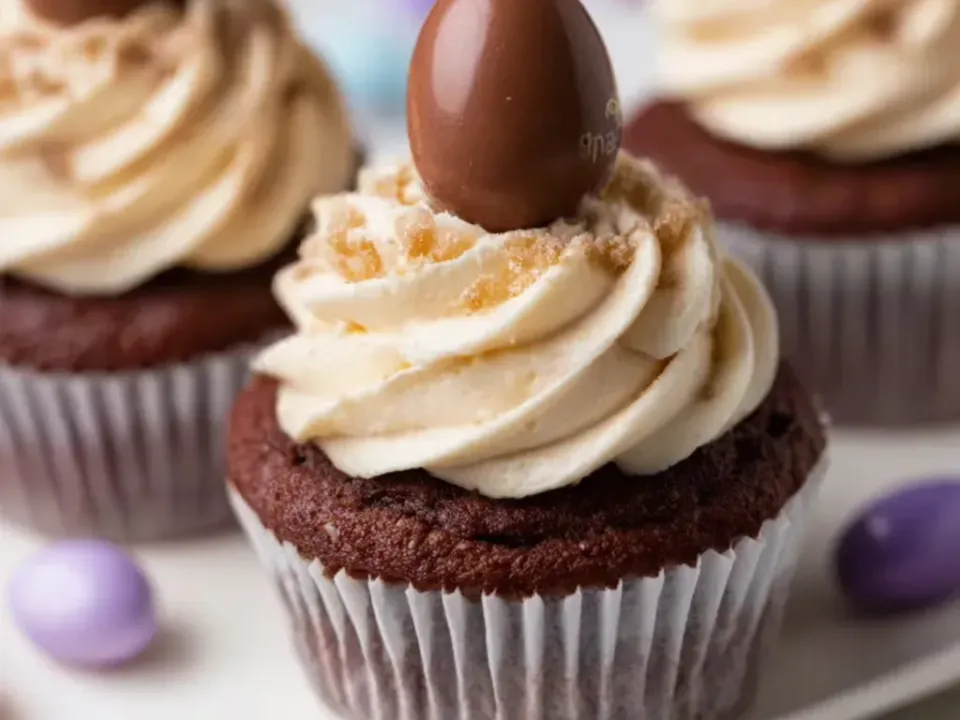
The finished cupcake is three things stacked: a tall pale swirl, a scatter of coarse golden crumb, and one whole chocolate egg on top.
Why This Recipe Works
- Oil rather than butter in the batter keeps a cocoa cupcake tender once cool.
- Buttermilk with baking soda gives lift and keeps the crumb soft.
- Mixing just until smooth avoids the tough texture overworking cocoa batter causes.
- Cooling completely before piping is what lets a tall swirl hold its shape.
- Coarse crumb over soft buttercream gives the topping something to bite against.
Ingredient Notes
- Unsweetened cocoa powder
- Half a cup against one cup of flour. That ratio is what makes these read as chocolate cupcakes rather than lightly cocoa-flavoured ones.
- Buttermilk
- Three quarters of a cup, working with the baking soda. It is also why the crumb stays soft under a heavy topping.
- Crushed graham cracker or digestive biscuit crumbs
- A third of a cup, scattered coarse over the buttercream. A component the title never names and clearly visible on the finished cupcakes.
- Chocolate creme eggs
- Twelve small ones, unwrapped — one whole egg per cupcake. They are named here purely as an ingredient.
How to Make It
Oven to 350°F, twelve cases lined
Heat oven to 350°F and line a 12-cup muffin pan.
Dry, wet, then combined just until smooth
Whisk flour, cocoa, baking powder, baking soda, and salt. In another bowl whisk sugar, eggs, oil, vanilla, and buttermilk. Combine just until smooth.
Eighteen to twenty minutes, then cooled completely
Divide batter and bake 18 to 20 minutes until the cupcakes are set and a tester comes out clean. Cool completely.
A tall pipeable pale buttercream
Beat butter, powdered sugar, vanilla, and enough cream for a tall pipeable pale buttercream.
Swirl, crumb, and one whole egg each
Pipe a tall swirl on each cupcake, scatter with coarse golden biscuit crumbs, and top with one whole Cadbury chocolate egg.
Candy eggs go on the plate, not the cupcake
Pastel candy eggs may be scattered around the serving plate but are not part of the cupcake itself.
The Topping, in the Order It Goes On
Every element of the finish is doing something specific, and one of them is not on the cupcake at all. Order matters here more than it looks: each layer has to be in place before the next has anything to sit on.
The cupcake - COMPLETELY cool first
12 cocoa-and-buttermilk cupcakes, baked 18 to 20 MINUTES at 350F until set and a tester comes out clean, then COOLED COMPLETELY. Not a formality: buttercream is mostly butter, and residual warmth in a cupcake will soften a swirl into a slump. The oil-and-buttermilk batter helps here too - it keeps the crumb tender once cold, where an all-butter cake firms up.
A TALL PIPED swirl, not a poured glaze
1 cup of softened butter beaten with 3 1/2 cups powdered sugar, 2 tsp vanilla and 2 TO 3 tbsp of heavy cream. The range on the cream is the whole craft of it: enough to pipe smoothly, not so much that the swirl cannot stand. It is PIPED rather than poured, and there is a structural reason as well as a visual one - a glaze could not hold what comes next.
Coarse golden crumb, over the soft swirl
1/3 cup of crushed graham cracker or digestive biscuit, scattered while the buttercream is still fresh so it holds. COARSE is the operative word: fine crumbs sink in and vanish, where coarse ones stay visible and give the topping a bite against all that softness. The title names no crumb, but it is part of the finished cupcake.
ONE whole chocolate egg per cupcake
12 small chocolate creme eggs, unwrapped, one to a cupcake, WHOLE rather than halved or chopped. The tall firm swirl from the previous layer is what carries it. The product is named here only as an ingredient - there is no endorsement, affiliation or connection of any kind claimed or implied by this recipe.
The pastel eggs - on the PLATE, not the cupcake
Scattered AROUND the serving plate. This is the distinction step 6 draws: they are plate styling, and they are not part of the cupcake. A reader following this recipe puts nothing pastel on top - the only thing crowning each cupcake is the single brown chocolate egg.
The stack is deliberate all the way down: cold cupcake so the swirl stands, a swirl firm enough to hold an egg, crumb applied while the buttercream is still tacky, and the egg last so nothing disturbs it. Assembled in any other order, at least one layer fails to stay where it was put.
Success Tips
- Let the cupcakes go completely cold; a tall swirl slumps on a warm one.
- Add the cream to the buttercream a spoonful at a time until it pipes without drooping.
- Crush the biscuit coarsely — fine crumbs disappear into the buttercream.
Serving Ideas
Twelve cupcakes on a white plate in their fluted cases, each under a tall pale buttercream swirl with coarse golden crumbs and one whole brown chocolate egg, with pastel candy eggs scattered around the plate.
Frequently Asked Questions
Do the pastel candy eggs go on the cupcakes?
No. They are scattered around the serving plate as styling. Each cupcake carries exactly one whole chocolate egg.
Why does the buttercream need to be piped?
Because the topping is a tall swirl, not a poured glaze, and it has to be firm enough to hold a whole chocolate egg on top.
What is the golden crumb?
A third of a cup of crushed graham cracker or digestive biscuit, scattered coarse over the buttercream before the egg goes on.