
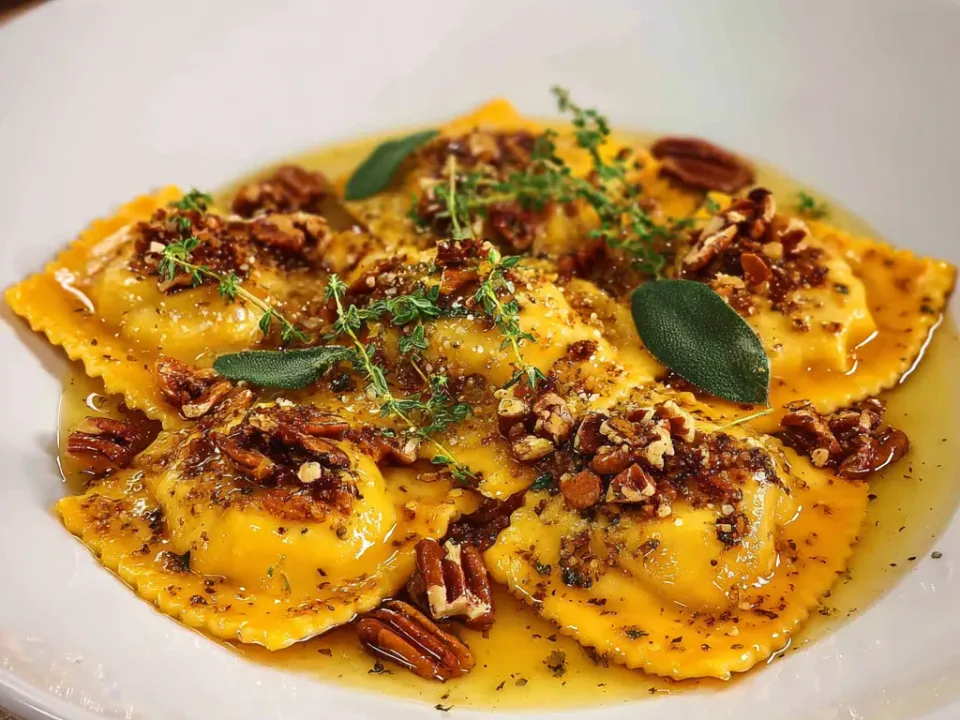
Shop-bought ravioli treated properly: browned butter, sage crisped in it, toasted pecans and enough lemon to keep it from being heavy.
Thirty minutes, one pot and one pan, and it eats like something considerably more involved.
Why This Recipe Works
- Brown butter is the entire sauce. Toasting the milk solids turns plain butter nutty and savoury, which is what stands up to a sweet squash filling.
- Sage crisped in the butter does two jobs — it flavours the fat and becomes a garnish with texture.
- Pecans toasted separately and added at the end stay crisp. Left in the butter for the whole browning stage they would burn.
- Lemon zest and juice against brown butter and squash is the balance that stops the plate reading as sweet. It is the reason this works as dinner.
The Ninety-Second Window
Everything in this recipe is easy except one stage, and that stage does not wait. These are the moments to be standing at the pan.
Toasting the pecans
2 to 3 minutes, stirring, until fragrant
Done first and removed, because they burn in the butter later. Nuts go from toasted to acrid with no visual warning — smell is the reliable cue.
The butter foaming
Foam rises, then subsides
That is the water boiling off. Nothing browns until it has gone, so the foam subsiding is the signal that the real cooking is about to start.
The milk solids turning
Golden-brown flecks at the bottom, nutty smell, 3 to 5 minutes total
The whole window is here. Brown butter is the solids toasting, and they go from nutty to burnt in seconds — swirl the pan and watch the colour, not the clock.
Adding the lemon
Off the heat, always
Acid in a hot pan spits, and it also stops the butter cooking any further. Off the heat it brightens the sauce instead of scorching in it.
Tossing
1 to 3 tbsp of pasta water, until it coats
Butter alone slides off filled pasta. The starch in the reserved water is what turns it into something that clings.
Ingredient Notes
- Butternut squash ravioli
- 18 oz, fresh or frozen — either works. This is a recipe built around a good shop-bought filled pasta rather than a from-scratch one.
- Fresh sage
- Twelve whole leaves, crisped in the butter. Dried sage cannot do this — the leaf itself becomes part of the dish.
- Lemon zest and juice
- A teaspoon and a tablespoon, both added off the heat. Small quantities doing the balancing work against butter and sweet squash.
How to Make It
Cook the ravioli
Bring a large pot of salted water to a boil and cook the ravioli according to the package, until they float. Reserve some pasta water before draining.
Toast the pecans
Warm the olive oil in a large skillet over medium, add the chopped pecans and toast 2 to 3 minutes, stirring, until fragrant. Remove and set aside.
Brown the butter with the sage
In the same skillet over medium, melt the butter. Add the sage leaves and cook, swirling, 3 to 5 minutes, until the butter is golden-brown and nutty and the sage is crisp.
Finish the sauce off the heat
Stir in the red pepper flakes if using, then take the pan off the heat and add the lemon juice and zest.
Combine
Add the drained ravioli and the toasted pecans and toss gently to coat, adding 1 to 3 tablespoons of reserved pasta water until the sauce clings.
Serve
Plate with Parmesan and the crispy sage on top, and finish with more pepper and Parmesan to taste.
Success Tips
- Toast the pecans first and take them out. Added early they burn while the butter browns.
- Watch the colour, not the clock. Three to five minutes is a guide; the pan tells you the truth.
- Take the pan off the heat before the lemon goes in.
- Toss gently — filled pasta splits, and a broken ravioli empties its filling into the sauce.
Serving Ideas
It needs nothing beyond extra Parmesan, though a sharp green salad alongside balances the richness. Serve straight from the pan; brown butter firms as it cools.
Storage and Reheating
Refrigerate
Refrigerate up to 2 days, though it is much better fresh. The butter solidifies and the sage loses its crispness.
Freeze
Not recommended. Cooked filled pasta goes soft and the sauce separates.
Reheat
Gently in a skillet with a splash of water to loosen the butter. The microwave makes the ravioli rubbery.
Frequently Asked Questions
How do I know when the butter has gone too far?
Golden-brown flecks and a nutty smell mean it is ready. Dark brown or black flecks and a sharp, acrid smell mean it has burnt, and there is no fixing it — start again with fresh butter. A pale pan makes the difference easy to see.
Can I use different nuts?
Walnuts and hazelnuts both work and toast in about the same time. Pine nuts are traditional with sage but burn even faster, so watch them closely.
Can I use a different filled pasta?
Brown butter and sage suit most squash, pumpkin or cheese fillings. A meat-filled pasta works too, though you lose the sweet-against-nutty contrast the squash gives.