
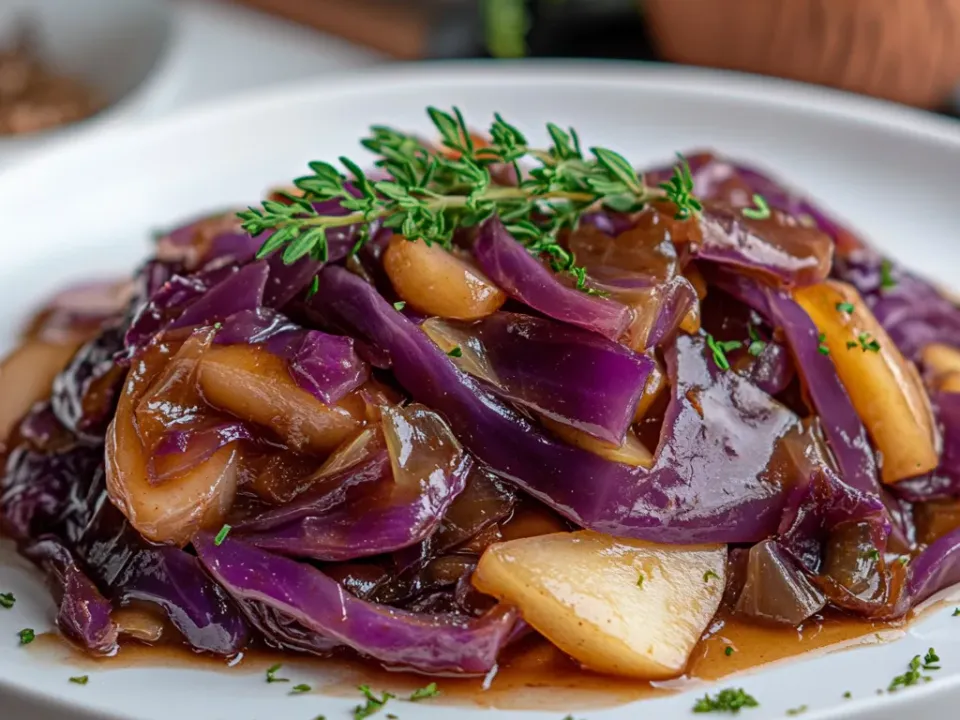
A Central European braise of red cabbage with apples, cider vinegar and warm spices — the side dish that traditionally sits next to pork, goose or sausages.
One pot, about an hour, and it is better made a day ahead than served straight away.
Why This Recipe Works
- Cooking the onion first, then wilting the cabbage in the fat, then adding the apples and spices for a minute before any liquid, means each layer is seasoned before it is submerged. Once the cider goes in, nothing else browns.
- Cinnamon, allspice and cloves are the classic trio for this dish and the quantities are restrained — half a teaspoon, a quarter, a quarter. Warm spices in a savoury braise cross into potpourri very easily.
- The bay leaf and the whole cloves are removed before serving. Ground cloves at a quarter teaspoon disappear into the dish; whole ones are unpleasant to bite into.
- Finishing uncovered is what separates this from boiled cabbage. The liquid reduces onto the vegetables rather than being drained away with the flavour in it.
Why the Vinegar Is Not Optional
Red cabbage contains anthocyanins, the same pigments that colour blueberries, and they change colour with pH. That single fact explains most of what this recipe does, and it is why a quarter cup of vinegar goes into a dish that is not especially sour.
Acid keeps it redStill vividly purple after 30 minutes
In acidic conditions those pigments stay red and purple. In neutral or alkaline conditions — which is what plain water and a long cook give you — they drift towards blue and grey. Braised red cabbage made without acid comes out a muddy slate colour, and no amount of seasoning fixes that.
The apples are working tooSlices still holding their shape
Two firm apples are not just sweetness and texture; they are also acidic. Together with the cider and the vinegar they keep the pot on the right side of that pH line for the whole braise.
Sugar balances rather than sweetensTangy first, sweet second
Two tablespoons against a quarter cup of vinegar is a deliberately small amount. This is a sweet-and-sour dish where neither side should win — the sugar exists to make the vinegar palatable, not to make the cabbage a dessert.
Uncover to finishGlossy and tender, not mushy
Thirty minutes covered softens the cabbage; ten to fifteen uncovered drives off the excess liquid. The result should be glossy, and that gloss is reduced cider and vinegar clinging to the cabbage rather than pooling under it.
Ingredient Notes
- Apple cider vinegar
- A quarter cup, and the one ingredient not to reduce. It is doing the colour chemistry as well as the flavour.
- Firm apples
- Two, Honeycrisp or Granny Smith, for a reason — a soft apple disintegrates over 45 minutes and you lose the pieces entirely.
- Apple cider, or water
- Half a cup. Cider adds sweetness and body; water works and makes the dish noticeably sharper, which the sugar can be nudged up to compensate for.
- Dijon mustard and orange zest
- Both optional and both added at the end rather than cooked. The mustard sharpens, the zest lifts — neither would survive being added at the start.
How to Make It
Prep the produce
Core and thinly slice the red cabbage; thinly slice the apples and red onion.
Soften the onion
Warm a large Dutch oven over medium heat, add the butter or olive oil and the onion, and cook 3 to 4 minutes until translucent.
Wilt the cabbage
Add the cabbage and a pinch of salt, toss to coat in the fat, and cook 5 minutes, stirring, until it starts to wilt.
Apples and spices
Stir in the apples, cinnamon, allspice, cloves, black pepper and bay leaf, and cook 1 minute until fragrant.
Add the liquid
Add the apple cider, cider vinegar and brown sugar or maple syrup. Stir well and bring to a gentle simmer.
Braise covered
Cover and braise on low heat 30 minutes, stirring every 10 minutes so it does not stick.
Reduce uncovered
Uncover and cook 10 to 15 minutes more, until the liquid has reduced and the cabbage is glossy and tender rather than mushy.
Finish and adjust
Stir in the Dijon and orange zest if using. Taste and adjust the salt, pepper and the vinegar-to-sweetness balance.
Remove the aromatics
Take out the bay leaf, and the whole cloves if you used them.
Serve
Serve warm, with chopped parsley if you like.
Success Tips
- Slice thinly and evenly; this dish has no other knife work to hide behind.
- Do not skip or shrink the vinegar.
- Stir every ten minutes during the covered braise — the sugar makes it catch.
- Stop while it is still tender rather than soft. It carries on cooking off the heat.
Serving Ideas
The traditional partners are roast pork, goose, duck and sausages, and it is very good beside a holiday roast because it cuts through everything rich on the plate. It is also a genuinely good vegetarian side that does not need meat nearby to make sense.
Storage and Reheating
Refrigerate
Refrigerate up to 5 days, and it improves for the first two — the spices and the sweet-sour balance settle. This is a dish worth making the day before.
Freeze
Freezes well up to 3 months. The cabbage softens further on thawing, which matters less here than it would in a dish where crispness was the point.
Reheat
Gently in a pan with a splash of cider or water. If it has tightened in the fridge, a small splash of vinegar at the end wakes it back up.
Frequently Asked Questions
My cabbage turned a bluish grey.
Not enough acid, or it was added too late. The pigments in red cabbage shift colour with pH, so the vinegar and cider have to be in the pot for the braise rather than stirred in at the end. Adding a splash of vinegar now will bring some of the colour back.
Can I make it ahead for a holiday meal?
It is better for it. Make it a day or two before, refrigerate, and reheat gently with a splash of liquid. Very few side dishes on a holiday table can be finished that far in advance, which is part of why this one has stayed on them.
Is it vegan?
It is if you take the two options already in the recipe — olive oil instead of butter, and maple syrup instead of brown sugar, though most brown sugar is vegan anyway. Nothing else in the recipe is animal-derived.