
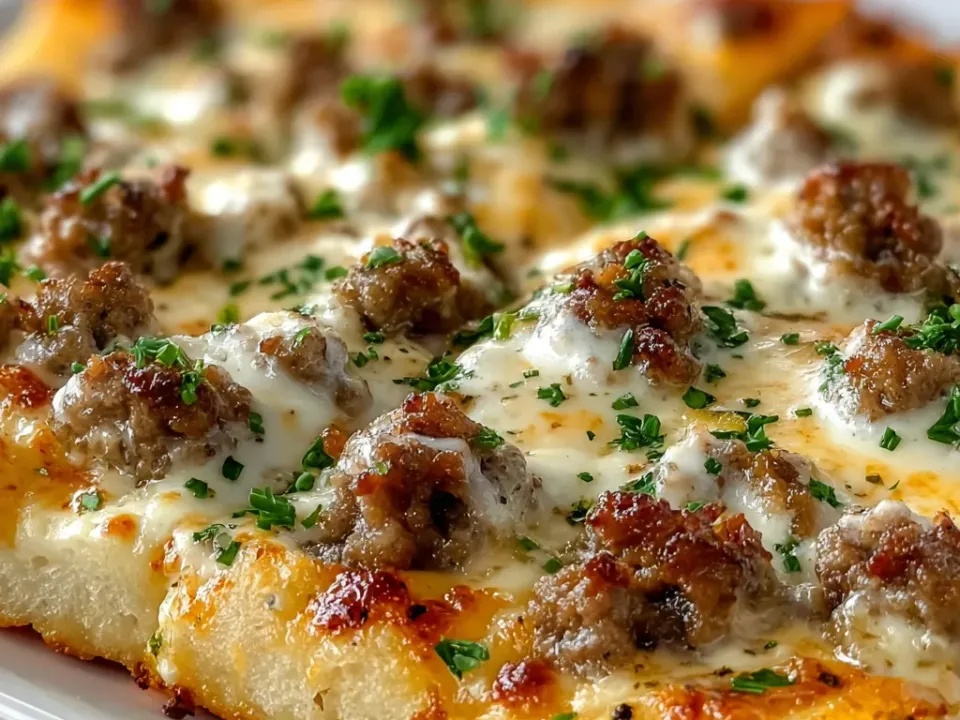
Eight refrigerated biscuits pressed into a single crust on a 12-inch pan, with the seams sealed so nothing runs through.
Half a pound of sausage becomes a classic milk gravy in the pan it was browned in; the other half goes on top with scrambled eggs and cheddar for eighteen to twenty-two minutes at 400°F.
Why This Recipe Works
- Splitting the pound of sausage is the structural idea. Half dissolves into the gravy and gives it the flavour; half stays whole on top and gives the pizza its texture. One pound doing both jobs is why the recipe reads oddly at step 3.
- The flour goes into the sausage fat rather than into butter. That is what makes it a sausage gravy rather than a béchamel with sausage in it — the roux carries the meat's rendered fat.
- Two and a half cups of milk against three tablespoons of flour makes a gravy that is thick but still spreadable. Any thicker and it will not spread over biscuit dough without tearing it.
- The eggs are scrambled only to just set. They finish in the oven, and eggs cooked hard in the pan come out of the bake dry and rubbery.
- 400°F and a golden underside as the cue. Biscuit dough under a wet gravy is the part most likely to stay raw, which is why the recipe tells you to check underneath rather than on top.
The Pizza, Bottom Up
This is a pizza built the way a pizza is built, with every position filled by something from a plate of biscuits and gravy. Reading it as a stack is the quickest way to see why each layer is where it is.
The finish: a cup and a half of cheddar
Over everything, and it browns as the crust cooks through. The doneness cue is the crust rather than the cheese — golden underneath is what step 7 asks for.
The second topping: the reserved sausage
The half pound set aside at step 3, scattered over the eggs. This is the sausage you actually see and bite, as opposed to the sausage dissolved into the gravy.
The first topping: scrambled eggs
Four eggs scrambled in butter in a separate pan to just set. Just set, because they have another eighteen to twenty-two minutes in the oven ahead of them.
The sauce: sausage gravy
Three tablespoons of flour cooked for a minute into half the sausage and its fat, then two and a half cups of milk stirred in gradually and simmered thick. This is the pizza sauce and it is what the whole dish is named for.
The crust: eight biscuits, pressed into one
Refrigerated dough pressed together on a greased 12-inch pan with the seams sealed. Sealed properly — an unsealed seam opens in the oven and the gravy runs through it onto the pan.
Ingredient Notes
- Refrigerated biscuit dough
- One 16.3-ounce can, eight biscuits, pressed into a single crust. Keep it cold until step 2 — warm dough is sticky and tears when it is pressed out.
- Breakfast sausage
- One pound, split in half at step 3. Bulk sausage rather than links, so it crumbles into both the gravy and the topping.
- Whole milk
- Two and a half cups. Whole milk makes a gravy that stays smooth on a hot crust; skimmed thins out and can look watery under the cheese.
- All-purpose flour
- Three tablespoons, cooked into the sausage fat for a full minute. That minute is what stops the gravy tasting of raw flour.
- Large eggs
- Four, scrambled in butter to just set. They are a topping rather than a binder, and they finish cooking in the oven.
How to Make It
Heat the oven and grease the pan
Heat the oven to 400°F. Grease a 12-inch pizza pan or rimmed baking sheet.
Make the crust
Press the biscuits together into one even pizza crust, sealing the seams.
Brown the sausage and split it
Cook the sausage in a skillet until browned and fully cooked. Transfer half the sausage to a plate.
Make the gravy
Stir the flour into the sausage remaining in the skillet and cook for 1 minute. Gradually stir in the milk, pepper and salt and simmer until thickened.
Scramble the eggs
Scramble the eggs in butter in a separate skillet until just set.
Build the pizza
Spread the sausage gravy over the biscuit crust. Top with scrambled eggs, reserved sausage and cheddar.
Bake
Bake for 18 to 22 minutes, until the biscuit crust is cooked through and golden underneath.
Rest, then slice
Rest for 5 minutes before slicing.
Success Tips
- Press the biscuit seams together firmly; gaps open up under gravy.
- Split the sausage before the flour goes in, not after.
- Add the milk gradually and keep stirring, or the gravy lumps.
- Pull the eggs off the heat while they still look slightly loose.
- Lift an edge of the crust at eighteen minutes and check it is golden underneath.
Serving Ideas
Cut into eight slices for brunch, with hot sauce and coffee. It also works cut into smaller squares as part of a larger breakfast spread.
Storage and Reheating
Refrigerate
Refrigerate slices in an airtight container for up to 3 days. The crust softens under the gravy overnight, which the oven partly reverses.
Freeze
Freezing is not recommended. A milk gravy on a biscuit base does not survive thawing — the crust goes soggy and the gravy separates.
Reheat
Reheat slices on a tray at 350°F for 10 to 12 minutes so the base re-crisps. A microwave leaves the crust soft.
Frequently Asked Questions
The crust was doughy underneath.
It needed longer, or the gravy was too thin when it went on. The doneness cue is golden underneath rather than a set time, so lift an edge and look.
Why is the sausage split in half?
One pound does two jobs. Half is cooked into the gravy for flavour and half is scattered on top for texture — that is the whole reason step 3 reads the way it does.
The gravy went lumpy.
The milk went in too fast. Add it gradually to the flour and sausage, stirring as you go, and it comes together smooth.
Can I make any of it ahead?
The gravy and the sausage can be made a day ahead and refrigerated separately. Press the crust and assemble on the day — biscuit dough sitting under gravy will not bake up properly.