
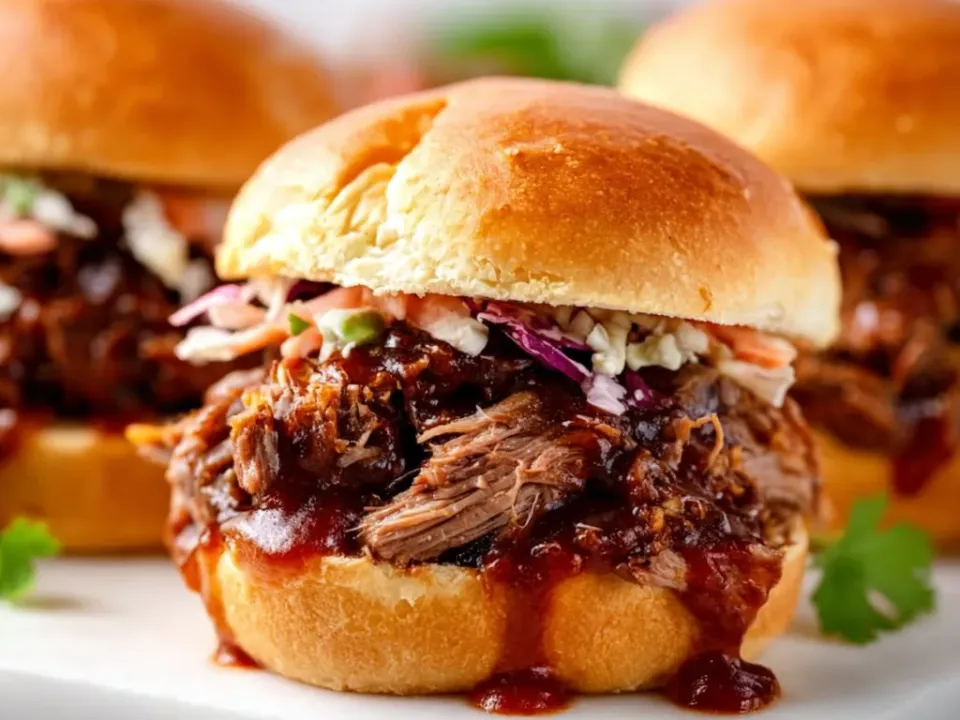
Twelve ingredients and just under four hours, almost all of it the braise.
The coleslaw is part of the sandwich rather than a side, and it goes on top of the beef.
Why This Recipe Works
- Searing the chuck before braising builds the colour the sauce sits on.
- A covered braise at 325 degrees keeps the meat moist while collagen breaks down.
- Three hours is what turns a firm roast into something that pulls apart.
- Thick barbecue sauce coats shredded beef instead of running out of the bun.
- Mayonnaise and vinegar keep the slaw creamy rather than watery.
Ingredient Notes
- Beef chuck roast
- Three pounds. A collagen-rich cut — it is what makes a three-hour braise produce meat that pulls apart rather than dry slices.
- Thick barbecue sauce, divided
- A cup and a quarter. One cup goes into the shredded beef; the rest is only for seasoning the slaw if it needs it.
- Green and purple cabbage with carrot
- Two cups, one cup and one cup. The coleslaw is a defining component the title never names.
- Mayonnaise and cider vinegar
- A third of a cup and a tablespoon. They are what keep the slaw creamy rather than wet.
How to Make It
Oven to 325°F, the chuck seasoned and seared
Heat oven to 325°F. Season the chuck with salt and pepper and sear in oil.
Braised covered about three hours to fork-tender
Add broth, cover, and braise until fork-tender and easily shreddable, about 3 hours; the meat will be well above the 145°F minimum by the time it is shreddable.
Shredded into a cup of barbecue sauce
Shred the beef and stir with 1 cup barbecue sauce until thickly coated.
The slaw kept creamy, not saucy
Mix both cabbages and carrot with mayonnaise, vinegar, and the remaining barbecue sauce only if needed for seasoning; keep the slaw creamy, not saucy.
Beef into the buns, slaw on top
Pile barbecue beef into the buns and top with creamy coleslaw.
No cheese and no pickles
Serve without cheese or pickles.
Two Different Endpoints, and Only One Is a Temperature
Most braises have a safety gate you have to reach. This one has a gate you pass early and then keep cooking for hours - and understanding why is the difference between beef that slices and beef that pulls apart.
- The cut - 3 lb of CHUCK, not a lean roastChuck is chosen for what it is full of: connective tissue. Collagen is what makes a cheap cut tough at 145F and what makes it silky and shreddable after hours of moist heat, once it has broken down into gelatin. A lean roast has nothing to convert, so it goes from safe to dry with no shreddable stage in between - which is why the cut is part of the recipe rather than a suggestion.
- SEARED first, in oilSeasoned with 1 tsp salt and 1/2 tsp pepper and seared before any liquid. This is the only dry-heat browning the meat will get: everything after it happens covered and wet, where nothing browns. The colour built here sits underneath the barbecue sauce for the rest of the recipe.
- COVERED, with 1 cup of broth, at 325FA modest amount of liquid and a lid. The point is not to boil the beef but to hold a humid environment around it so the surface never dries while the inside spends hours in the collagen-breakdown range. 325F is low enough to get there slowly and high enough to get there at all.
Check before you continue
At least 145°F with a 3-minute rest is the safe minimum - but the real target is FORK-TENDER AND EASILY SHREDDABLE, about 3 hours — A fork, not a thermometer
This is the unusual part, and the recipe's own step spells it out: THE MEAT WILL BE WELL ABOVE THE 145F MINIMUM BY THE TIME IT IS SHREDDABLE. Whole-cut beef is safe at 145F plus a 3-minute rest, which a 3 lb chuck reaches in well under an hour. If you stopped there you would have a safe roast that will not shred at all. So the temperature gate is passed early and almost incidentally, and the endpoint you actually cook to is textural - test it by twisting a fork in the meat. About 3 hours is a guide; shreddable is the instruction.
- Shredded into 1 CUP of barbecue sauceStirred UNTIL THICKLY COATED. Thick sauce is specified for a structural reason - shredded beef in a thin sauce slides out of a soft bun, and the sauce should drip rather than flood.
- The slaw - creamy, NOT saucy2 cups green cabbage, 1 cup purple cabbage and 1 cup carrot with 1/3 cup mayonnaise and 1 tbsp cider vinegar, plus the REMAINING BARBECUE SAUCE ONLY IF NEEDED FOR SEASONING. That qualifier is doing real work: this is the point where a coleslaw stops being a crisp counterweight and turns into more barbecue sauce with cabbage in it. Keep it CREAMY, NOT SAUCY.
- Built, and two things left offBeef into the buns, slaw ON TOP of it rather than beside - the slaw is part of the sandwich, and it is the component the title never names. Coriander on the board is garnish. Step 6 closes it: NO CHEESE and NO PICKLES.
Success Tips
- Sear the chuck properly first; that colour is under everything else.
- Test with a fork rather than a clock — three hours is a guide, shreddable is the target.
- Add the extra barbecue sauce to the slaw only if it needs seasoning; too much makes it saucy.
Serving Ideas
Six sandwiches on a board, soft golden buns filled with shredded beef in thick dark barbecue sauce and topped with the creamy green-and-purple cabbage slaw, with coriander leaves beside as garnish.
Frequently Asked Questions
What temperature should the beef reach?
At least 145 degrees Fahrenheit with a three-minute rest is the safe minimum for whole-cut beef — but this braise goes far past that, because shreddable takes about three hours.
Is the coleslaw optional?
No. It is a defining component of the sandwich and it goes on top of the beef, inside the bun.
Can I add cheese or pickles?
No — step 6 rules both out.