
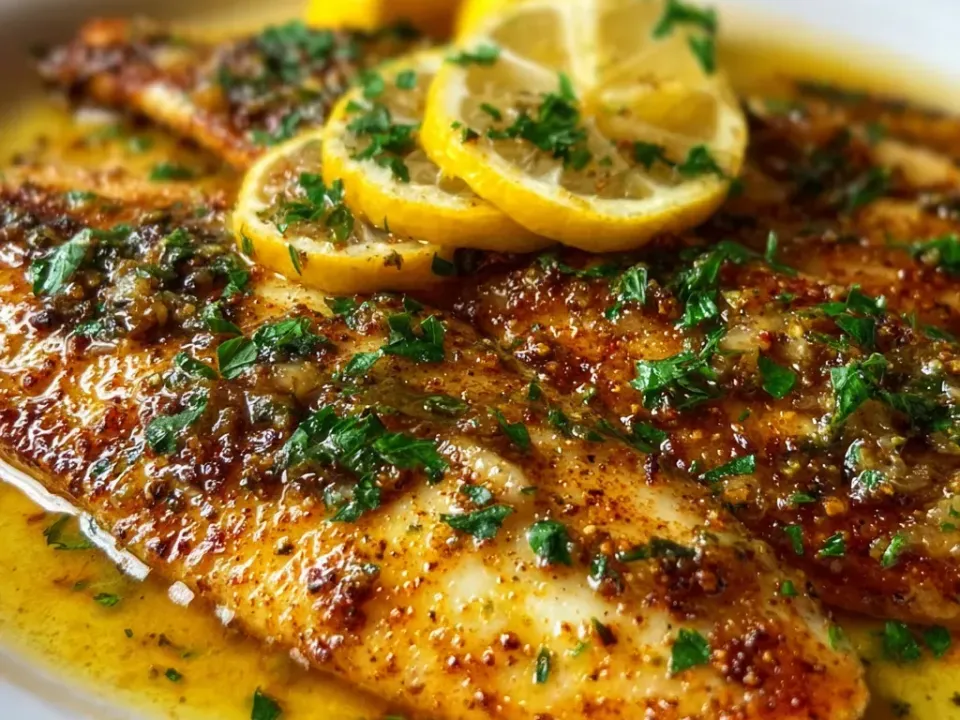
Tilapia is thin and cooks fast, which makes a hot oven the right tool and a long bake the wrong one. Ten to twelve minutes at 425 degrees Fahrenheit is the whole of it.
The sauce is not made separately and added later. Butter, oil, garlic, lemon juice and paprika are whisked together and spooned over the raw fillets, so what comes out of the dish at the end is the same sauce, cooked into pan juices.
Why This Recipe Works
- Melted butter with olive oil in it stays liquid enough to spoon evenly over four fillets.
- Paprika in the sauce gives the surface colour the oven alone would not produce.
- Lemon slices on top perfume the fish as they warm rather than being a garnish added at the end.
- A brief broil browns the surface in a minute or two without adding meaningful cooking time.
- Spooning the pan juices back over at the end returns the sauce that ran off during baking.
Ingredient Notes
- Melted butter and olive oil
- Two tablespoons and one. Together they make a sauce that stays pourable rather than setting the moment it meets cold fish.
- Paprika
- Half a teaspoon, whisked into the sauce. Small, but it is a real part of why the finished fillets are golden-brown rather than white.
- Lemon, juiced and sliced
- Two tablespoons of juice in the sauce and a whole lemon sliced over the top. Both are in the finished dish.
- Parsley
- Three tablespoons, and the recipe says heavily. It is a visible layer on the plate, not a pinch.
How to Make It
Hot oven, oiled dish
Heat oven to 425 degrees Fahrenheit and arrange tilapia in a lightly oiled baking dish.
Whisk and spoon over
Whisk butter, olive oil, garlic, lemon juice, salt, pepper, and paprika; spoon over the fish.
Lemon slices, then bake
Top with lemon slices and bake 10 to 12 minutes.
Broil for colour
Broil 1 to 2 minutes if needed to create a golden-brown surface.
145F and flaking
Cook until the fish reaches 145 degrees Fahrenheit and flakes easily.
Parsley and pan juices
Finish heavily with parsley and spoon the lemon-butter pan juices over the fillets.
Four Checks in Fifteen Minutes
A thin fillet gives very little margin. Each of these is a single line in the recipe, and three of the four are about the difference between cooked and overcooked.
Step 2 - the sauce goes on
Every fillet is evenly covered.
2 tbsp melted butter, 1 tbsp olive oil, 3 garlic cloves, 2 tbsp lemon juice and 1/2 tsp paprika are the sauce AND the colouring. Paprika browns where it sits, so a fillet with a bare patch bakes to a bare patch.
Step 3 - the bake
10 to 12 minutes at 425F, no longer on a first look.
Tilapia is thin. The oven window is short by design, and the broiler in the next step is available if the colour is not there yet - going longer in the oven costs texture rather than buying colour.
Step 4 - the broil
1 to 2 minutes, watched, and only IF NEEDED.
Browned fillets are the goal, and a plain bake leaves them paler. The broiler adds colour, not doneness - which is why it is conditional and why it is measured in minutes rather than fractions of the cook.
Step 5 - the temperature
145F in the fillet, and it flakes easily.
145F is the USDA figure for fish. The recipe gives both cues because a browned surface tells you nothing about the inside, and a fillet that flakes has usually just reached it.
Success Tips
- Spoon the sauce over evenly; the paprika in it is doing the colouring, so patchy sauce means patchy browning.
- Broil with the door watched. One to two minutes, and only if it needs it.
- Do not leave the pan juices in the dish — they are the sauce.
Serving Ideas
Four servings, two golden-brown fillets to a white plate, the lemon-butter pan juices spooned over them with the softened lemon slices and heavy chopped parsley.
Frequently Asked Questions
Is the broiler step necessary?
Only if the fillets are still pale. A plain bake leaves them lighter than the finished dish should be, and one to two minutes under the broiler closes that gap.
How do I know the tilapia is done?
145 degrees Fahrenheit and it flakes easily. Both, and thin fillets reach that quickly.
Should I make the sauce separately?
No. It is whisked once and spooned over the raw fish; what you spoon back at the end are those same juices after baking.