
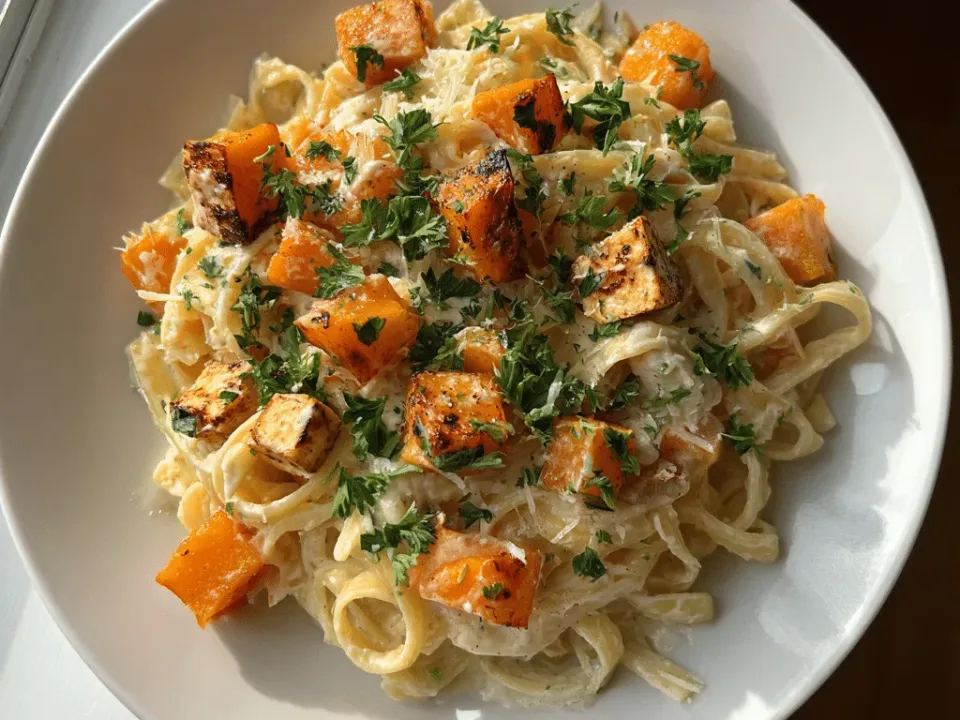
A whole block of feta roasted in the middle of cubed butternut squash, then crushed with a fork into a sauce and tossed through hot pasta with spinach and lemon.
Twenty minutes of prep, thirty-five in a hot oven, and one dish that becomes the sauce, the pan and the serving bowl.
Why This Recipe Works
- 425°F is hot enough to caramelise the cut faces of the squash rather than merely soften them, and hot enough to brown the outside of the feta while the inside goes creamy.
- Mashing with a fork rather than blending is a deliberate texture choice. You want visible pieces of squash suspended in a creamy sauce, not a smooth orange puree.
- Starchy pasta water is the emulsifier. Feta is a dry, crumbly cheese and it will not become a sauce on its own — the starch is what binds the fat and water into something glossy.
- The garlic is sliced thin and roasts alongside the squash rather than being added raw at the end, which turns it sweet and mellow instead of sharp.
- Lemon juice goes in at the very end. Feta is salty and squash is sweet, and the acid is what stops the finished bowl reading as heavy.
Two Things Happening At Once
Step 4 begins with 'meanwhile', and that word is the whole timing of this dish. The pasta has to arrive hot at the moment the feta comes out, because a cooled sauce will not emulsify.
In the oven
- 0 minutes
Squash tossed with oil, salt, pepper, thyme, sliced garlic and the optional chilli flakes in a 9-by-13 dish, with the whole block of feta set in the centre.
- About 15 minutes in
Stir the squash around the feta — around it, not through it. The block wants to stay whole and browning at the edges.
- 30 to 35 minutes
Out when the squash is tender and the feta has softened and taken colour at its edges.
On the hob
- Start when the squash goes in
Salt the water and bring it to the boil. Twelve ounces of short pasta needs a big pot.
- About 20 minutes in
Pasta into the water, cooked to al dente. Time it so it drains in the last few minutes of the roast.
- Before draining
Scoop out half a cup of the starchy cooking water and set it beside the hob.
Where they meet
Mash the hot feta and some of the squash with a fork straight in the baking dish until it forms a creamy sauce, then tip in the hot drained pasta and the spinach and toss, adding the reserved water a little at a time until the sauce turns glossy and coats. Lemon juice and parsley last, off the heat.
Ingredient Notes
- Feta, one 8-ounce block
- A block, not crumbles. Crumbled feta is drier and often coated to stop it clumping, and it will scorch in the dish rather than soften into a sauce.
- Butternut squash, 3/4-inch cubes
- Four cups, cut to a consistent size. Bigger pieces will not be tender in thirty-five minutes and smaller ones collapse into the sauce entirely.
- Short pasta
- Twelve ounces of a shape with somewhere for sauce to sit — rigatoni, shells, fusilli. Long strands do not suit a chunky mashed sauce.
- Reserved pasta water
- Half a cup, added a splash at a time rather than all at once. You can always add more; you cannot take it back out.
- Crushed red pepper flakes
- A quarter teaspoon, and the recipe marks it optional. It goes in with the squash so it toasts rather than sitting raw on top.
How to Make It
Heat the oven
Heat oven to 425°F.
Load the dish
Toss the squash with olive oil, salt, pepper, thyme, garlic and the optional red pepper flakes in a 9-by-13-inch baking dish. Place the feta block in the centre.
Roast
Bake 30 to 35 minutes, stirring the squash once around the feta, until the squash is tender and the feta is soft and browned at the edges.
Cook the pasta meanwhile
Meanwhile cook the pasta until al dente, reserve 1/2 cup pasta water and drain.
Mash the sauce
Mash the feta and some of the squash with a fork to form a creamy sauce.
Toss it together
Add the hot pasta and the spinach and toss, adding pasta water a little at a time until glossy.
Finish and serve
Stir in the lemon juice and parsley and serve.
Success Tips
- Cut the squash to an even three-quarter-inch dice — mixed sizes give you both mush and raw cubes.
- Stir the squash around the block rather than disturbing it, so the feta browns undisturbed.
- Set a mug by the hob to remind you to scoop pasta water before draining.
- Toss while everything is genuinely hot; a cooled sauce will not come together no matter how much water you add.
- Add the reserved water in splashes and stop as soon as the sauce turns glossy.
Serving Ideas
It is a full dish on its own. A rocket salad alongside adds a peppery edge that suits the sweetness of the squash.
Storage and Reheating
Refrigerate
Refrigerate up to 3 days. The sauce tightens considerably as it chills — that is the starch setting, and it loosens again with heat.
Freeze
Not recommended. The squash goes watery and the emulsified feta sauce splits on thawing.
Reheat
In a pan over low heat with a splash of water or milk, tossing until it loosens back to glossy. The microwave works but gives a drier result.
Frequently Asked Questions
Can I use crumbled feta instead of a block?
It is a noticeably worse result. Crumbles are drier, often anti-caking coated, and they scatter through the squash and dry out rather than staying together and going creamy. A block is what this method is built on.
My sauce stayed grainy rather than turning creamy.
Either the pasta water was left out or everything had cooled. Both matter — the starch does the binding and heat is what lets it. Toss hot, add water in splashes and keep going; it usually comes together with more movement than you expect.
Will another squash work?
Any dense winter squash cut to the same size will roast in a similar time. Softer summer squash will not — it releases water and collapses well before thirty minutes.
Can I roast the squash and feta ahead?
You can, but the sauce is made from them hot. Reheat the dish thoroughly in the oven before mashing, and have the pasta ready at that moment rather than the other way round.