
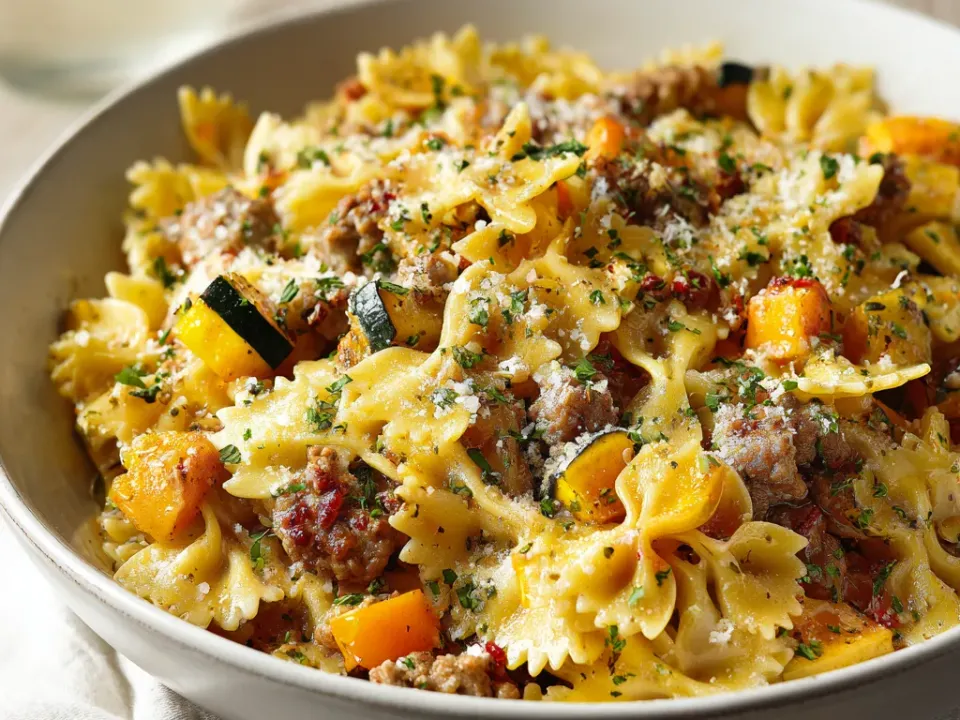
Sausage, butternut squash and sage in a cream sauce, tossed through farfalle — the pasta shape matters, since the ruffles hold a sauce this rich.
It is one skillet plus a pasta pot, and it lands in about forty-five minutes.
Why This Recipe Works
- Browning the sausage first and cooking the squash in its rendered fat means the squash is seasoned from the outside in, before any sauce arrives.
- Half-inch cubes are small enough to caramelise in the time the recipe allows and large enough not to collapse when the pasta is tossed through.
- A quarter teaspoon of nutmeg is doing more work than its quantity suggests — it is the classic partner to both squash and cream, and the dish tastes thin without it.
- Reserved pasta water is what makes the sauce glossy. Cream and butter alone separate and slide off the pasta.
One Skillet, Four Passes
Nothing is washed between stages, and that is the point. Each pass leaves fat or fond behind for the next one to pick up.
The sausage
5 to 7 minutes, until browned and cooked through1 lb Italian sausage, crumbled
Browned first and then set aside. What it leaves behind - rendered fat and browned bits - is what the squash cooks in, so the squash tastes of sausage before any sauce exists.
The squash
Stirring occasionally, until golden at the edges3 cups butternut squash, 1/2-inch cubes, plus olive oil
Cooked in that fat until golden at the edges. Colour here is flavour later — squash that only softens gives a sweeter, flatter dish.
The aromatics
About 1 minute once the garlic goes inOnion, garlic, sage, thyme, nutmeg, red pepper flakes
Onion softened 3 to 4 minutes, then the rest for about a minute. Sage and nutmeg together are what make this read as autumn rather than as a generic cream pasta.
The sauce
Gentle simmer until slightly thickened1 cup broth, 3/4 cup heavy cream
Poured in together and simmered 2 to 3 minutes. The liquid lifts everything stuck to the pan, which is the whole reason the skillet was never washed.
The finish
Toss, adding pasta water until silkySausage back in, spinach, pasta, butter, Parmesan, pasta water
Starchy pasta water is what emulsifies the cream and butter into something glossy that clings to farfalle instead of pooling under it.
Then tasteLemon zest and juice at the very end, if using — a small acid against a rich pan, added off the heat so it stays bright.
Ingredient Notes
- Italian sausage
- A pound, casings removed so it crumbles. Mild or hot both work — hot removes the need for the red pepper flakes.
- Fresh sage
- Eight leaves chopped, or a teaspoon dried. Fresh is noticeably better here; sage is the defining flavour rather than a background herb.
- Farfalle
- Twelve ounces. The ruffled edges and the flat centre both hold sauce, which a smooth shape would shed.
- Reserved pasta water
- Half to a full cup, added at the end. Starch is the emulsifier; plain water would only thin the sauce.
How to Make It
Cook the pasta
Boil the farfalle in well-salted water until just al dente. Reserve a cup of pasta water, then drain.
Brown the sausage
Heat a large skillet over medium, add the sausage and break it into crumbles, cooking 5 to 7 minutes until browned and cooked through. Set aside.
Colour the squash
Add the olive oil and butternut squash to the same skillet with a pinch of salt, and cook, stirring occasionally, until golden at the edges.
Add the aromatics
Stir in the onion and cook 3 to 4 minutes until softened, then add the garlic, sage, thyme, nutmeg and red pepper flakes and cook about a minute until fragrant.
Build the sauce
Pour in the broth and cream and bring to a gentle simmer until slightly thickened, 2 to 3 minutes.
Return the sausage, wilt the spinach
Add the sausage back with the spinach and stir until wilted, 1 to 2 minutes.
Toss it together
Add the drained farfalle, butter and Parmesan, tossing and adding reserved pasta water as needed until the sauce is silky and clings to the pasta.
Finish and serve
Lemon zest and juice if using, then taste for salt and pepper. Serve hot with extra Parmesan and parsley.
Success Tips
- Do not wash the skillet between stages. The browned residue is the flavour base of the whole dish.
- Cook the pasta to just al dente — it finishes in the sauce and goes soft if it starts there.
- Add the pasta water gradually. It is easier to tighten a loose sauce than to rescue a watery one.
- Give the squash time to colour rather than just soften. That is where the depth comes from.
Serving Ideas
Extra Parmesan and parsley at the table, with a sharp green salad alongside to cut the cream. It needs nothing else.
Storage and Reheating
Refrigerate
Refrigerate up to 3 days. The pasta absorbs the sauce as it stands, so it is noticeably drier the next day.
Freeze
Not recommended. Cream sauces split and cooked farfalle goes mealy after thawing.
Reheat
Gently in a skillet with a splash of broth or cream to loosen it. The microwave works but the sauce tightens.
Frequently Asked Questions
Can I make it without sausage?
Yes, though you lose the fat the squash cooks in. Use a little more olive oil, brown the squash hard for colour, and add toasted walnuts at the end for the texture the sausage was providing. Use vegetable broth to keep it consistent.
Can I use frozen butternut squash?
It works but it will not brown the same way — frozen squash releases water as it thaws in the pan. Pat it dry, give it longer, and expect a softer, sweeter result.
Can I make it lighter?
Half-and-half can replace the heavy cream. Skip the finishing butter too if you like; the pasta water still emulsifies the sauce, just less richly.