
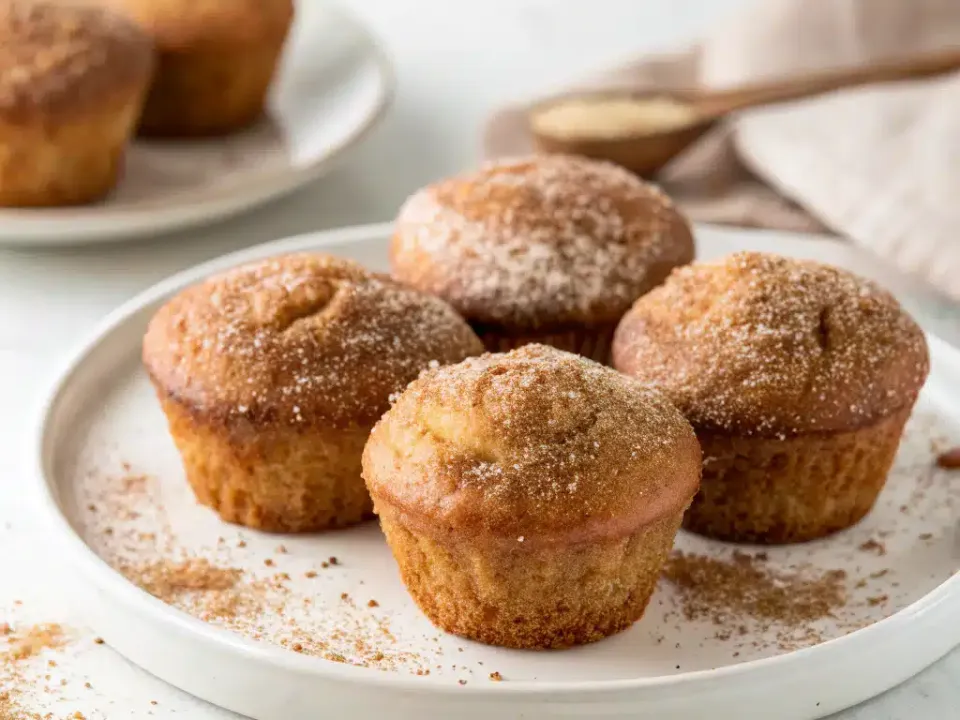
Apple cider boiled down until it is thick and concentrated, baked into a spiced muffin, then brushed with butter and rolled in cinnamon sugar while it is still warm.
Twenty-five minutes of prep including the reduction, about twenty in the oven, and a coating step that turns a muffin into something closer to a cider donut.
Why This Recipe Works
- Reducing the cider by two thirds concentrates its sugar and its acidity into half a cup. Bottled cider is mostly water, and adding it straight would water down the batter while contributing almost no flavour.
- Brown sugar rather than white in the batter. Two thirds of a cup of it brings a molasses note that sits behind the apple, which is exactly the flavour a cider donut has.
- The butter-and-sugar coating goes on WARM. Warm muffins take the melted butter into the surface and hold the sugar; cold ones shed both, which is the difference between a coating and a dusting.
- Baking powder and baking soda together, because the reduced cider is acidic. The soda reacts with it and the powder provides the reliable general lift on top of that.
- Half a cup of melted butter in the batter and three more tablespoons for the outside. Both are unsalted, and the half teaspoon of salt in the batter is the only salt in the recipe — worth measuring properly against this much sugar.
The Reduction, In Proportion
Step 1 is the entire identity of this recipe and it is easy to underestimate. A cup and a half of cider goes into the pan; a third of that volume comes out. Everything below is the same cider at three stages.
- Cider, as it goes in1 1/2 cups
- What boils away1 cup
- Reduced cider used in the batter1/2 cup
Two thirds of it leaves as steam, and what stays behind carries all of the apple sugar and acid that was in the whole cup and a half. That concentration is why these taste of cider rather than merely being made with it — and it is why using unreduced cider straight from the bottle produces a bland muffin with wet batter.
Ingredient Notes
- Apple cider
- A cup and a half before reduction, half a cup after. Cloudy unfiltered cider rather than clear apple juice — juice reduces to something flatly sweet without the apple-skin depth.
- Unsalted butter, twice
- Half a cup melted and cooled for the batter, three tablespoons melted for the coating. Cooled matters for the first — hot butter poured onto an egg starts to cook it.
- Light brown sugar, packed
- Two thirds of a cup, pressed into the measure. It is the batter's only sugar; the granulated is entirely for the outside.
- Granulated sugar, for coating
- Half a cup, mixed with a teaspoon and a half of cinnamon. Ordinary granulated rather than caster — the coarser grain is what gives the crust its texture.
- Whole milk
- Half a cup. With only half a cup of reduced cider in the batter, the milk is most of the remaining liquid and keeps the crumb tender.
How to Make It
Reduce the cider
Simmer the apple cider in a small saucepan until reduced to 1/2 cup, about 15 to 20 minutes. Cool slightly.
Heat the oven and prepare the pan
Heat oven to 375°F and grease or line a 12-cup muffin pan.
Whisk the dry ingredients
Whisk the flour, baking powder, baking soda, cinnamon, nutmeg and salt.
Whisk the wet ingredients
Whisk the melted butter, brown sugar, egg, milk, vanilla and 1/2 cup reduced cider.
Fold them together
Fold the dry ingredients into the wet just until combined.
Bake
Divide the batter among the muffin cups and bake 18 to 21 minutes, until a tester comes out clean.
Brush with butter while warm
Cool 5 minutes. Brush the warm muffins lightly with melted butter.
Coat in cinnamon sugar
Mix the granulated sugar and cinnamon and roll or sprinkle the muffin tops generously in the mixture.
Success Tips
- Measure the reduction rather than guessing; half a cup is the target, and going too far gives a syrup that will not incorporate.
- Let the reduced cider and the melted butter both cool before the egg joins them.
- Fold until the flour just disappears, as with any muffin batter.
- Coat them within a few minutes of coming out, while the tops are still warm enough to hold the butter.
- Roll rather than sprinkle if you want full donut-style coverage — a shallow bowl makes it easy.
Serving Ideas
Warm, the day they are made, which is when the coating is at its best. They belong with coffee or hot cider.
Storage and Reheating
Refrigerate
Airtight at room temperature for 2 days. The cinnamon sugar draws moisture and softens after that, so these are not long keepers.
Freeze
Freeze them UNCOATED for up to 2 months, then warm and coat after thawing. A frozen coated muffin thaws to a wet, patchy crust.
Reheat
Ten to fifteen seconds in the microwave. If the coating has softened, a fresh brush of butter and a re-roll restores it.
Frequently Asked Questions
Can I skip reducing the cider and just use half a cup from the bottle?
You can bake it, but it will not taste like a cider donut. Straight cider is mostly water, so you lose both the concentrated apple flavour and the acidity the baking soda reacts with. The reduction is the recipe.
How is this different from the apple butter muffins?
The apple arrives in a completely different form. These use cider boiled down to a concentrate and are finished with a cinnamon-sugar coating. That recipe uses apple butter, which is a thick cooked spread, and has no donut coating at all.
My cinnamon sugar would not stick.
The muffins had cooled too far. Brush and roll within about five minutes of them leaving the oven — the warm surface plus the melted butter is what holds the sugar.
I reduced the cider past half a cup. Can I save it?
Top it back up with a little fresh cider to reach half a cup and stir. It will be slightly stronger than intended, which is no bad thing here.