
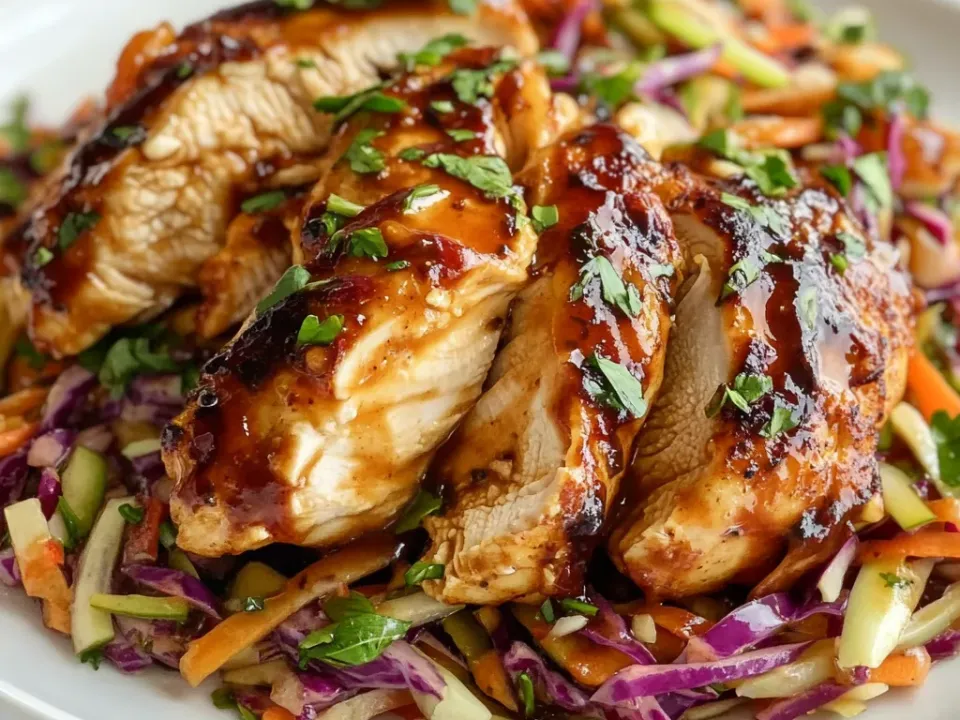
Seared chicken breasts with a cider pan sauce, served over a raw slaw of cabbage, apple and carrot — hot, cold, sweet and sharp on one plate.
Forty minutes in total, one skillet and one bowl.
Why This Recipe Works
- Cider appears in three places and does something different each time — reduced into the sauce, as vinegar in the sauce, and as vinegar again in the slaw dressing. That repetition is what ties the two halves of the plate together.
- The slaw is not a garnish, it is the counterweight. A reduced cider sauce is sweet and rich; something raw, crisp and acidic underneath is what stops the dish being one-note.
- Searing five to seven minutes a side gets a real crust on a lean cut. That crust and the fond it leaves are the entire flavour base of the sauce.
- A teaspoon of maple in the slaw dressing against two tablespoons of vinegar is a small correction that makes a sharp dressing pleasant rather than aggressive.
One Pan, Four Additions
The sauce is made in the pan the chicken just left, and each thing that goes in is doing one job. Skip any of them and it still works — it just stops being a sauce and becomes a liquid.
The fond
Browned bits stuck to the baseWhat the seared chicken leaves behind
Every bit of the savoury base. This is why the chicken is seared properly and removed rather than cooked through in the sauce - a poached breast leaves nothing in the pan.
Shallot, one minute
Softened and fragrant, not coloured1 small shallot, minced
Sweetness and body. A minute is enough - the pan is already hot and a shallot burns faster than an onion.
Cider and broth, reduced by half
Visibly thicker, coats a spoon1 cup cider + 1/2 cup broth, 6 to 8 minutes
The reduction IS the sauce. A cup and a half going down to three quarters concentrates the apple sugars until they cling; stopping early leaves you with something that runs off the plate.
Dijon and vinegar, whisked in
Glossy and uniform1 tbsp Dijon + 1 tsp cider vinegar
The mustard emulsifies as well as seasons, which is what lets the butter go in next without splitting. The vinegar puts back the sharpness that reducing cider cooks away.
Then tasteA tablespoon of butter whisked in OFF the heat. This is the classic finish for any pan sauce and the off-the-heat part is not optional: butter whisked into a simmering pan splits into oil and solids, and the sauce goes from glossy to greasy in seconds.
Ingredient Notes
- Cider vinegar appearing twice
- Not a duplication. One teaspoon finishes the pan sauce; two tablespoons dress the slaw. The chicken and the slaw are made as separate components.
- Apple cider
- One cup, cider rather than juice if you can — it is less sweet and has more acidity, which matters in something reduced by half.
- A crisp apple, julienned
- Crisp is the specification. A soft apple goes limp in the dressing within minutes and the slaw loses its point.
- Butter
- One tablespoon, off the heat, at the very end. It is a finish rather than a cooking fat.
How to Make It
Make the slaw
Toss the shredded cabbage, julienned apple and carrot and parsley with the cider vinegar, olive oil, maple syrup, salt and pepper, and chill it.
Season the chicken
Season the chicken breasts with the salt, pepper and thyme.
Sear
Sear 5 to 7 minutes per side until the chicken reaches 165°F (74°C), then remove it from the pan.
Shallot
Sauté the minced shallot for 1 minute in the same pan.
Reduce
Add the apple cider and chicken broth and reduce by about half, 6 to 8 minutes.
Dijon and vinegar
Whisk in the Dijon and cider vinegar.
Butter, off the heat
Take the pan off the heat and whisk in the butter.
Serve
Coat the chicken in the sauce and serve it with the chilled slaw.
Success Tips
- Make and chill the slaw before you touch the chicken.
- Do not crowd the pan; sear in batches if you must.
- Reduce the sauce properly — half is half.
- Whisk the butter in off the heat.
Serving Ideas
It is a complete plate as written. Roast potatoes or crusty bread if you want more, and the bread is genuinely useful for the sauce.
Storage and Reheating
Refrigerate
Refrigerate the chicken and sauce up to 3 days. Keep the slaw separate and eat it within a day — dressed cabbage goes soft.
Freeze
Freeze the chicken in its sauce up to 2 months. The slaw does not freeze at all; make it fresh.
Reheat
Gently in a covered pan with a splash of broth. The sauce may look separated when cold and comes back together with gentle heat and a stir.
Frequently Asked Questions
My sauce never thickened.
It was not reduced far enough. There is no flour or starch here — the thickening comes entirely from evaporating a cup and a half of liquid down to about three quarters of a cup, which takes the full 6 to 8 minutes and sometimes a little longer.
The sauce went greasy after I added the butter.
The pan was still on the heat. Butter whisked into a simmering liquid splits; taken off the heat first it emulsifies into the sauce and makes it glossy. It is the one instruction in this recipe with no margin.
Can I use chicken thighs?
Yes, and they are more forgiving of a long sear. They take a little longer to reach 165°F and render more fat into the pan, so you may want to pour some off before the shallot goes in.