
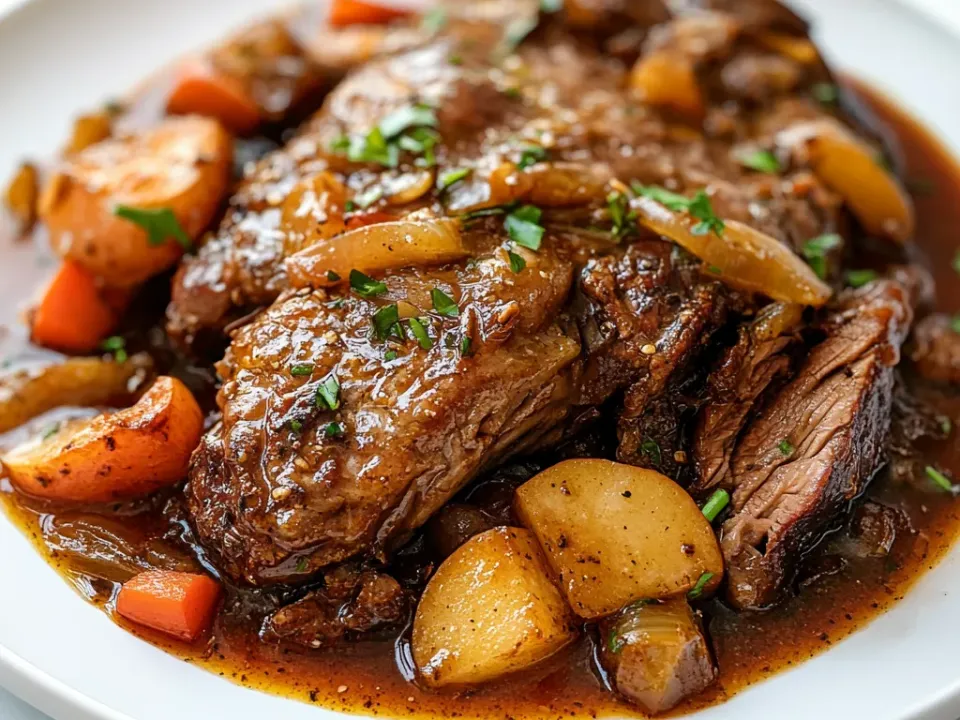
A three-pound beef shoulder browned hard, then braised in a covered Dutch oven with apple cider, carrots and herbs until a fork goes through it without resistance.
Twenty-five minutes at the hob, three hours or so in the oven, and a pan sauce finished with a spoonful of cider vinegar.
Why This Recipe Works
- Apple cider rather than stock alone. Two cups of it brings sweetness and acidity at once, and both are useful against a fatty cut — the sugar in the cider is also part of why the sauce takes on colour as it reduces.
- The liquid comes only halfway up the meat, which is what makes this a braise rather than a boil. The top of the roast sits above the liquid in the steam, and it browns further under the lid.
- Tomato paste cooked for a minute before any liquid arrives. That short dry cook develops the savoury depth that raw paste never gives, and two tablespoons is enough to darken the whole sauce.
- Turning the roast once partway through means both faces spend time in the liquid, so it seasons evenly rather than being wet underneath and dry on top.
- A tablespoon of cider vinegar at the very end, after the sauce has reduced. Three hours of gentle cooking rounds everything off, and the vinegar is what puts an edge back on it.
One Pot, Four Techniques
The Dutch oven does four different jobs across nine steps, and it never leaves the recipe. Each rung uses a different heat.
SearMedium-high, all sides
Medium-high, two tablespoons of oil, the dried and seasoned roast browned on every side and then taken out. This is the flavour foundation for everything after it, and it needs a hot pan and patience rather than turning the meat too early.
Sweat and caramelise5 minutes, then 1 minute
Onion and carrots for five minutes in the beef fat, then garlic and two tablespoons of tomato paste for one more. The paste is cooked, not merely added — a minute in the hot pan takes the raw tinned edge off it and darkens it.
Deglaze
Two cups of apple cider poured in and the browned bits scraped up from the base, then broth, Worcestershire, thyme, rosemary and bay. The cider is the defining ingredient of this recipe and it arrives at the moment it can dissolve everything the sear left behind.
Braise325°F, covered, turn once
Beef back in with the liquid about halfway up it, lid on, 325°F, turning once. Two and three-quarter to three and a quarter hours is the window for a three-pound roast — but fork-tender is the endpoint, and a larger or unusually dense roast simply takes longer.
Ingredient Notes
- Boneless beef chuck or shoulder
- Three pounds. This is a hard-working cut full of connective tissue, and that is the point — it is what turns to gelatin over three hours and gives the sauce its body. A lean roast would simply go dry.
- Apple cider
- Two cups, and it is the defining ingredient of the recipe. Cloudy unfiltered cider rather than clear apple juice, which is thinner and sweeter.
- Tomato paste
- Two tablespoons, cooked for a minute in the pan before the liquid goes in. It reads as depth rather than as tomato in the finished sauce.
- Apple cider vinegar
- One tablespoon, stirred in at the very end and never earlier. Added at the start it would simply cook away.
- Rosemary sprig and bay leaf
- Whole rather than chopped, so they can be lifted out. Both are strong enough that a long braise extracts plenty from a single one.
How to Make It
Heat the oven
Heat oven to 325°F.
Dry and season the beef
Pat the beef dry and season with the salt and pepper.
Brown the roast
Heat the oil in a Dutch oven over medium-high heat. Brown the beef on all sides, then transfer it to a plate.
Cook the vegetables and paste
Add the onion and carrots and cook 5 minutes. Add the garlic and tomato paste and cook 1 minute.
Deglaze with cider
Pour in the apple cider and scrape up the browned bits. Add the broth, Worcestershire, thyme, rosemary and bay leaf.
Return the beef
Return the beef to the pot. The liquid should come about halfway up the meat.
Braise until fork-tender
Cover and braise 2 3/4 to 3 1/4 hours, turning once, until the beef is fork-tender. Whole-muscle beef should have passed 145°F with a 3-minute rest, but continue cooking for braise texture.
Rest the beef and reduce the sauce
Transfer the beef to a board. Skim excess fat if desired and simmer the sauce briefly to reduce.
Finish and serve
Stir the apple cider vinegar into the sauce, slice or shred the beef, and serve with the vegetables and sauce.
Success Tips
- Give the roast a proper crust before it comes out of the pan; pale meat gives a pale sauce.
- Do not skip the minute of cooking the tomato paste — it is the shortest step with the biggest effect.
- Check the liquid reaches halfway up the meat and no further before the lid goes on.
- Go by the fork rather than the clock; a stubborn roast needs longer, not hotter.
- Rest the meat on the board while the sauce reduces, so both are ready at once.
Serving Ideas
Mashed potato or bread for the sauce, which is the best part of the pot. The carrots come out of the braise soft and cider-sweet and are part of the dish rather than a garnish.
Storage and Reheating
Refrigerate
Refrigerate the beef in its sauce for up to 4 days. Keeping them together is what stops the sliced meat drying out.
Freeze
Freezes well for up to 3 months, again in the sauce. Thaw overnight in the fridge before reheating.
Reheat
Gently, covered, in the sauce — on the hob or in a low oven. Slices reheated dry will toughen no matter how tender they started.
Frequently Asked Questions
How long will my roast take?
For a three-pound roast, between two and three-quarter and three and a quarter hours. Fork-tender is the real endpoint rather than the clock — a larger or unusually dense piece takes longer, and no fixed time is promised for one.
Can I use apple juice instead of cider?
It will work but it is sweeter and thinner, so the sauce ends up less complex and more sugary. Cloudy unfiltered cider is what the recipe is built around.
Could I do this in a slow cooker?
The recipe is written for a Dutch oven at 325°F and the halfway-up liquid line is part of that method. A slow cooker holds liquid rather than reducing it, and no slow-cooker timing is published here.
The beef is still tough after three hours.
Give it longer. Toughness at that stage almost always means the connective tissue has not finished breaking down, and the fix is more time at the same temperature rather than a hotter oven.