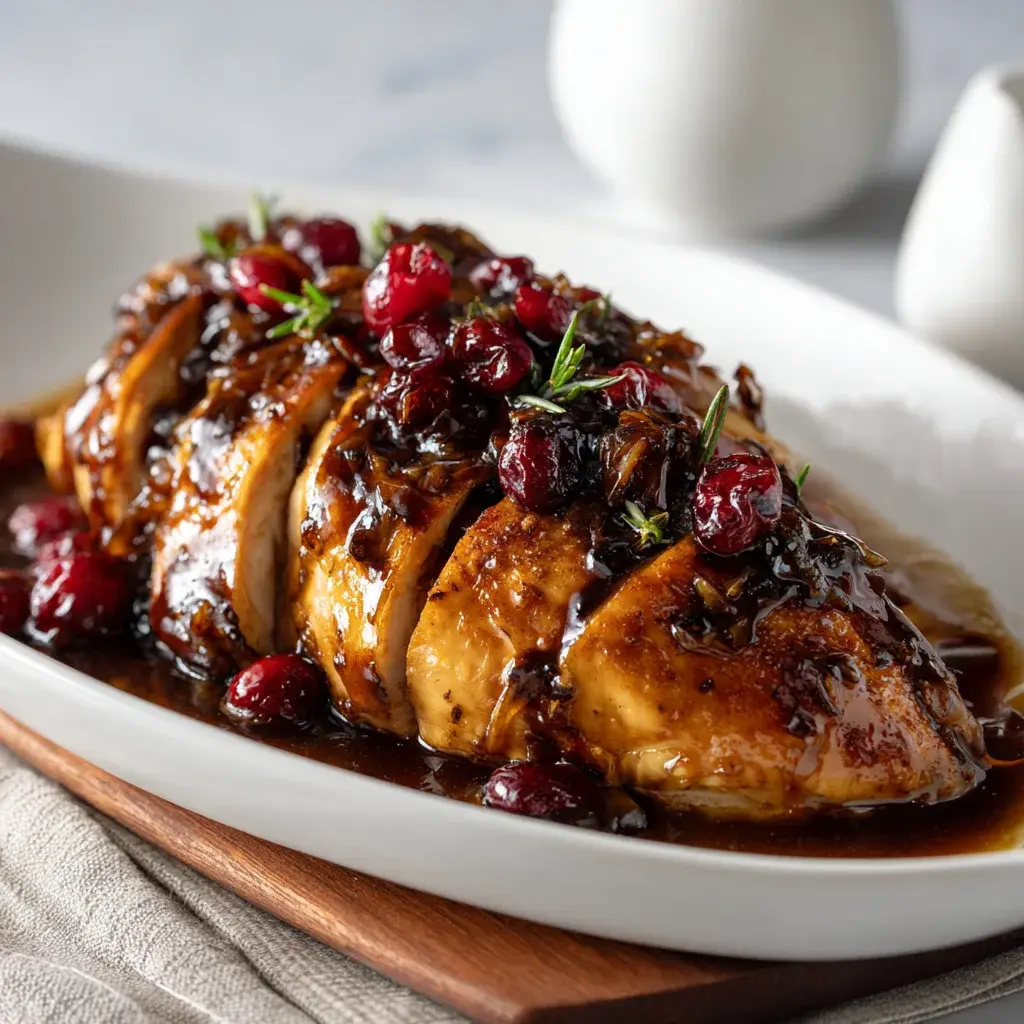


Chicken thighs under a mushroom sauce that tastes like it took a lot more attention than it did — one skillet at the start, four hours of nothing, and a cream finish.
It is the kind of thing that looks like Sunday and fits into a Tuesday.
Why This Recipe Works
- Browning the mushrooms first drives off their water. Raw mushrooms release the same liquid into the pot, and that is the difference between a sauce and a puddle.
- Thighs rather than breasts means four hours is forgiving. There is more fat and more connective tissue, so the window where they are good is much wider.
- A tablespoon of Dijon does two jobs — it cuts the cream and helps hold the sauce together, which is why it is in a recipe that otherwise has no sharp note.
- Tempering the cream cheese with hot liquid before it goes in is the single step that decides whether the sauce is smooth or speckled.
Ingredient Notes
- Cremini mushrooms
- A full pound, sliced. They cook down to far less than they look, so the quantity is not a mistake — and they need a large pan to brown rather than steam.
- Chicken thighs
- Thighs are the first choice, with breasts as the alternative. Thighs stay juicy across a four-hour window; breasts need the shorter end of it.
- Dijon mustard
- One tablespoon, and easy to dismiss. It is the only sharp thing in the pot until the lemon at the end, and the sauce tastes flat without it.
- Cornstarch slurry
- Marked optional, and mixed with cold water before it goes in. Leaving it out gives a looser sauce that suits rice better than mash.
How the Sauce Is Built
The chicken cooks itself. The sauce is assembled in layers, and each one is doing a job the others cannot — which is why skipping any of them is noticeable in the bowl.
The fat
Medium-high, before anything else goes in2 tbsp butter and 1 tbsp olive oil
Butter for flavour, oil to stop it burning. Together they take a higher heat than butter alone, which is what the mushrooms need.
The browning
5 to 7 minutes until browned, then garlic for 30 seconds16 oz cremini mushrooms and a sliced onion, then garlic
The deepest flavour in the finished dish, and the reason the sauce is not watery. A pound of mushrooms holds a lot of liquid, and browning drives it off before it can dilute the pot.
The base
Into the crockpot, chicken nestled in on top1 cup chicken broth, 1 tbsp Dijon, thyme
Dijon is the quiet one here — it sharpens the cream at the end and emulsifies the sauce so it clings instead of separating. The thyme goes in now so it has hours to infuse.
The cream
After the chicken is cooked, not before4 oz cream cheese and 1/2 cup heavy cream
Body and richness. The cream cheese is whisked with a few spoonfuls of the hot cooking liquid first, which is what stops it seizing into lumps when it hits the pot.
The finish
High for 10 to 15 minutes if thickening; acid off the heatOptional cornstarch slurry, then 1 tsp lemon juice or vinegar
The slurry is only for thickness and only if you want it. The acid at the very end is what keeps a cream sauce from tasting heavy, and it is the last thing in.
Then tasteStir in the lemon juice, taste, and adjust the salt — half the salt is held back to this point precisely so there is room to correct.
How to Make It
Season the chicken
Pat the thighs dry and season both sides with a teaspoon of the salt and the black pepper.
Brown the mushrooms and onion
Butter and olive oil in a skillet over medium-high. Sauté the sliced cremini and onion 5 to 7 minutes until properly browned, then stir in the garlic for 30 seconds.
Build the base in the cooker
Scrape the mushrooms, onion and garlic into the crockpot. Stir in the thyme, chicken broth and Dijon, then nestle the seasoned chicken into the sauce.
Cook
Low for 4 to 5 hours or High for 2 to 3, until the chicken is tender and reads 165°F.
Temper the cream cheese
Whisk the cubed cream cheese with a few spoonfuls of the hot cooking liquid until smooth, then stir it and the heavy cream into the pot.
Thicken if you want to
For a thicker sauce, stir in the cornstarch slurry, cover and cook on High 10 to 15 minutes until glossy.
Sharpen and serve
Stir in the lemon juice, taste and adjust the salt, then garnish with parsley and serve over mashed potatoes, rice or egg noodles.
Success Tips
- Give the mushrooms a hot pan and space. Crowded, they release liquid and stew, and you lose the browning the whole sauce is built on.
- Temper the cream cheese every time. It takes thirty seconds and it is the difference between smooth and speckled.
- If you switch to breasts, drop to Low for 3 to 4 hours and check early — they go from done to dry much faster than thighs.
- Hold back the last half teaspoon of salt until after the cream goes in. Dairy mutes salt, so seasoning before it is misleading.
Serving Ideas
Mashed potatoes, buttered egg noodles or rice — anything that will take the sauce. Something green and crunchy alongside, like roasted broccoli or a sharp salad, keeps it from being uniformly rich.
Storage and Reheating
Refrigerate
Refrigerate up to 4 days. The sauce thickens as it cools and the thyme comes forward overnight.
Freeze
Freezes up to 3 months. Cream sauces can look separated after thawing; reheating gently and stirring brings it back together.
Reheat
Warm gently with a splash of broth, over low heat or in short microwave bursts. A hard boil will split the cream.
Frequently Asked Questions
Can I use chicken breasts instead of thighs?
Yes. Cook on Low 3 to 4 hours or High 2 to 2.5, just until they reach 165°F. Breasts have less fat, so the window between juicy and dry is much narrower than it is with thighs.
Do I have to brown the mushrooms first?
You can skip it, but it is the step doing the most work. Browning concentrates the flavour and drives off the water a pound of mushrooms would otherwise release into the pot, which is the usual cause of a thin, pale sauce.
How can I make it lighter?
Use light cream cheese and half-and-half in place of the heavy cream. The mushrooms and thyme are carrying the flavour, so you lose some richness rather than much taste.
Is this gluten-free?
The sauce is naturally gluten-free if you skip the cornstarch slurry or use a certified gluten-free cornstarch. Serve it over mashed potatoes or rice rather than egg noodles.