
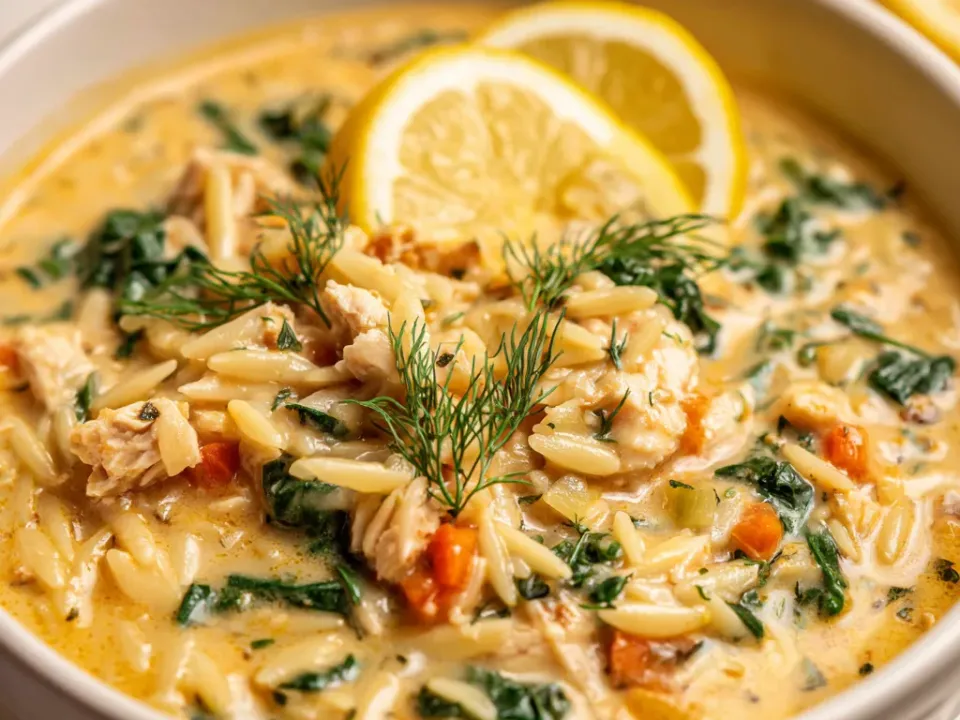
A slow-cooker chicken soup that comes out bright rather than heavy: orzo cooked in the broth for body, then cream, lemon and Parmesan stirred in at the very end.
Nearly five hours in total, but the work is twenty minutes at the start and about five at the finish.
Why This Recipe Works
- Cooking the orzo in the soup rather than separately means it releases its starch into the broth. That is what thickens this soup — there is no roux and no flour anywhere in the ingredient list.
- Zest and juice are both used, and they are not interchangeable. The juice brings the acidity; the zest carries the lemon oils, which is where the smell of the finished bowl comes from.
- Dried dill goes in at the start and fresh dill at the end. The dried version survives a long cook and seasons the broth; the fresh version is a top note that would disappear entirely after four hours.
- Parmesan and butter go in off the heat as a finish. Both would separate if the pot were still boiling, and the soup would look grainy instead of glossy.
When Each Thing Goes In
This is a soup with four separate entry points, and the order is not decorative. Dairy, acid, starch and greens each fail in a different way if they go in at the wrong moment.
Hour zero
Aromatics, chicken, broth, bay, thyme, dried dill, salt, pepper
Everything that benefits from long heat. The dried dill goes in here and the fresh dill waits until serving - they are doing different jobs, and the fresh one would cook to nothing.
After 4 to 6 hours on Low
Nothing — the chicken comes out to be shredded
This is also where the temperature is checked. Tenderness is one cue; also check for 165°F in the thickest breast before it is shredded.
Then 20 to 30 minutes
1 cup orzo
Dry, straight into the broth. It releases starch back into the pot, which is where the body comes from - there is no flour in this soup. Al dente is the target, because it keeps softening in the residual heat.
Off the boil
Cream, lemon zest, lemon juice
Both at once, and gently. Lemon juice added to a boiling dairy soup is the classic way to curdle it; the acid and the heat together are what break the cream, not the acid alone.
Last
Spinach, Parmesan, butter, fresh dill
Residual heat wilts the spinach in under a minute and melts the cheese and butter without letting them split. The butter is a finish, not a fat to cook in.
Ingredient Notes
- Orzo
- One cup, dry, added to the pot. It is a pasta, not a grain, and it behaves like one — it will keep absorbing broth for as long as it sits in it.
- Lemon zest and juice
- A tablespoon of zest and three of juice. Two lemons usually covers both; zest first.
- Heavy cream or half-and-half
- Three quarters of a cup, and they work as equals. Half-and-half is thinner and more prone to splitting, so it wants the pot further off the boil.
- Baby spinach
- Two cups, marked optional. It wilts to almost nothing and mostly adds colour, so leaving it out costs the soup very little.
How to Make It
Layer the aromatics
Put the onion, celery, carrots and garlic into the slow cooker.
Add the chicken and broth
Add the chicken breasts, broth, bay leaf, thyme, dried dill, salt and pepper.
Cook
Low for 4 to 6 hours, or High for 2 to 3, until the chicken is tender.
Check and shred
Check the chicken before shredding it: an instant-read thermometer in the thickest breast must read 165°F (74°C). Shred it and return it to the broth.
Cook the orzo in the soup
Stir in the orzo and cook 20 to 30 minutes, until just al dente. Start checking early — it keeps softening off the heat.
Cream and lemon
Stir in the cream, lemon zest and lemon juice, keeping the pot below a boil. Taste and adjust the salt.
Finish
Fold in the spinach until it wilts, then the Parmesan and butter. Serve with the fresh dill.
Success Tips
- Take the chicken to 165°F rather than judging it by feel.
- Start tasting the orzo at twenty minutes, not thirty.
- Keep the pot below a boil once the cream and lemon are in.
- Season at the end. Parmesan is salty and the broth changes once it goes in.
Serving Ideas
Crusty bread and more Parmesan. It is a full bowl on its own, so a sharp green salad alongside does more for it than another rich side would.
Storage and Reheating
Refrigerate
Refrigerate up to 3 days. It thickens considerably as the orzo keeps drinking — loosen with a splash of broth rather than water, which would dilute the seasoning.
Freeze
Freeze before the orzo and cream go in, up to 3 months, then cook fresh orzo into the reheated base and finish as written. Frozen cooked orzo goes mealy and frozen cream separates.
Reheat
Gently on the stove, stirring, kept under a boil so the cream stays smooth.
Frequently Asked Questions
My orzo turned to mush by the second day.
That is what orzo does in liquid, and it is why this soup is best eaten the day it is made. If you know there will be leftovers, cook the orzo separately and add it per bowl — the broth then keeps for three days without changing.
The soup looked grainy after I added the lemon.
The pot was too hot. Acid and heat together split dairy, so the cream and the lemon both need the soup off the boil. If it has already happened the soup is still perfectly good to eat; it just will not go smooth again.
Can I use chicken thighs?
Yes, and they are more forgiving over a long cook because the extra fat keeps them from drying out. The temperature target is the same 165°F, and they shred a little more coarsely.