
Dinner
Gochujang Roasted Root Veg – Cozy, Bold, and Irresistible
Jump to Recipe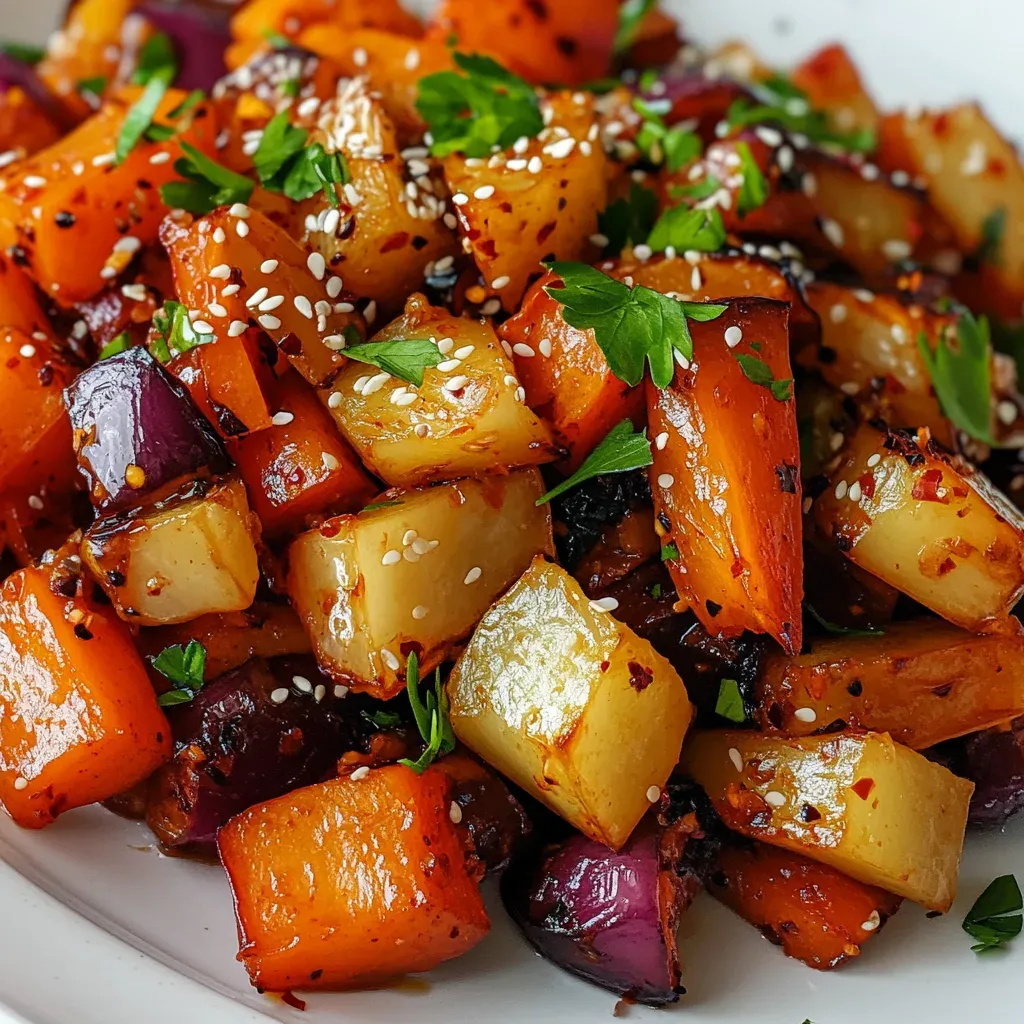
Gochujang Roasted Root Veg – Cozy, Bold, and Irresistible
Ingredients
- 1 lb (450 g) sweet potatoes, peeled and cut into 1-inch cubes
- 10 oz (300 g) carrots, peeled and cut into 1-inch chunks
- 10 oz (300 g) parsnips, peeled and cut into 1-inch chunks
- 1 medium red onion, cut into wedges
- 2 tbsp neutral oil (avocado or canola)
- 3 tbsp gochujang paste
- 1 tbsp soy sauce or tamari (gluten-free)
- 1 tbsp rice vinegar
- 1 tbsp maple syrup or honey
- 1 tbsp toasted sesame oil
- 2 cloves garlic, minced
- 1 tsp grated fresh ginger
- 1/2 tsp kosher salt, plus more to taste
- 1/4 tsp black pepper
- Optional: 1 tsp gochugaru or red pepper flakes for extra heat
- To finish: 2 green onions (scallions), thinly sliced
- 1 tbsp toasted sesame seeds
- Lime wedges or a squeeze of lime, optional
Instructions
- Preheat the oven to 425°F (220°C). Line a large rimmed sheet pan with parchment for easy cleanup.
- Prep vegetables: peel and cut sweet potatoes, carrots, and parsnips into similar 1-inch pieces. Cut red onion into wedges.
- Make the glaze: in a large bowl, whisk together gochujang, neutral oil, soy sauce/tamari, rice vinegar, maple or honey, sesame oil, garlic, ginger, salt, and pepper (add gochugaru for extra heat).
- Add all vegetables to the bowl and toss until evenly coated with the gochujang glaze.
- Spread vegetables on the prepared sheet pan in a single layer, avoiding overcrowding for maximum caramelization.
- Roast for 20 minutes, then flip and roast another 15–20 minutes until edges are deeply browned and centers are tender.
- Taste and adjust seasoning with a pinch of salt or a squeeze of lime.
- Transfer to a serving dish and sprinkle with sliced green onions and toasted sesame seeds.
- Serve hot as a side dish or over rice, quinoa, or greens for a simple bowl.
Gochujang Roasted Root Veg is what I make when dinner needs to be both exciting and easy. Last week, I pulled a classic Darleen move: tossed everything on one sheet pan, then realized I preheated the toaster oven instead of the big one. Kitchen chaos! Still, Gochujang Roasted Root Veg saved the night with caramelized edges and that cozy, spicy-sweet glaze. The kids kept stealing bites right off the pan while I tried to plate it. Pro tip from my circus to yours: line the pan, crank the heat, and let the gochujang do the heavy lifting.
Table of Contents
Recipe
Why You’ll Love This Gochujang Roasted Root Veg
What Makes This Gochujang Roasted Root Veg So Irresistible
I once pulled this pan from the oven and my son asked if the vegetables were wearing lipstick. That glossy gochujang sheen does look glamorous, and that’s the charm of Gochujang Roasted Root Veg: it’s weeknight-easy yet dinner-party-pretty. Gochujang Roasted Root Veg brings cozy, spicy-sweet comfort food vibes with minimal work—just toss, roast, and serve. The homemade glaze clings to every edge, giving you crispy bits and soft centers in every bite.
- One-pan meal energy: sheet pan simplicity with almost no cleanup.
- Comforting taste: sweet potatoes, carrots, and parsnips soak up bold, umami-rich gochujang.
- Quick prep: 15 minutes of chopping, then the oven does the rest.
- Flexible and family-friendly: adjust the heat and add your favorite roots.
- Homemade glaze, big payoff: pantry staples turn into a glossy, craveable finish.
Trending Reason People Are Talking About Gochujang Roasted Root Veg
Gochujang is the flavor trend that refuses to fade—and for good reason. It’s a quick fix for bland vegetables, offering deep umami, mild heat, and just enough sweetness. Plus, this easy dinner strategy plays beautifully with bowls, proteins, and holiday spreads. If you love make-ahead comfort food like my Slow Cooker Red Lentil Curry or hearty classics like Chicken and Dumplings with Biscuits, this Gochujang Roasted Root Veg belongs on your weekly rotation. Ready to roast?
Tips, Tricks & Expert Secrets for Gochujang Roasted Root Veg
Chef Tips for Perfect Gochujang Roasted Root Veg Every Time
During a cooking demo, I learned the hard way that crowding the pan turns crisp dreams into a soft, steamy situation. Since then, my Gochujang Roasted Root Veg has been all about space, heat, and timing—little tweaks for big wins in any homemade version of this easy recipe.
- Cut evenly: aim for 1-inch chunks so everything roasts at the same pace and gets caramelized edges.
- High heat rules: 425°F (220°C) delivers that gorgeous browning without drying out the centers.
- Use parchment: it minimizes sticking and helps glaze cling to the vegetables.
- Toss mid-roast: flipping at the 20-minute mark promotes even color and texture.
Smart Ingredient Swaps & Practical Cooking Advice
- Swap-ins: butternut squash or baby potatoes work beautifully in place of parsnips or carrots.
- Vegan and gluten-free: choose maple syrup and tamari to keep this Gochujang Roasted Root Veg friendly for both diets.
- Lighter option: reduce neutral oil to 1 tablespoon and add a splash of water to the glaze to coat more thinly.
What not to do: Don’t overcrowd the pan. If your vegetables are piled up, they’ll steam instead of roast. Use two sheet pans if needed. For more weeknight-friendly ideas, peek at my cozy Pot Roast (Slow Cooker)—different method, same stress-free dinner magic.
Serving Ideas & Creative Variations for Gochujang Roasted Root Veg
How to Serve Gochujang Roasted Root Veg for Maximum Enjoyment
I served this to friends on a big white platter with a sprinkle of sesame seeds, and it disappeared before the roast chicken even hit the table. Presentation matters, but with Gochujang Roasted Root Veg, the flavor does the heavy lifting. Try these serving ideas to make it pop.
- Build a bowl: spoon over jasmine rice or quinoa, add a soft-boiled egg, and drizzle with a little extra sesame oil.
- Pair with protein: roasted salmon, crispy tofu, or grilled chicken all love that spicy-sweet glaze.
- Fresh contrast: finish with lime, cilantro, or a dollop of tangy yogurt to balance the heat.
Flavor Twists and Seasonal Variations
- Miso-maple twist: add 1 teaspoon white miso to the glaze for extra umami.
- Fall harvest: include cubed delicata or butternut squash; in spring, use baby carrots and radishes for a seasonal twist.
- Garlic-sesame crunch: top hot vegetables with a quick sizzle of garlic in oil plus extra sesame seeds for a TikTok-worthy finish.
Plating suggestion: use a wide, shallow platter so the glossy edges are visible, then scatter scallions and sesame seeds for texture. Snapping photos? Angle toward natural light and let a few pieces tumble off the platter for that relaxed, homemade vibe. For holiday brunch pairings, this is dreamy alongside my Holiday Red & Green Veggie Strata.
Storage & Troubleshooting Guide for Gochujang Roasted Root Veg
How to Store and Reheat Gochujang Roasted Root Veg
I always make extra and call it “future me’s lunch.” Leftover Gochujang Roasted Root Veg is a gift for busy days—just add a fried egg and you’ve got a quick fix that tastes like you planned it.
- Room temperature: keep out for serving up to 2 hours.
- Fridge: store in an airtight container for 3–4 days. A shallow container keeps the edges from getting soggy.
- Freezer: freeze up to 2 months; thaw overnight in the fridge for best texture.
- Reheat: oven or air fryer at 400°F (205°C) for 6–10 minutes to re-crisp; skillet with a teaspoon of oil works in a pinch.
Troubleshooting Common Gochujang Roasted Root Veg Issues
- Too soft or watery: increase oven temp to 425–450°F and spread vegetables across two pans to avoid steaming.
- Dry texture: toss with a teaspoon of sesame oil after reheating or drizzle with a little maple and soy for moisture.
- Uneven browning: rotate the pan halfway through and flip vegetables at the 20-minute mark.
- Too spicy: stir in extra maple or serve with yogurt or sour cream to cool things down.
With a little storage advice and a warm oven, your Gochujang Roasted Root Veg will keep its cozy crunch. You’ve got this—tomorrow’s lunch is already winning.
FAQs
Can I make Gochujang Roasted Root Veg ahead of time?
Yes. Roast fully, cool, and refrigerate up to 3–4 days. Re-crisp in a 400°F oven or air fryer just before serving.
What vegetables work best besides carrots and sweet potatoes?
Parsnips, butternut squash, baby potatoes, and even radishes roast beautifully. Keep pieces about 1 inch for even cooking.
Is gochujang very spicy in this recipe?
It’s warm and cozy, not fiery. Reduce gochujang by 1 tablespoon or skip the extra chili flakes for a milder version.
Can I make Gochujang Roasted Root Veg gluten-free or vegan?
Absolutely. Use tamari instead of soy sauce and maple syrup instead of honey. The rest is naturally vegan and gluten-free.
Conclusion
There’s something magical about how a hot oven and a glossy glaze can transform everyday roots into a show-stealing side. Gochujang Roasted Root Veg checks every easy dinner box—simple ingredients, one-pan meal cleanup, and restaurant-level flavor that still feels homemade. Whether you’re building cozy bowls, brightening up a roast chicken, or laying out a comfort food spread, this dish brings the spicy-sweet balance that gets everyone reaching for seconds. If you love weeknight winners like my Slow Cooker French Onion Chicken, you’ll adore the depth and ease here. Try Gochujang Roasted Root Veg at home, share your plate, and tag me so I can cheer you on!