

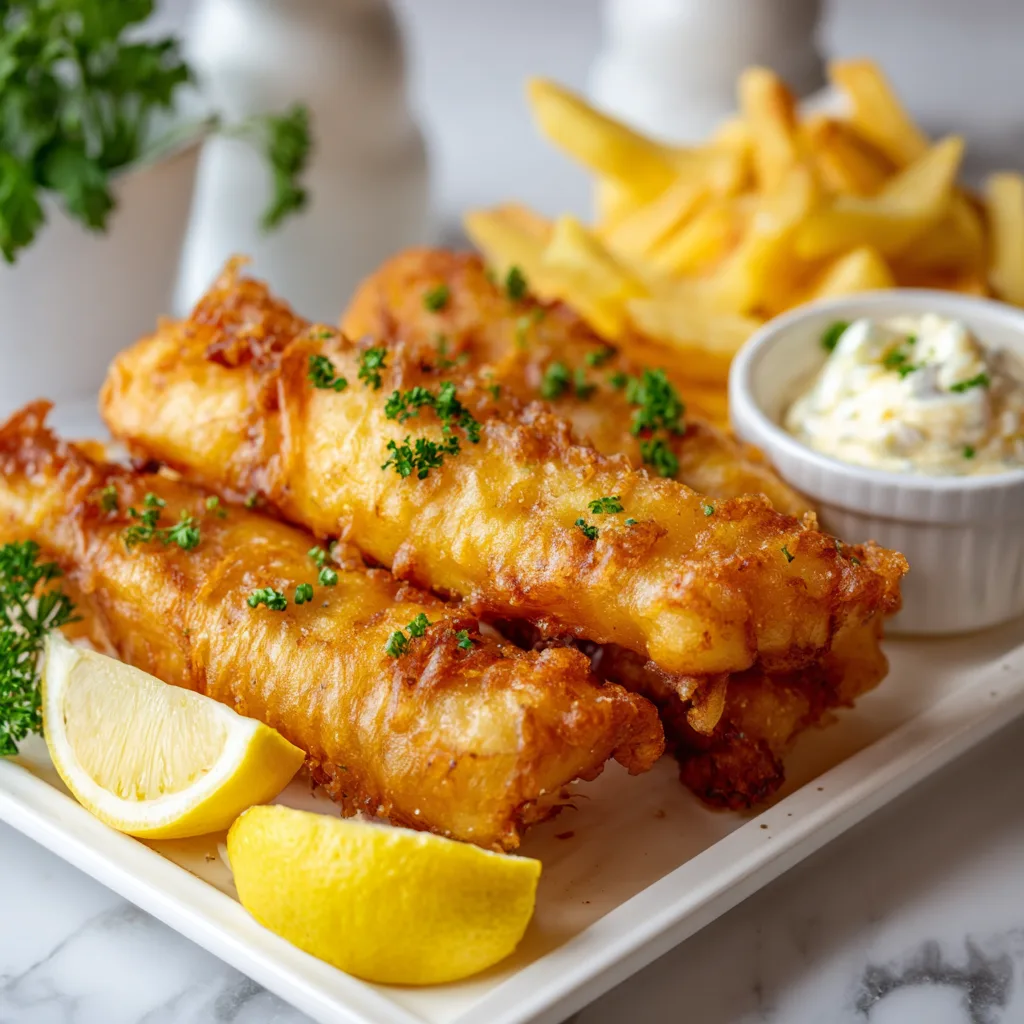
Classic British Fish & Chips brings the taste of seaside holidays right to your kitchen. There’s something magical about that first bite through crispy, golden batter into tender, flaky white fish. As a child, I remember unwrapping newspaper parcels on Brighton Beach, the vinegar-soaked chips steaming in the cool sea breeze. That distinctive combination of crispy exterior and pillowy interior creates an irresistible comfort food that’s stood the test of time. Today, I’m sharing my perfected recipe that captures that authentic British chippy experience. Grab your deep fryer—we’re about to embark on a deliciously nostalgic journey!
Table of Contents
Recipe
Print
Classic British Fish & Chip
- Total Time: 50 minutes
- Yield: 4 servings
Description
This classic British fish & chips recipe brings the pub to your kitchen! Crispy beer-battered white fish and golden hand-cut fries served hot with tartar sauce and malt vinegar—it’s comfort food at its crunchiest.
Ingredients
4 fillets white fish (cod, haddock, or pollock)
Salt & pepper, to taste
1 cup all-purpose flour (plus extra for dredging)
1 tsp baking powder
1/2 tsp salt
1 cup cold beer (or sparkling water)
Oil, for deep frying
For the chips:
4 large russet potatoes, peeled and cut into thick fries
Oil, for frying
Salt, to finish
Optional for serving:
Tartar sauce
Malt vinegar
Lemon wedges
Instructions
1. Soak cut potatoes in cold water for 30 minutes. Drain and pat dry.
2. Heat oil to 325°F (165°C). Fry potatoes in batches for 4–5 minutes until soft but not colored. Remove and drain.
3. Increase oil temp to 375°F (190°C).
4. Season fish with salt and pepper. Dredge lightly in flour.
5. In a bowl, whisk together flour, baking powder, salt, and cold beer until smooth.
6. Dip fish into batter and lower gently into hot oil. Fry 5–6 minutes until golden and crispy. Drain on paper towels.
7. Refry chips for 2–3 minutes until golden and crispy. Drain and season with salt.
8. Serve fish & chips hot with tartar sauce, vinegar, and lemon.
Notes
• Keep batter cold and oil hot for ultra-crispy texture.
• Fry in small batches to avoid soggy fish.
• Add a pinch of paprika or cayenne to the batter for a kick.
- Prep Time: 20 minutes
- Cook Time: 30 minutes
- Category: Dinner
- Method: Deep Frying
- Cuisine: British
Why You’ll Love This Classic British Fish & Chips
The Perfect Batter Secret
The soul of exceptional fish and chips lies in the batter consistency. I’ve tested dozens of variations, and the magic happens with cold beer and self-rising flour. The carbonation creates those beautiful air pockets that make the coating light yet crispy. For authentic results, keep everything ice cold until the moment it hits the hot oil. I always rest my batter 15 minutes before using—this allows the gluten to relax, preventing that heavy, chewy texture that ruins good fish. The transformation from pale batter to golden perfection is truly one of cooking’s most satisfying moments.
Double-Fried Chips Technique
Traditional British chips require a double-frying method that creates that distinctive texture—crispy outside, fluffy inside. Start with starchy potatoes like Russets or Maris Pipers, cut them thicker than American fries (about 1/2 inch), and soak them in cold water to remove excess starch. The first fry at a lower temperature (325°F) essentially poaches the potatoes, while the second at higher heat (375°F) delivers that golden crunch. I learned this technique from a third-generation chip shop owner in Whitby, and it’s absolutely transformative. The difference between single and double-fried chips is immediately noticeable.
Essential Tips & Tricks
Oil Temperature Control
Maintaining proper oil temperature is critical for fish and chips success. Too cool, and your food absorbs oil, becoming greasy; too hot, and the exterior burns before the interior cooks. I recommend using a deep-fry thermometer and aiming for 350-375°F for fish and the second chip fry. Between batches, allow the oil to return to temperature before adding more food. Working in small batches prevents dramatic temperature drops. My favorite oils are peanut or vegetable, which have high smoke points and neutral flavors. Never fill your pot more than halfway with oil to prevent dangerous overflow.
Authentic Seasoning Approach
The traditional British seasoning approach is beautifully simple—malt vinegar and sea salt are your best friends here. Sprinkle salt immediately after removing from the fryer when the surface is still slightly moist so it adheres properly. For an authentic touch, serve with lemon wedges, homemade tartar sauce, and mushy peas. I keep a small spray bottle filled with malt vinegar for even distribution without sogginess. While Americans often reach for ketchup, true British fish and chips enthusiasts consider this almost sacrilegious—though I won’t judge if that’s your preference!
Serving Ideas & Creative Variations
Classic Accompaniments
Serving fish and chips with the right sides elevates the entire experience. Mushy peas made with fresh or frozen peas, butter, and mint create that authentic chippy experience. Homemade tartar sauce with capers, cornichons, and fresh herbs offers the perfect tangy counterpoint to the rich fish. I always warm my serving plates slightly to keep everything hot longer. For presentation, try newspaper-lined baskets or parchment paper cones for that takeaway feel. My family’s favorite Friday tradition involves setting up a “chip shop” buffet with various vinegars, sauces, and crispy shrimp toast on the side for a complete seafood feast.
Modern Twists & Variations
While traditionalists might raise eyebrows, these creative variations can breathe new life into this classic dish. Try beer-battering different fish—haddock offers a sweeter flavor than cod, while halibut provides firmer texture. For a lighter option, use sparkling water instead of beer and add tempura-style seasonings. Experiment with chip alternatives like sweet potato, parsnip, or even zucchini fries for variety. My personal favorite twist is adding crushed salt and vinegar chips into the batter for extra flavor and crunch. For special occasions, serve with homemade curry sauce or garlic aioli for dipping—surprisingly delicious with the traditional fish.
Storage & Troubleshooting Guide
Proper Storage Methods
While fish and chips are best enjoyed immediately, proper storage techniques can help preserve leftovers. If storing, separate the fish from the chips to prevent sogginess, and cool completely before refrigerating in airtight containers for up to 2 days. For reheating, avoid the microwave which ruins the texture. Instead, use an oven preheated to 350°F for 10-15 minutes until crispy and heated through. The air fryer works brilliantly too—just 3-4 minutes at 370°F. I’ve found that freezing battered fish works surprisingly well; freeze pieces separately on a baking sheet before transferring to freezer bags for up to 1 month.
Common Problems & Solutions
Even experienced cooks encounter troubleshooting challenges with fish and chips. If your batter slides off, ensure your fish is completely dry before coating and consider dusting with flour first. For soggy batter, check your oil temperature—it’s likely too low. Greasy results usually indicate the oil wasn’t hot enough or has degraded from overuse. If chips turn out limp, you’ve likely overcrowded the fryer—work in smaller batches. I once saved an entire dinner party when my batter wouldn’t crisp by adding a tablespoon of cornstarch to the remaining mixture, which instantly improved the texture and saved the meal.
Frequently Asked Questions
What’s the best fish for authentic British fish and chips?
Traditional British fish and chips typically uses cod or haddock. Cod offers a mild, clean taste with large flakes, while haddock has a slightly sweeter flavor with firmer texture. Both work beautifully when fresh and sustainably sourced.
Can I make fish and chips without a deep fryer?
Absolutely! Use a heavy-bottomed Dutch oven with a thermometer. Fill it no more than halfway with oil, maintain proper temperature, and work in small batches. This method produces results just as delicious as dedicated fryers.
How do I keep my Classic British Fish & Chips crispy until serving?
Place fried pieces on a wire rack over a baking sheet in a 200°F oven. This maintains crispiness without continuing to cook the food. Avoid covering with foil, which traps steam and creates sogginess.
What’s the secret to non-greasy fish and chips?
The key is proper oil temperature (350-375°F), not overcrowding the fryer, and briefly draining on paper towels after frying. Using fresh oil and cold batter ingredients also significantly reduces greasiness.
Can I prepare components of fish and chips ahead of time?
You can cut and soak potatoes up to 24 hours ahead (refrigerated in water) and mix dry batter ingredients. However, only add wet ingredients right before cooking, and never coat fish until you’re ready to fry.
Final Thoughts
Classic British Fish & Chips represents comfort food at its finest—simple ingredients transformed through technique into something truly special. The combination of crispy, golden fish with perfectly double-fried chips creates a meal that transcends its humble origins. Whether you’re recreating holiday memories or experiencing this British staple for the first time, the joy of breaking through that crunchy exterior to the steaming fish beneath is unmatched. I hope this recipe brings a little bit of seaside magic to your table. Don’t forget to check out more comfort food classics on Pinterest for inspiration on your culinary journey!